

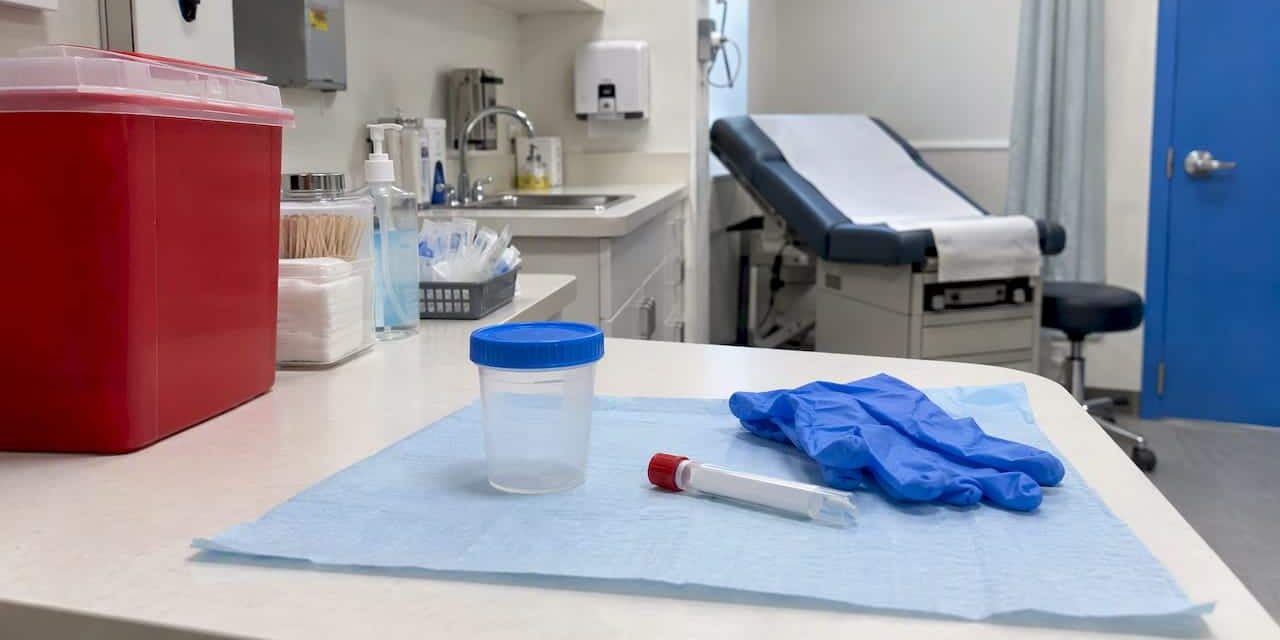
The right time to test depends on two things: how long ago you were exposed, and whether you are due for routine screening. If you had a possible exposure, testing at about one to two weeks catches most chlamydia and gonorrhea infections, while HIV and syphilis can need one to three months to be fully reliable. If you have symptoms, you should be tested now, whatever the calendar says. If you are sexually active and have no symptoms, you may still be due for a test today.
This guide walks through each situation, so you know when to come in and when a second test makes sense. Nothing here needs to feel alarming. Testing is a normal, responsible part of health care, and we treat it that way.
TL;DR
- Test right away if you have symptoms such as unusual discharge, sores, burning with urination or genital itching. Do not wait out a window period.
- With no symptoms after an exposure, chlamydia and gonorrhea tests can often detect infection about 1 week later, and 2 weeks catches almost all cases. HIV and syphilis may take 1 to 3 months to be fully reliable.
- An early negative result is not always the final answer. Plan a follow-up test after the full window period has passed.
- Routine screening matters even when you feel fine: STIs often cause no symptoms.
- We offer STD testing and treatment in Lutz, open 7 days a week, 8 AM to 8 PM.
Table of Contents
- Why timing matters: the window period
- When to test after a possible exposure
- When to test right now, even without waiting
- Routine screening: when to test with no exposure or symptoms
- When to retest after treatment
- Perspective: what we see in our exam rooms
- What a testing visit looks like
- Testing without a long wait or a big bill
- Get tested in Lutz, 7 days a week
- FAQ
- Sources
Why timing matters: the window period
A test does not detect an infection the moment it starts. The “window period” is the time between exposure and the point when a test can reliably pick up an infection. Testing inside that window can produce a false negative, meaning the test says you are clear when the infection is simply too new to measure.
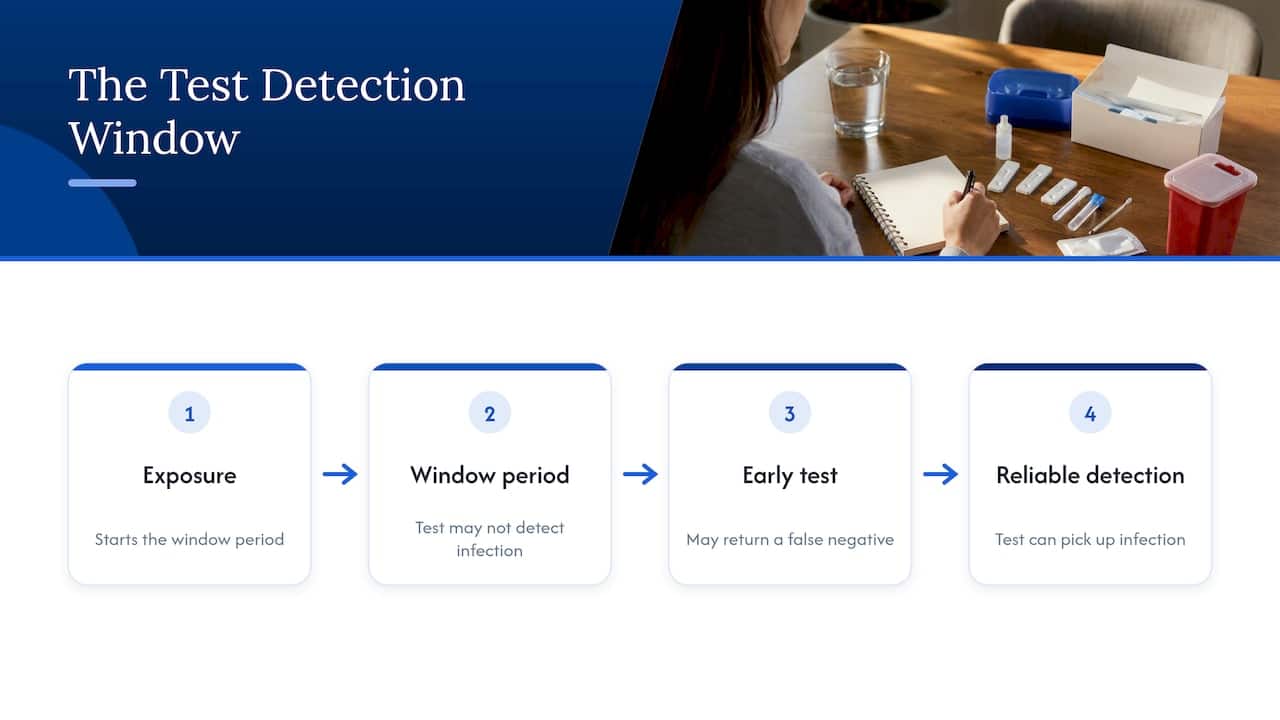
That is why “how soon can I test?” and “when should I test?” have different answers. You can test early for peace of mind, but you should understand that an early negative may need to be confirmed.
Typical window periods by infection
| Infection | Test type | When it can reliably detect infection |
|---|---|---|
| Chlamydia | Urine or swab | About 1 week after exposure, with 2 weeks catching almost all cases |
| Gonorrhea | Urine or swab | About 1 week after exposure, with 2 weeks catching almost all cases |
| HIV | NAT (nucleic acid test) | 10 to 33 days |
| HIV | Antigen/antibody lab blood test | 18 to 45 days |
| HIV | Antibody test | 23 to 90 days |
| Syphilis | Blood test | 1 to 3 months to be fully reliable |
The HIV ranges come from the same CDC testing guidance. Window periods vary by test brand and by person, so treat these as general ranges. Our own STD window period guide goes deeper on what to expect at each stage.
When to test after a possible exposure
Say you had sex without a condom or other barrier, or a partner tells you they have tested positive. Here is a practical timeline.
- Day 0 to 3: Most tests cannot yet detect a new infection. If you are worried about HIV exposure in the last 72 hours, call a clinician or urgent care right away to ask about preventive medication. Do not wait for a test date.
- About 1 to 2 weeks: A good time for a first chlamydia and gonorrhea test.
- 2 to 6 weeks: A reasonable time for an HIV lab test that checks for both antigen and antibody, with a NAT available sooner if your clinician recommends it.
- 1 to 3 months: The point where syphilis and HIV antibody tests become fully reliable. If your earlier results were negative, this is the confirming test.
If you test early and the result is negative, clinicians often recommend a follow-up test after the full window period to get a definitive negative. If you test early and want to know your status with confidence, ask for that second appointment before you leave.
One caution: until your confirming test, use condoms and consider holding off on sex with new partners, so an infection that has not shown up yet is not passed on.
When to test right now, even without waiting
Symptoms change the plan. Do not wait out a window period if you notice any of the following:
- Unusual discharge from the vagina, penis or anus
- Pain or burning when you urinate
- Sores, lumps or skin growths around the genitals or anus
- A rash
- Unusual vaginal bleeding
- Genital itching
This list tracks the symptoms the NHS describes. The same symptoms can come from a urinary tract infection or a yeast infection, so you cannot tell what you have by how it feels. Testing is the only way to know. If your main symptom is burning with urination, we also offer same-day UTI care, and our clinicians can check for both at one visit.
Testing is also appropriate if a current or past partner has been diagnosed with an STI, whether or not you feel anything.
Routine screening: when to test with no exposure or symptoms
Many people who need testing are not worried about a specific night. They are simply sexually active, and STIs often have no symptoms. Based on the CDC’s testing guidance, consider testing if you are sexually active, have had sex without barrier protection, or know a partner has an STI. The CDC recommends:
- Everyone ages 13 to 64: an HIV test at least once.
- Sexually active women under 25: chlamydia and gonorrhea testing every year.
- Sexually active gay and bisexual men: syphilis, chlamydia and gonorrhea testing at least once a year, and possibly every 3 to 6 months if you are at higher risk.
- Women 25 and older: chlamydia and gonorrhea testing if you are at increased risk, per the CDC screening recommendations.
Higher risk usually means a new partner, more than one partner, or a partner who has other partners. Pregnancy also changes screening, so tell your clinician if you are pregnant or planning to be.
A simple rule of thumb
Test at least once a year if you are sexually active and have more than one partner or a new partner. Test again whenever a partner changes. Test between partners if you can. If you are in a long-term relationship where both of you tested negative and neither has other partners, you may not need repeat testing, and a clinician can help you decide.
When to retest after treatment
A positive result is treatable in most cases, and finding it early prevents longer-term health problems. Treatment is not the last step, though. For chlamydia, the CDC screening guidance advises retesting about 3 months after treatment. Reinfection is common, especially when a partner was not treated at the same time.
Some practical points:
- Ask your partner or partners to be tested and treated too.
- Avoid sex until you and your partners have finished treatment, or until your clinician says it is safe.
- Book your follow-up test before you leave the clinic so it does not slip.
Perspective: what we see in our exam rooms
Most patients who come to us about STD testing are not sure whether they are too early, too late, or worrying over nothing. The answer is almost never “you are being silly.” We would rather see you for a test you did not strictly need than miss an infection that quietly causes damage.
We built our clinic around same-day access because this kind of question does not wait well. You can walk in, talk to a provider with no appointment, and leave with a plan: what to test for today, what to repeat later, and what to do in the meantime. Our team has more than 25 years of combined experience, and we treat sexual health like any other part of family care, with no judgment.
If you take one thing from this article, let it be this: an early negative is useful, but the follow-up test is what settles the question.
— Lisa
What a testing visit looks like
Knowing what happens can make the first visit easier.
- A private conversation. A provider asks about symptoms, recent exposures and partners, so the right tests are chosen. Answer honestly. The questions are medical, not moral.
- Sample collection. Depending on what you need, this may be a urine sample, a swab, a blood draw, or a combination. Our STD panel guide explains what different panels include.
- A plan for results. We explain how and when you will hear back. Turnaround varies by test, and our page on how long STD results take covers what to expect.
- Treatment and follow-up if needed. If a result is positive, treatment and a retest schedule can be arranged with the same team.
If you are a Florida teen or a parent of one, our article on STD testing consent in Florida explains how privacy and billing statements work.
Testing without a long wait or a big bill
Cost keeps some people from testing at all. We accept major health insurance plans, Medicaid and self-pay. We do not publish prices for individual tests, so call us at (813) 793-8555 and we can explain your options before you come in. If you are paying out of pocket, our guides on STD testing without insurance and STD testing costs in Florida lay out the choices.
Get tested in Lutz, 7 days a week
Our clinic is open every day from 8 AM to 8 PM, and same-day visits are available. You can see a provider for STD screening and treatment, and add HIV testing, other lab work or a wellness exam at the same visit if you want a fuller picture. If you also want to review routine checkups, see our overview of common health screenings. If you tested positive for HIV on a rapid test, or got a result you are unsure about, read about rapid test accuracy and confirmation, then come see us.
FAQ
How soon will an STD show up on a test?
It depends on the infection. Chlamydia and gonorrhea can often be detected about one week after exposure, and two weeks catches almost all cases. HIV ranges from 10 to 90 days depending on the test type, and syphilis may take one to three months to be fully reliable.
Is 7 days too early to test for chlamydia?
Seven days is at the early edge. A positive result at that point is reliable, but a negative may not be final. If you test at one week and have no symptoms, plan a repeat test around two weeks after exposure, or sooner if symptoms appear.
How long should I wait before having an STD test?
If you have symptoms, do not wait. If you do not, wait until the window period for the infection you are worried about, or test early and repeat later. For HIV and syphilis, a confirming test at one to three months gives the most definitive answer.
What are signs I should get tested for an STD?
Unusual discharge, burning with urination, sores or lumps, a rash, genital itching or unusual vaginal bleeding are all reasons to test. So is a partner’s diagnosis. Because many infections cause no symptoms, being sexually active is itself a reason to screen regularly.
Do I need to test if I use condoms every time?
Condoms lower risk but do not remove it, since some infections spread through skin contact. Routine screening is still recommended based on your age, partners and risk level. A provider can help you set a schedule.
Sources
- Getting Tested for STIs, CDC
- Getting Tested for HIV, CDC
- STI Screening Recommendations, CDC
- Sexually transmitted infections (STIs), NHS