
The best age for the HPV vaccine is 11 or 12, and it can be started as early as 9. If you missed it, catch-up vaccination is recommended for everyone through age 26. Adults 27 through 45 can still be vaccinated, but that is a decision you make together with your clinician. Nobody older than 45 is covered by the FDA license.
This guide walks through each age group, how many doses you need, and what to ask at your visit. We wrote it for parents of pre-teens and teens, for young adults who never finished the series, and for adults in their late 20s to 40s who are wondering if it is too late.
TL;DR
- Routine age: 11 or 12 years old. The series can start at age 9, according to the CDC.
- Catch-up: recommended for everyone through age 26 if you did not start or finish the series.
- Ages 27 to 45: not routinely recommended, but available after a conversation with your provider about your individual risk.
- Doses: 2 doses if you start before age 15, 3 doses if you start at 15 or older.
- Over 45: the FDA has not licensed an HPV vaccine for this age group.
Table of Contents
- HPV vaccine age by group
- Why 11 or 12 is the target age
- How many doses you need
- Catch-up vaccination: ages 13 through 26
- Ages 27 through 45: a decision to make with your provider
- Who should wait
- What to expect at your visit
- Our perspective
- Getting vaccinated in Lutz and the Tampa area
- Questions to bring to your appointment
- FAQ
- Sources
HPV vaccine age by group
The table below summarizes the current CDC recommendations and the FDA license for Gardasil 9, the HPV vaccine used in the United States.
| Age at first dose | Recommendation | Doses |
|---|---|---|
| 9 to 10 | May start, especially if your provider sees a reason to begin early | 2 |
| 11 to 12 | Routine, recommended for everyone | 2 |
| 13 to 14 | Catch-up, recommended | 2 |
| 15 to 26 | Catch-up, recommended | 3 |
| 27 to 45 | Shared clinical decision-making | 3 |
| 46 and older | Not licensed by the FDA | Not applicable |
The CDC’s vaccine information statement explains that routine vaccination at 11 or 12 is meant to protect adolescents before they are exposed to the virus. The FDA’s Gardasil 9 page lists the licensed age range as 9 through 45.
Why 11 or 12 is the target age
HPV stands for human papillomavirus. It is a very common virus, and some types can cause cancers later in life, including cervical, vaginal, vulvar, anal and some head and neck cancers. Other types cause genital warts.
The vaccine is preventive. It helps your immune system recognize the virus before you ever meet it. It does not treat an infection you already have. That is the whole reason for the timing: the CDC explains that the greatest benefit comes before any exposure to the virus.
There is also a practical reason. Children who start before age 15 need only two doses instead of three. An 11- or 12-year-old visit is also when other adolescent vaccines are usually given, so it fits into a visit you may already be planning.
Can a child start at age 9 or 10?
Yes. The vaccine is licensed from age 9, and the CDC says vaccination may begin then. Some parents choose to start early so the series is finished well ahead of middle school. Others start at the 11 to 12 checkup. Both are within the guidelines, and your child’s provider can help you pick what fits your family’s schedule.
Is a 13 or 14 year old too late?
No. Teens who start at 13 or 14 still need only two doses, as long as the doses are spaced correctly. They still get strong protection. The earlier you start, the less likely you are to run into exposure before the vaccine has had time to work.
How many doses you need
Your age on the day of your first shot decides the number of doses. The Gardasil 9 package insert gives the schedules:
- Ages 9 through 14: two doses, with the second given 6 to 12 months after the first.
- Ages 15 through 45: three doses, given at 0, 2 and 6 months.
There is one catch for younger patients. If a child under 15 gets the second dose less than 5 months after the first, the CDC’s adult schedule notes and the package insert call for a third dose. This happens more often than you would expect when a family tries to squeeze shots into a busy school year.
Our advice: when you get the first dose, schedule the second right away, and put the date on your calendar. If you are not sure whether a previous dose counted, bring any records you have. Our guide to getting immunization records in Florida shows where to look.
Catch-up vaccination: ages 13 through 26
If you or your teen never started the series, or started and never finished, you do not need to start over. The CDC recommends catch-up vaccination for everyone through age 26. The federal health site MyHealthfinder also notes that people up to age 26 who missed the vaccine as pre-teens should talk with their doctor about getting it now.
If you already had one or two doses, you generally pick up where you left off rather than restarting. Your provider will check the dates and tell you whether you need another dose.
Do you need a test before the vaccine?
No. You do not need a Pap test, an HPV test or a physical exam first. The CDC’s evidence review for adults makes clear that the vaccine protects against types you have not yet been exposed to. Even if you have had HPV, you can still benefit from protection against other types.
This is a common worry, and it can stop young adults from asking. You do not have to share your sexual history to get vaccinated, and the question is not a judgment call at our clinic.
Heading to college?
Many students find out in the first weeks of college that they are behind on vaccines. If that is your situation, we have a short guide on vaccines for kids going off to college. The HPV series is easy to forget because it is not always required for school.
Ages 27 through 45: a decision to make with your provider
This is the group that searches “am I too old?” the most. The answer: probably not too old, but the benefit is smaller.
The FDA license covers adults through 45. The CDC does not recommend routine vaccination for everyone in this range. Instead, it recommends shared clinical decision-making. The CDC says the reason is that most adults older than 26 have already been exposed to some HPV types, which lowers the potential benefit across the whole population.
Shared decision-making does not mean the answer is no. It means a conversation. Your provider will look at:
- Your risk of new HPV exposure, including a new partner or multiple partners
- Your overall health
- Whether you have been vaccinated before
- Your own priorities and any questions about cost or side effects
People in this range who are in a new relationship after a divorce or a long partnership often find the vaccine worthwhile. Someone in a long-term mutual relationship may see less to gain. Both choices are reasonable.
Why does the HPV vaccine stop at 45?
Clinical trials and licensing established safety and effectiveness for ages 9 through 45. There is no clinical data supporting use beyond that range, and the FDA has not licensed any HPV vaccine for people older than 45. The CDC’s explanation is that, as people age, the likelihood of encountering new high-risk types and the vaccine’s potential impact both decline.
If you are over 45, the vaccine is not the tool. Staying current with screening is. Cervical screening, which includes Pap and HPV tests, is the main way to catch changes early. Our overview of common health screenings recommended by Tampa primary care providers covers what to ask about at your age.
Head and neck cancers and your dentist
Gardasil 9 is indicated for the prevention of oropharyngeal and other head and neck cancers caused by certain HPV types, according to the FDA. The vaccine does not replace screening. Your dentist can look for warning signs in your mouth and throat during routine visits. A dental practice that offers oral cancer screening can explain what the exam involves. Ask your own dentist whether it is part of your regular checkup.
Who should wait
Some situations call for a pause or a conversation first:
- Pregnancy. The current guidance is to put off HPV vaccination until after pregnancy. If you got a dose before you knew you were pregnant, the CDC says no special follow-up is needed. Tell your provider about a possible pregnancy before any immunization, as noted in the CDC adult schedule notes.
- A moderate or severe illness. If you have a fever or are significantly ill, ask whether the shot should wait until you feel better.
- A past severe allergic reaction. If you have ever had a serious reaction to a vaccine or a vaccine ingredient, tell your clinician before your visit so they can review your history.
A mild cold usually does not mean you need to reschedule, but let the clinician decide.
What to expect at your visit
The visit is short. Here is how it usually goes:
- You or your parent fill out a brief health history and share any vaccine records you have.
- A clinician reviews your age, past doses and health, and answers your questions.
- You get the shot in the upper arm.
- You are asked to stay briefly afterward, and then you leave with a plan for the next dose.
Sore arm, redness and swelling at the injection site are the most commonly mentioned reactions. Fainting after any shot can happen, especially in teens, so sitting down for the injection and staying seated for a few minutes afterward is sensible. If you have concerns about side effects, our clinicians will go through them before you decide.
Our perspective
We see HPV vaccination from the front desk and the exam room. The biggest problem is not that families refuse it. It is that the series gets started and then lost. A first dose happens at a sports physical, then summer ends, then the second dose never gets scheduled.
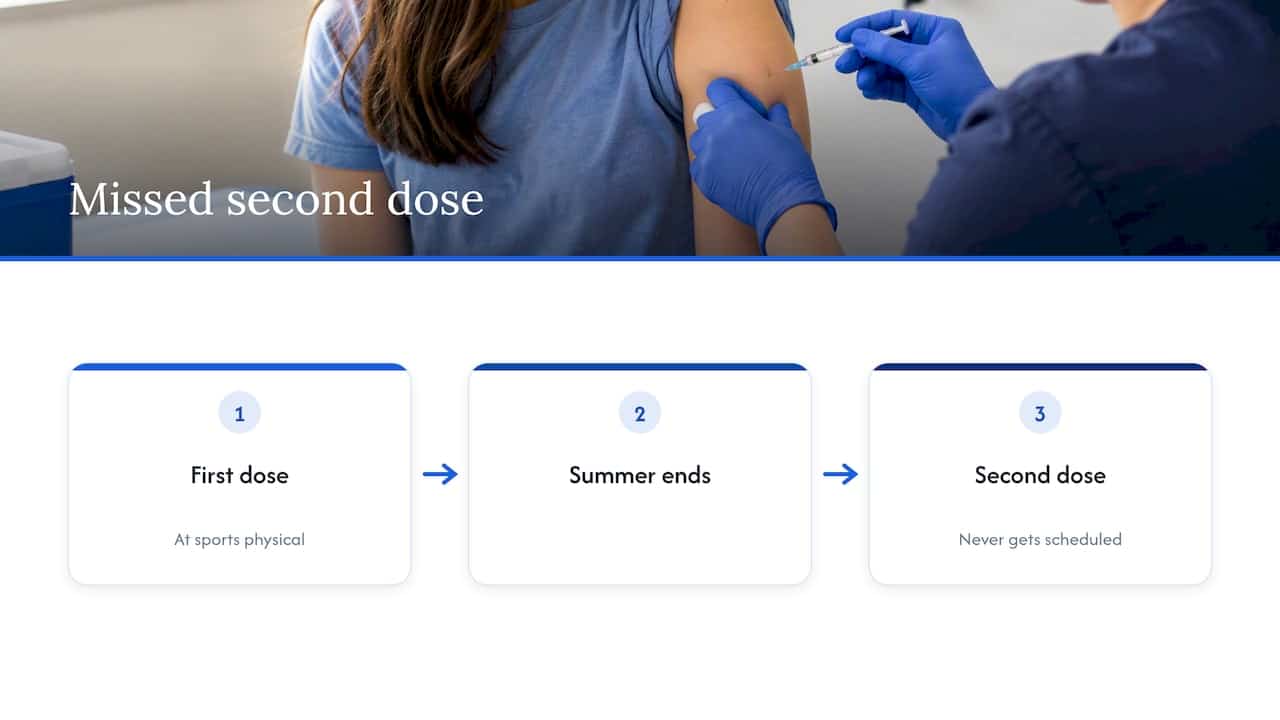
That is why we think the visit matters as much as the vaccine. When a parent brings in a 12-year-old for a school or sports physical, it is a natural moment to review vaccine records. When a 22-year-old comes in for another reason, we can check whether the series was ever completed, without any lecture.
For adults in their late 20s and beyond, we do not give a one-size answer. We talk about your life, your health history and what you want from the vaccine. Some leave with a plan to start. Some decide against it. Both are good outcomes if the decision was informed.
We are open seven days a week from 8 AM to 8 PM, and we offer same-day appointments, which helps when the second dose is overdue and you do not want to wait for a weeks-out slot. Our approach is simple: no judgment, clear information, and care for the whole family.
— Lisa
Getting vaccinated in Lutz and the Tampa area
Your Family Walk-In Clinic provides immunizations for children and adults, along with primary care, physicals and screenings, in Lutz, Florida. We accept major health insurance plans and Medicaid, and you can also pay out of pocket. Because coverage and vaccine availability can vary, call us before you come so we can confirm that the HPV vaccine is available and talk through your insurance.
You can see what we offer on our services page for immunizations, wellness exams and screenings. If your child needs a school or sports physical, that visit is a good time to review the vaccine record too. For Florida-specific details on school rules and costs, read our guide to HPV vaccine age in Florida. To see where HPV fits among the other shots you may be due for, use our adult vaccine schedule.
If you want to know whether you have already been exposed to other infections, we also offer STD screening and treatment in a private, non-judgmental setting. Vaccination and screening do different jobs, and many patients benefit from both.
Questions to bring to your appointment
- Which doses have I or my child already had, and on what dates?
- Based on the starting age, do we need two doses or three?
- When should the next dose be scheduled?
- Is there any reason for me to wait, such as pregnancy or illness?
- If I am between 27 and 45, what would I gain given my own situation?
- What will my insurance cover, and what would I owe?
FAQ
Is it too late to get the HPV vaccine at 30?
Not necessarily. The FDA license covers ages 9 through 45, and the CDC recommends that adults 27 through 45 talk with their provider about it. The benefit is smaller than for younger people because many adults have already been exposed to some HPV types. Your provider can help you weigh your own risk.
Why is there no routine HPV vaccine recommendation after 26?
The CDC reasons that the vaccine works best before exposure to the virus. Most adults older than 26 have already encountered some HPV types, so the population-wide benefit is lower. That is why guidance shifts to a shared decision rather than a blanket recommendation.
Is the HPV vaccine a lifetime, one-time shot?
No. It is a series of two or three doses, depending on your age at the first dose. The series should be completed within about six months to a year for full effect, following the schedule in the package insert. Missing doses can leave you less protected, so keep track of your dates.
Do I need an HPV test or Pap test before getting vaccinated?
No. The CDC does not require any screening or exam before HPV vaccination. The vaccine protects against types you have not yet been exposed to, but it does not treat an existing infection.
Can I get the HPV vaccine while pregnant?
The guidance is to wait until after pregnancy. If you got a dose before you realized you were pregnant, no special follow-up is needed. Tell your provider if you are or might be pregnant before any vaccine.
Sources
- CDC: HPV Vaccine Recommendations
- CDC: HPV Vaccine Information Statement
- CDC: Adult Immunization Schedule Notes
- CDC ACIP: Evidence to Recommendations for HPV Vaccination of Adults, Ages 27 through 45
- FDA: Gardasil 9
- FDA: Gardasil 9 Package Insert
- MyHealthfinder: Get Screened for Cervical Cancer