

If you’re paying cash, expect to spend a range of amounts for a single STD test or for a standard panel, depending on where you go. The fastest ways to lower that cost are a public health clinic, a Title X or FQHC sliding-fee site, or a direct-access lab panel that skips facility fees. Start with the CDC’s GetTested locator to find a confidential option near you today.
TL;DR:
- Independent labs and nonhospital clinics typically charge 40% to 70% less than hospital outpatient departments for the same panel because they avoid facility fees.
- FQHC discounts depend on income and household size, and clinics may require a pay stub, tax return, or signed income statement to qualify.
- Expanded panels add herpes or trichomoniasis, but herpes screening usually is not recommended without symptoms or a known exposure because it rarely changes care.
- A positive home test still requires a clinician visit for confirmation and treatment, while consultation, medication, and retesting may cost extra.
- Request a written Good Faith Estimate before booking, and ask whether a positive result triggers separate fees for consultation, medication, or retesting.
Table of Contents
- What affects STD test prices: site of service and test type
- Where uninsured people can get free or low-cost testing
- At-home and over-the-counter STI tests: cost, accuracy, and when to use them
- How to decide which tests or panel you actually need
- Payment tactics to lower out-of-pocket costs
- Clinic perspective: what a walk-in visit for STD testing looks like
- What else you might pay for after a positive result
- Are medications included in the testing price or billed separately?
- Estimating your total cost from testing through treatment
- Author perspective: quick next steps if you need testing today
- Your Family Walk-In Clinic: a practical local option for affordable testing
- FAQ
- Sources
What affects STD test prices: site of service and test type
The same test can cost wildly different amounts depending on where you walk in. Hospital outpatient departments add facility fees on top of the lab charge, which is why a chlamydia test billed through a hospital system often lands far above what an independent lab charges for the identical NAAT test. Independent direct-access labs and non-hospital clinics typically charge 40%/ff-393-locationx3-1apr21.pdf?sfvrsn=84e73a2f_6) to 70% less than hospital outpatient departments for the same panel, since they skip the overhead that comes with hospital billing.
Pricing also depends on whether you’re buying a single test or a bundled panel. A single chlamydia or gonorrhea test often varies on its own, while HIV screening generally costs more. Syphilis and hepatitis C tests tend to fall in a similar range, and herpes testing, when it’s clinically warranted, adds its own separate charge. Bundling these into a panel almost always costs less per test than ordering them one at a time.
The median hospital cash price for a single chlamydia NAAT test is available but can vary widely by facility across U.S. hospitals.
Where you go changes your total bill more than almost any other factor:
- Hospital outpatient departments carry the highest prices because of added facility fees.
- Independent labs and direct-access testing sites usually offer the lowest per-test pricing for self-pay patients.
- Urgent care clinics sit in the middle, often bundling a visit fee with the test cost.
- Sexual health clinics and FQHCs frequently offer the lowest prices of all, especially for income-eligible patients.
Knowing these price bands before you book a visit lets you choose a site deliberately instead of discovering the facility fee on your bill afterward.
Where uninsured people can get free or low-cost testing
A handful of safety-net options exist specifically because STI testing is a public health priority, not just a private medical expense. These sites are built to serve people without coverage, and many charge nothing at all for eligible patients.
- Local health department clinics often provide free or deeply discounted STI testing regardless of ability to pay.
- Title X family planning clinics receive federal funding specifically to offer low-cost reproductive and sexual health services.
- Planned Parenthood locations frequently use income-based pricing for testing and treatment.
- Federally Qualified Health Centers (FQHCs) apply sliding-fee discount programs that scale charges to your income and household size, which can cut costs substantially for uninsured patients according to HRSA’s compliance guidance.
A sliding-fee schedule works by placing your income against the federal poverty guidelines; someone near or below the poverty line might pay a nominal fee of a few dollars, while someone at 200% of the guideline might pay a modest percentage of the standard charge. The CDC’s GetTested tool is the quickest way to find a confidential clinic near you that offers free or low-cost testing.
Pro Tip: Call ahead and ask specifically whether the clinic offers a sliding-fee scale and what documentation (pay stub, tax return, or a signed income statement) you’ll need to qualify.
Bring a photo ID, any insurance card even if it’s inactive, and a list of your recent sexual history so the clinician can recommend the right tests without guesswork.
At-home and over-the-counter STI tests: cost, accuracy, and when to use them
At-home testing falls into two categories that get confused often: mail-in home-collection kits and instant over-the-counter devices. Home-collection kits, where you collect a sample and mail it to a lab, typically vary in cost depending on how many infections they screen for. Instant OTC devices that give a result in minutes, similar to a home pregnancy test, usually cost less per test but cover fewer infections.
The FDA has authorized the first over-the-counter home sample collection test for chlamydia and gonorrhea, along with other home or OTC tests that have cleared similar review, which has expanded what people can legitimately test for at home.
- Home-collection kits mail your sample to a certified lab and generally cover more infections per kit.
- Instant OTC devices give a same-day result but often focus on a single infection, such as HIV.
- Accuracy varies by test type and collection technique, so following the kit instructions precisely matters more than with a clinician-collected sample.
FDA-authorized home sample collection tests for chlamydia and gonorrhea mark the first such clearance for at-home STI testing in this category.
If an at-home or OTC test comes back positive, the next step is the same no matter how you tested: a follow-up visit with a clinician for confirmation, treatment, and partner notification. At-home convenience doesn’t replace the medical visit that follows a positive result.
How to decide which tests or panel you actually need
Testing everything available isn’t usually the smart financial move. The right panel depends on your age, your recent sexual history, and whether you have symptoms, and the CDC’s screening recommendations set clear benchmarks clinicians use to decide who needs what.
- Sexually active women under 25, or older women with new or multiple partners, are generally advised to get annual chlamydia and gonorrhea screening.
- Adults and adolescents ages 15 to 65 are generally advised to get at least one HIV test as part of routine care.
- Pregnant patients typically need an expanded panel early in pregnancy regardless of symptoms.
- Anyone with symptoms, a known exposure, or a new partner usually needs targeted testing rather than waiting for a routine screening window.
A standard panel usually covers five core infections: chlamydia, gonorrhea, HIV, syphilis testing types, and sometimes hepatitis C. Expanded panels covering eight to ten infections add tests like herpes, trichomoniasis, or hepatitis B, which cost more and aren’t necessary for everyone. Herpes testing in particular is usually reserved for people with symptoms or a known exposure, since routine screening in people without symptoms isn’t generally recommended and adds cost without changing most outcomes. Our guide to what’s included in different STD panels breaks down which bundle fits which situation.
Payment tactics to lower out-of-pocket costs
A few concrete moves can shrink your bill before you ever sit in an exam room.
- Order a direct-access lab panel through services like LabCorp OnDemand or Quest, which let you pay for testing without a separate clinic visit fee when a clinician evaluation isn’t medically necessary first.
- Ask for a Good Faith Estimate in writing before scheduling any self-pay visit, which gives you a number to compare across clinics and a basis to dispute a bill that comes in significantly higher.
- Ask directly about self-pay discounts, since many clinics quietly reduce cash prices for patients who ask before the visit rather than after the bill arrives.
- Use telehealth for the follow-up conversation after a cash lab result, which avoids a second in-person visit fee just to discuss results and next steps.
- Watch for community testing events, which many health departments and nonprofits run periodically at no cost.
Pro Tip: Request your Good Faith Estimate by name, since the No Surprises Act requires most providers to give uninsured patients one when asked, and having it in writing protects you if the final bill doesn’t match.
For a broader look at stretching a self-pay budget across any kind of visit, our guide on seeing a doctor without insurance covers tactics beyond STI testing specifically.
Clinic perspective: what a walk-in visit for STD testing looks like
A typical visit starts with a short conversation about your symptoms and recent sexual history, which helps narrow the panel to what’s actually indicated rather than everything available. From there, sample collection is quick, usually a urine sample, a blood draw, or a swab depending on the tests ordered, and most results come back within a few days.
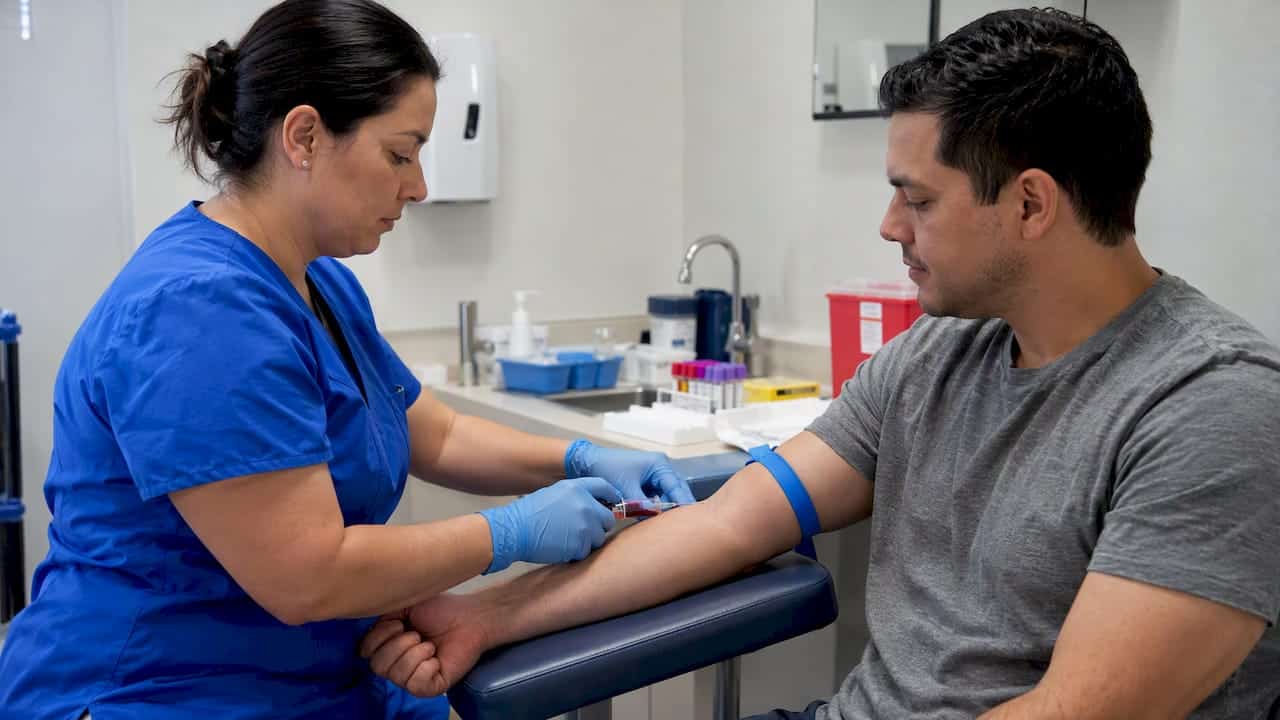
At Your Family Walk-In Clinic, we offer STD screening and treatment alongside same-day appointments seven days a week, so testing and a treatment plan can often happen without a long wait. Our pricing and services page lists the broader range of care we provide, and we’re glad to work through a Good Faith Estimate or a telehealth follow-up for patients who tested elsewhere and need a treatment plan.
What else you might pay for after a positive result
A positive test is rarely the last charge you’ll see. Most clinics bill a separate consultation or visit fee for the appointment where you discuss results and get a treatment plan, even if that visit happens by telehealth. If the diagnosis requires a prescription, that’s typically billed on top of the testing and consultation costs rather than bundled into the original test price.
Partner notification and retesting add to the total as well. Many bacterial infections call for a retest a few months later to confirm the treatment worked, and if you have a partner who also needs testing and treatment, that’s an entirely separate cash expense unless a clinic offers expedited partner therapy at no added charge. Some clinics fold a basic consultation into the testing fee when the result is positive, but this varies enough that it’s worth asking directly before you book, especially if you’re already working with a tight budget.
Budgeting for testing alone can leave you short if a positive result arrives and you hadn’t planned for the consultation, the medication, and a possible retest. Asking a clinic upfront what’s included in their testing price, versus what gets billed separately if you test positive, avoids an unpleasant surprise on the back end.
Are medications included in the testing price or billed separately?
Almost universally, no. The test itself covers only the lab work and the sample collection, and any antibiotics or antiviral medication prescribed after a positive result are billed as a separate charge, whether that’s a pharmacy fill or an in-clinic dispensed dose.
Common bacterial infections like chlamydia and gonorrhea are usually treated with a short course of antibiotics, and the cash price for these medications at a pharmacy is typically modest compared to the testing itself, though it still adds to your total. Some clinics dispense the first dose on-site for immediate treatment, which may carry its own charge distinct from both the test and the office visit.
If your diagnosis requires ongoing management, such as antiviral therapy for a chronic viral infection, the medication cost becomes a recurring expense rather than a one-time add-on. Ask the clinic directly whether they dispense medication in-house or send a prescription to your pharmacy, since the price difference between the two routes can be significant, and a pharmacy price comparison before you fill the prescription is worth the few extra minutes it takes.
Estimating your total cost from testing through treatment
Add up four potential line items before you commit to a plan: the test or panel itself, a consultation fee for reviewing results, any medication if you test positive, and a possible retest a few months later. A reasonable self-pay estimate for straightforward testing with a negative result might vary depending on the panel and site of service.
If a result comes back positive, costs for testing, consultation, and medication can vary widely, potentially adding substantially to the total expense for that single episode. These numbers are illustrative only. Your actual total depends heavily on which site you choose and whether you qualify for a sliding-fee discount, which can cut the testing portion dramatically.
The most reliable way to pin down your real number is to request a Good Faith Estimate from whichever clinic or lab you’re considering, then ask directly whether a positive result would trigger separate consultation and medication charges. Comparing two or three options this way, especially a direct-access lab against a local sliding-fee clinic, usually reveals a meaningful price gap before you ever schedule anything.
Author perspective: quick next steps if you need testing today
If you need testing now, don’t overthink the first step. Pull up the CDC’s GetTested locator, look for a sliding-fee or Title X clinic near you, and call ahead to confirm pricing and what to bring. If a public clinic isn’t convenient, a direct-access lab panel paired with a telehealth follow-up is a solid backup that keeps costs predictable.
Ask for a Good Faith Estimate before you commit to any self-pay visit, and don’t let embarrassment slow you down. These visits are confidential, routine, and handled by people who see this every day. Early testing catches infections while they’re simplest and cheapest to treat, which matters more than which door you walk through to get there.
— Lisa
Your Family Walk-In Clinic: a practical local option for affordable testing
We built our approach around same-day access, so you’re not waiting weeks for an appointment when you need an answer now. We offer STD screening and treatment seven days a week, with same-day visits for testing, results discussion, and treatment if you need it, all in one place.
We also work with patients on cost before the visit happens. If you’d like a Good Faith Estimate or want to know what a self-pay visit typically runs, call ahead and we’ll walk through it with you. You can see the full range of what we offer, including lab work and follow-up care, on our pricing and services page, or book directly through our urgent care scheduling page to get started today.
This article is general information, not a substitute for advice from a qualified doctor. Consult a qualified healthcare professional about your own circumstances before acting on anything here.
FAQ
Are STD tests covered by insurance?
Yes, for insured patients, ACA rules require most private health plans to cover certain USPSTF-recommended STI screenings without copayments or coinsurance when an in-network provider performs them. Coverage details and which specific tests qualify still depend on your plan and your risk profile, so it’s worth confirming with your insurer beforehand.
Can STDs clear up on their own?
Some viral infections can become dormant or asymptomatic, but bacterial infections like chlamydia, gonorrhea, and syphilis do not resolve without antibiotic treatment and can cause lasting complications if left untreated. Testing and treatment remain the only reliable way to clear a bacterial infection and stop transmission to partners.
Are OTC STD tests accurate?
Accuracy depends on the specific test and how closely you follow the collection instructions, and the FDA has authorized home sample collection tests for chlamydia and gonorrhea as a legitimate at-home option. A positive result on any home or OTC test still calls for a clinician follow-up to confirm the diagnosis and start treatment.
What are the big three STDs that need to be tested for?
Guidance generally centers on chlamydia, gonorrhea, and HIV as the core infections most sexually active adults should screen for regularly, with syphilis often added depending on risk factors. The CDC’s screening recommendations tie the exact combination to your age, pregnancy status, and sexual history rather than a single fixed list for everyone.
Sources
- Healthcare
- Getting tested for STIs | CDC
- FDA grants marketing authorization for first test for chlamydia and gonorrhea home sample collection