
A standard STD panel tests for chlamydia, gonorrhea, syphilis, and HIV at minimum, with many panels also covering hepatitis B, hepatitis C, trichomoniasis, and herpes simplex virus (HSV). Sample types depend on the infection: urine or swabs for chlamydia and gonorrhea, and a blood draw for HIV, syphilis, and hepatitis. Knowing exactly what a panel covers before you order it is the single most important step, because the name on the package rarely tells the whole story.
Before you schedule, here is a quick orientation:
- “5-panel” panels typically cover HIV, syphilis, chlamydia, gonorrhea, and herpes IgG. These are marketing labels, not medical standards — the actual pathogens tested can vary by provider.
- “10-panel” panels usually add hepatitis B, hepatitis C, trichomoniasis, and sometimes expanded herpes typing or mycoplasma genitalium. Direct-pay pricing for 5-test panels runs roughly $99–$149; 10-test panels typically run $189–$299.
- The CDC is the primary U.S. authority for sexually transmitted disease screening recommendations. For same-day local testing in the Lutz and Tampa area, Your Family Walk-In Clinic offers confidential STD screening and treatment seven days a week.
Key Takeaways
A standard STD panel tests for chlamydia, gonorrhea, syphilis, and HIV at minimum, but what a panel actually covers varies by provider, so always verify the specific infections and sample sites before you test.
| Point | Details |
|---|---|
| Panel names are marketing labels | “5-panel” and “10-panel” have no standardized medical definition; confirm which infections are included. |
| Window periods determine timing | HIV 4th-gen tests need 18–45 days; syphilis serology needs 3–6 weeks; testing too early risks a false negative. |
| Extragenital testing is often missing | Pharyngeal and rectal NAAT requires site-specific swabs not included in most consumer or at-home panels. |
| Cost ranges vary by coverage | Direct-pay 5-test panels run roughly $99–$149; 10-test panels run $189–$299; insurance often covers recommended screening at no cost. |
| Your Family Walk-In Clinic | Offers same-day, confidential STD testing and treatment in Lutz, FL, seven days a week, 8 AM to 8 PM. |
Table of Contents
- What do STD panel tests actually include?
- Who should get tested and how often?
- Sample collection, test accuracy, and window periods
- Where can you get an STD panel in the U.S.?
- Costs, insurance, confidentiality, and testing for minors
- What a high-quality STD testing visit looks like
- What to do after a positive STD test result
- How Your Family Walk-In Clinic approaches STD panels and patient care
- Confidential STD testing is available at Your Family Walk-In Clinic today
- Sources
- FAQ
What do STD panel tests actually include?
The infections covered in a sexually transmitted disease screening panel fall into two broad groups: those detected by nucleic acid amplification testing (NAAT) and those detected by serology (blood-based antibody or antigen tests). Understanding which method applies to which infection tells you what sample you need to provide and when results will be meaningful.
| Infection | Common test type | Typical sample |
|---|---|---|
| Chlamydia | NAAT | Urine or urethral/vaginal/cervical swab |
| Gonorrhea | NAAT | Urine or urethral/vaginal/cervical swab |
| Trichomoniasis | NAAT or rapid antigen | Urine or vaginal swab |
| Syphilis | RPR + treponemal confirmatory | Venous blood |
| HIV (1/2) | 4th-generation Ag/Ab combo | Venous blood or finger-prick |
| Hepatitis B | Surface antigen (HBsAg) + antibody | Venous blood |
| Hepatitis C | Anti-HCV antibody ± RNA | Venous blood |
| Herpes simplex (HSV-1/2) | IgG serology or PCR swab | Venous blood or lesion swab |
| HPV | No routine blood test; detected via Pap/HPV co-test | Cervical cells (clinician-collected) |
A few points worth noting. HPV and HSV are frequently excluded from routine bundled panels. HPV has no approved blood test for general screening; it is detected during a Pap smear or co-test in people with a cervix. HSV IgG serology is available but carries a meaningful false-positive rate, so many clinicians order it only when there is a clinical reason rather than as a default screen. The CDC’s testing resources describe NAATs as the preferred method for chlamydia and gonorrhea because of their high sensitivity, while serology remains the standard for syphilis, HIV, and hepatitis.
For a bundled example, Labcorp’s Complete STI Test uses combined blood and urine samples to screen for seven infections (chlamydia, gonorrhea, trichomoniasis, HIV, syphilis, hepatitis B, and hepatitis C), with results typically available within 1–4 days of the lab receiving the sample.
Pro Tip: If you have had oral or anal sexual contact, ask specifically about pharyngeal and rectal NAAT swabs. Most consumer panels only test genital sites, and extragenital infections at the throat or rectum will not show up on a urine sample. Confirm with your provider whether site-specific swabs are included.
Who should get tested and how often?
CDC screening and treatment guidelines provide population-specific recommendations that go well beyond “get tested once a year.” The right frequency depends on your age, pregnancy status, sexual practices, and individual risk factors.
Routine screening recommendations by population:
- Sexually active women under 25: Annual chlamydia and gonorrhea screening, regardless of symptoms or number of partners.
- Sexually active women 25 and older: Annual chlamydia and gonorrhea screening if they have new or multiple partners, or other risk factors.
- Pregnant people: Syphilis, HIV, and hepatitis B screening at the first prenatal visit; chlamydia and gonorrhea for those under 25 or at increased risk; hepatitis C screening at least once during pregnancy. Repeat syphilis and HIV testing in the third trimester for those at high risk.
- Men who have sex with men (MSM): At least annual HIV, syphilis, chlamydia, and gonorrhea testing. MSM with multiple or anonymous partners benefit from testing every 3–6 months. Extragenital (pharyngeal and rectal) NAAT is recommended based on reported sexual practices.
- People on PrEP (HIV pre-exposure prophylaxis): HIV testing every 3 months; syphilis, chlamydia, and gonorrhea testing at least every 6 months, or more frequently based on risk.
- People with HIV: At least annual screening for syphilis, chlamydia, gonorrhea, and hepatitis C; more frequent testing based on ongoing risk.
- People with new or multiple partners: Baseline testing for HIV, syphilis, chlamydia, gonorrhea, and hepatitis B/C is reasonable before or shortly after new sexual contact.
A quick self-check: if you answered yes to any of the following, routine or more frequent screening applies to you.
- You have had a new sexual partner in the past year.
- You or a partner have had more than one sexual partner concurrently.
- You have had unprotected sex (no condom or other barrier method).
- You are pregnant or planning to become pregnant.
- You have symptoms such as unusual discharge, sores, burning with urination, or pelvic pain.
Frequency recommendations also shift with local disease prevalence. Clinicians in areas with higher reported rates of syphilis or gonorrhea may recommend more frequent testing even for lower-risk patients. The CDC’s annual STI statistics document national case trends that reinforce why routine screening in key groups remains a public-health priority.
Sample collection, test accuracy, and window periods
How a sample is collected matters as much as which test is ordered. The collection method determines whether the result is accurate for your specific exposure.
Common collection methods
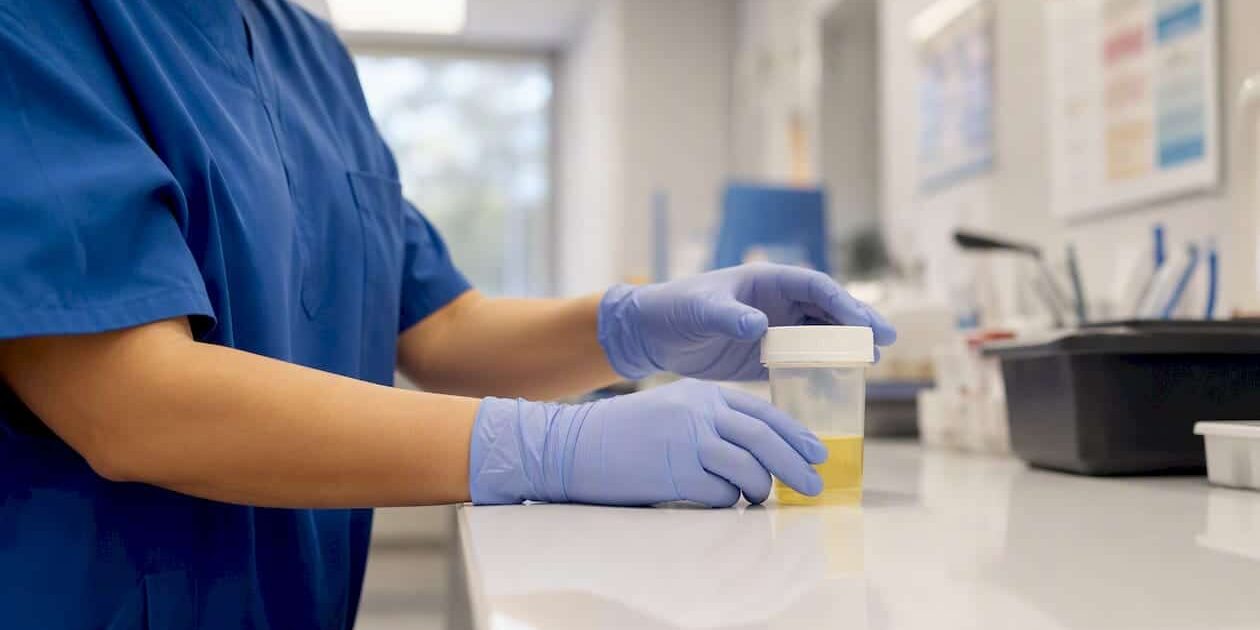
Urine: The most common collection for chlamydia and gonorrhea NAAT. You provide a first-catch urine sample (the first portion of the urine stream, not midstream). No special preparation is needed beyond avoiding urination for at least one hour beforehand.
Clinician-collected swabs: A provider swabs the cervix, urethra, rectum, or pharynx depending on reported sexual practices. These are required for extragenital testing and for people whose anatomy makes urine collection less reliable.
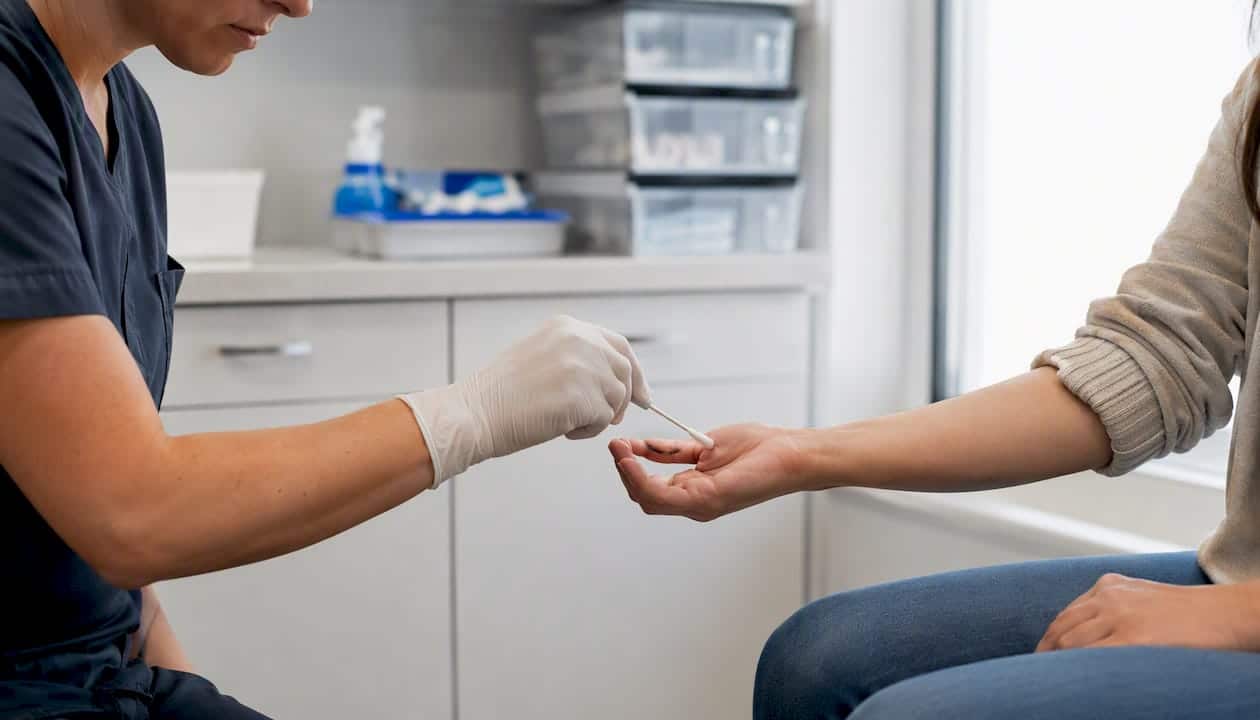
Self-collected swabs: Vaginal self-swabs have been validated for chlamydia and gonorrhea NAAT and are offered by some telehealth services and at-home kits. Rectal and pharyngeal self-swabs are used in some research and clinic settings but are less universally available.
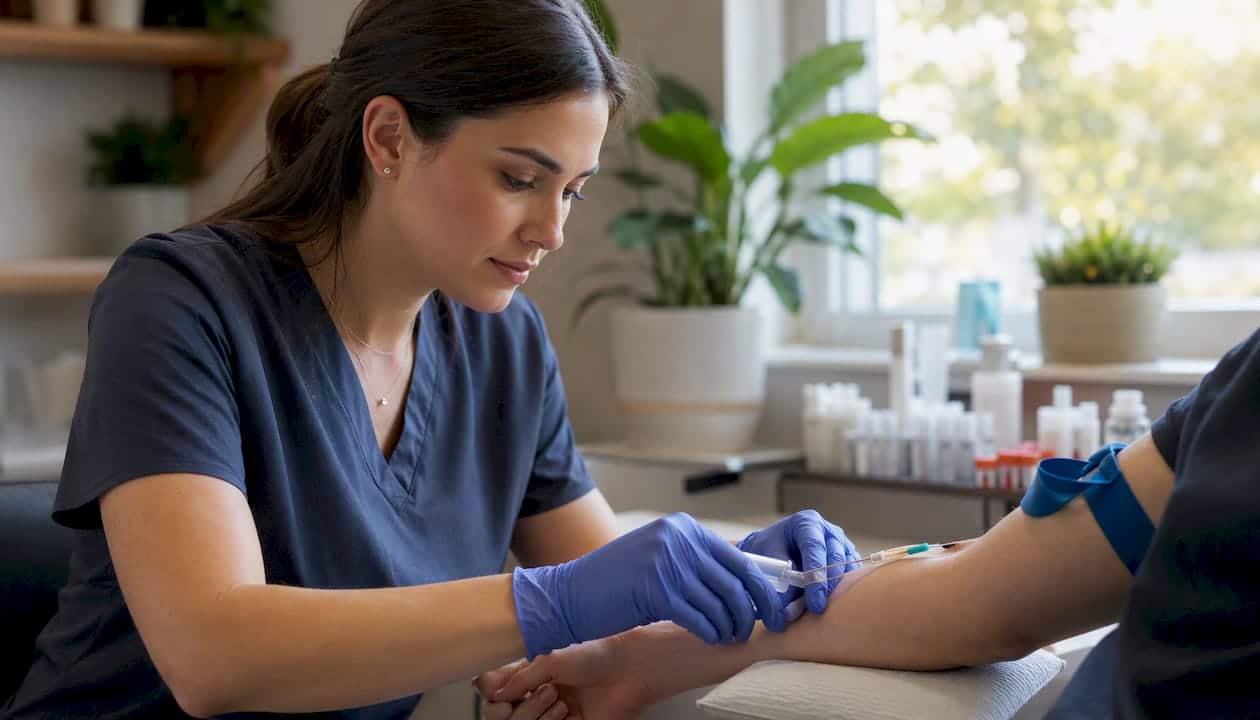
Venous blood draw: Standard for HIV, syphilis, hepatitis B, and hepatitis C. A phlebotomist draws a small tube of blood, usually from the arm.
Finger-prick: Some point-of-care HIV tests and rapid syphilis tests use a finger-prick sample. Results are faster but may require confirmatory lab testing if reactive.
NAAT vs. serology: what each detects
NAAT detects the genetic material of the pathogen itself. This means it can identify an active infection relatively quickly after exposure, but it cannot detect past infections that have already cleared. Serology detects antibodies (or antigens) your immune system produces in response to infection. Antibodies take time to develop, which is why the timing of a blood test matters so much.
Window periods
Testing too early after an exposure can produce a false-negative result. The window period is the time between exposure and when a test can reliably detect infection.
Typical window periods to keep in mind:
- Chlamydia and gonorrhea (NAAT): 5–14 days after exposure.
- HIV (4th-generation Ag/Ab combo test): Roughly 18–45 days; most infections are detectable by 45 days, and the CDC considers 90 days a conclusive negative for most people.
- Syphilis (serology): 3–6 weeks after exposure for initial RPR reactivity.
- Herpes IgG: Weeks to months; HSV-2 IgG may take up to 12–16 weeks to become reliably positive after a first infection.
- Hepatitis C (antibody): 8–11 weeks for most people; RNA testing can detect infection earlier (1–2 weeks after exposure).
If you have symptoms — sores, discharge, burning, rash, or pelvic pain — do not wait for a window period to pass. Symptomatic patients should seek evaluation promptly, because a clinical exam can guide testing decisions and treatment may be indicated before lab results return.
Where can you get an STD panel in the U.S.?
Access to comprehensive std tests has expanded considerably, from walk-in clinics to at-home kits. Each route has real trade-offs in terms of sample types available, turnaround time, and access to follow-up care.
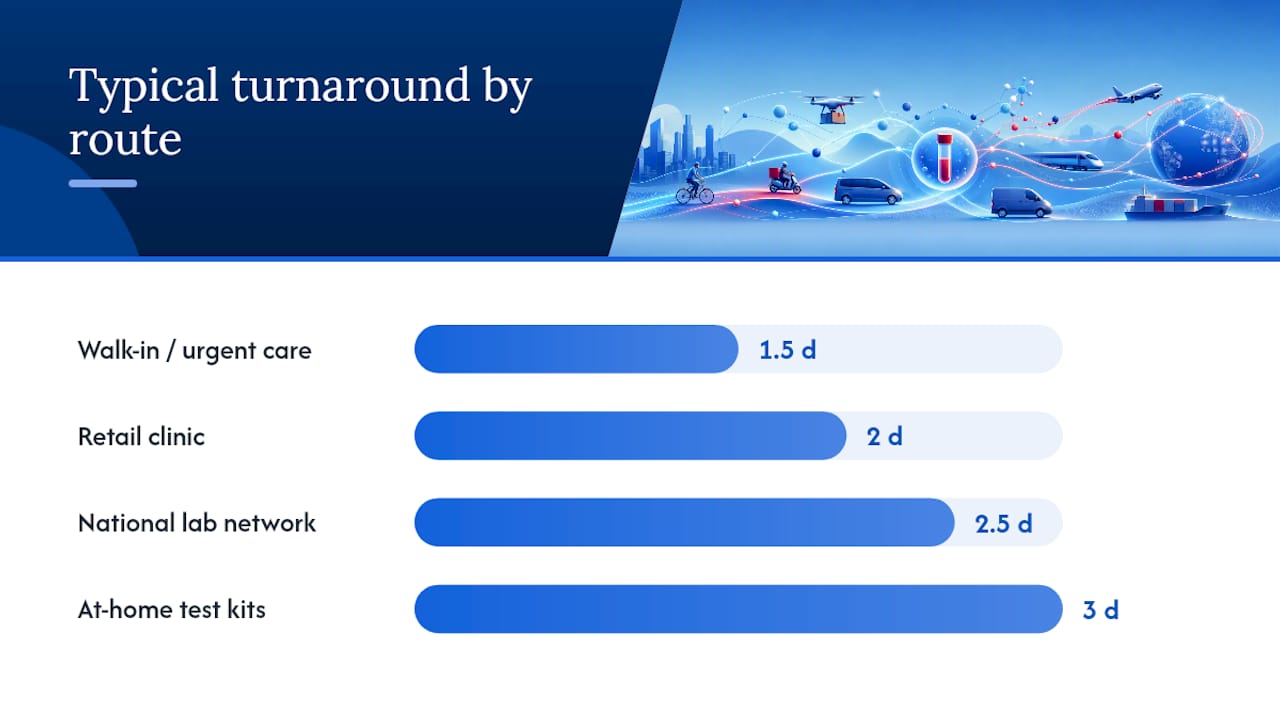
| Access route | Sample types available | Typical turnaround | Clinical follow-up | Best for |
|---|---|---|---|---|
| Walk-in / urgent care clinic | Urine, blood, clinician swabs (including extragenital) | Same-day to 1–3 days | Yes, on-site | Symptomatic patients, extragenital testing, same-day results |
| Retail clinic (e.g., MinuteClinic at CVS) | Urine, blood, limited swabs | 1–3 days | Limited; referral for positives | Routine genital-site testing, convenient hours |
| National lab network (e.g., Quest Diagnostics) | Urine, blood, clinician swabs | 1–4 days | No direct care; results to ordering provider | Ordered panels, insurance billing, broad test menu |
| Public health department | Urine, blood, swabs | 1–5 days | Yes; often free or low-cost | Uninsured patients, anonymous testing options |
| Telehealth + lab order | Urine, blood (at local lab draw site) | 2–5 days | Virtual follow-up | Convenience, no in-person visit needed |
| At-home test kits | Self-collected urine, vaginal swab, finger-prick | 1–5 days after lab receipt | None; provider follow-up required | Low-risk routine screening, genital-site only |
The FDA has granted marketing authorization for select at-home tests covering chlamydia, gonorrhea, and trichomoniasis, which has meaningfully expanded access. However, these kits have defined limitations: they test only genital sites, they do not include serology for HIV or syphilis, and a positive result still requires clinical confirmation and treatment. If you have had oral or anal exposures, an at-home kit will not capture pharyngeal or rectal infections.
For same-day access with the full range of sample types, including extragenital swabs, a walk-in clinic or urgent care setting is the most practical option. MedlinePlus notes that at-home results should always be reviewed with a clinician, particularly because many STIs are asymptomatic and a negative result does not rule out infection if testing occurred within the window period.
Costs, insurance, confidentiality, and testing for minors
What does an STD panel cost?
Direct-pay pricing varies by provider and location, but market data gives a useful baseline. A 5-test panel typically runs $99–$149, covering HIV, syphilis, chlamydia, gonorrhea, and herpes IgG. A 10-test panel, which adds hepatitis B, hepatitis C, trichomoniasis, and sometimes expanded herpes typing, typically runs $189–$299. Clinic-based visits may carry an additional office visit fee depending on the provider.
Insurance and billing
Most major insurance plans, including Medicaid, cover STI screening for recommended populations without cost-sharing when the visit is billed as preventive care. If you are not in a recommended screening category or if you request tests beyond what your insurer covers as preventive, you may owe a copay or coinsurance. To avoid a surprise bill, ask the clinic ahead of time whether the panel will be billed as preventive or diagnostic.
If you prefer that a test not appear on your insurance Explanation of Benefits (EOB), paying out-of-pocket is an option at most clinics and lab networks. Some public health departments offer free or anonymous testing with no insurance required.
Pro Tip: Ask the clinic or lab whether you can pay directly for the panel rather than billing insurance. This keeps the visit off your EOB and is often straightforward at walk-in clinics and public health sites.
Confidentiality and HIPAA
Your test results are protected under HIPAA, which limits who can access your health information without your consent. However, certain STIs are legally reportable to state and local public health departments. Chlamydia, gonorrhea, syphilis, and HIV are all reportable infections in every U.S. state. When a lab confirms one of these, the result is sent to the health department as required by law. This reporting is confidential and is used for disease surveillance, not shared with employers, schools, or family members.
Minor consent
In most U.S. states, minors can consent to STI testing and treatment without a parent or guardian’s permission. The specific age threshold and scope of services covered by minor consent laws vary by state. If you are a minor or the parent of one, calling the clinic ahead of your visit to ask about their minor consent policy is the clearest way to confirm what applies in Florida.
What a high-quality STD testing visit looks like
Not every testing visit is equal. A thorough, evidence-based visit involves more than handing you a cup and sending you to the lab. The CDC’s STI Treatment Guidelines describe the components of quality clinical STI care, and knowing what to expect helps you evaluate whether you are getting it.
The Five P’s sexual history
A well-trained provider will take a structured sexual history using the Five P’s framework:
- Partners: How many partners in the past 60–90 days? What are the genders of your partners?
- Prevention of pregnancy: Are you using contraception? What type?
- Protection from STIs: Do you use condoms or other barrier methods? How consistently?
- Practices: What types of sexual contact do you have (vaginal, anal, oral)? This determines which sites need to be tested.
- Past history of STIs: Have you had an STI before? When were you last tested?
This structured history is not intrusive for its own sake. It directly determines which tests are ordered and from which sites. A provider who skips this step may order a panel that misses the infections most relevant to your actual exposures.
What else a quality visit includes
Beyond the history, a complete visit should cover:
- A symptom review (discharge, sores, pain, rash, urinary symptoms)
- A targeted physical exam when clinically indicated
- Site-specific specimen collection, including pharyngeal and rectal swabs when practices warrant it
- Counseling on prevention: consistent condom use, vaccination (hepatitis A, hepatitis B, and HPV vaccines where applicable), and a discussion of PrEP for HIV prevention if appropriate
- Clear communication about which tests were and were not performed, and what the results mean
Pro Tip: Before leaving the visit, ask your provider directly: “Did you test all the sites relevant to my sexual practices?” If you reported oral or anal contact and no swabs were collected from those sites, ask whether extragenital NAAT is indicated for you.
What to do after a positive STD test result
A positive result is not the end of the conversation. It is the beginning of a clear, manageable process. Here is what to expect:
-
Confirmatory testing if needed. Some initial results, particularly reactive syphilis RPR or reactive HIV screening tests, require a second, more specific test to confirm the diagnosis before treatment begins. Your provider will order this automatically.
-
Treatment initiation or referral. Most bacterial STIs (chlamydia, gonorrhea, syphilis) are treatable with antibiotics. Your provider will prescribe treatment or refer you to a specialist if needed. Starting treatment promptly reduces the risk of complications and transmission.
-
Partner notification. You have a responsibility to notify recent sexual partners so they can be tested and treated. Many clinics offer expedited partner therapy (EPT), where a prescription is provided for your partner without requiring them to come in for a visit. EPT is legal in Florida and most other U.S. states.
-
Public health reporting. For reportable infections (chlamydia, gonorrhea, syphilis, HIV), the clinic or lab will submit the required report to the local health department. You do not need to do this yourself.
-
Retesting schedule. For chlamydia and gonorrhea, a test-of-cure is recommended 1–2 weeks after treatment if a non-standard regimen was used, or if symptoms persist. The 2021 CDC guidelines recommend rescreening for chlamydia and gonorrhea at 3 months after treatment, because reinfection is common. For syphilis, follow-up serology is needed at 6 and 12 months to confirm treatment response.
-
HIV-specific follow-up. A reactive HIV screening test triggers rapid confirmatory testing (HIV-1/HIV-2 differentiation assay). If confirmed, linkage to HIV care and antiretroviral therapy is the immediate priority. Your clinic or the local health department can connect you with HIV care resources.
-
Hepatitis follow-up. A positive hepatitis C antibody test requires RNA testing to confirm active infection. Hepatitis B results are interpreted as a panel (surface antigen, core antibody, surface antibody) to distinguish active infection, past infection, or immunity from vaccination.
State and local health departments offer partner services and can assist with notification, testing referrals, and linkage to care for HIV and syphilis.
How Your Family Walk-In Clinic approaches STD panels and patient care
At Your Family Walk-In Clinic, STD testing is handled with the same care and confidentiality you would expect from a primary care provider, without the weeks-long wait for an appointment. The clinic follows CDC screening guidance, orders site-appropriate testing based on a structured sexual history, and provides counseling and linkage to treatment during the same visit.
The clinic’s providers have over 25 years of experience in family and urgent care medicine. Services include STD testing and treatment, immunizations (including hepatitis A, hepatitis B, and HPV vaccines), lab work, and health screenings for both adults and children. If a test comes back positive, the team coordinates confirmatory testing, prescribes treatment, and discusses partner notification and retesting schedules before you leave.
Confidentiality is a priority. Results are handled under HIPAA protections, and the team can walk you through your options for discreet billing or self-pay if that matters to you. The clinic is open seven days a week, 8 AM to 8 PM, so you can schedule around your life rather than rearranging it. To check same-day availability for STD testing, call ahead or walk in.
Confidential STD testing is available at Your Family Walk-In Clinic today
Same-day access to a complete, confidential STD panel is available at Your Family Walk-In Clinic in Lutz, Florida. The clinic accepts major insurance plans, Medicaid, and self-pay, so cost is not a barrier to getting tested. Walk in any day between 8 AM and 8 PM, or call ahead to confirm same-day availability.
Bring a photo ID and your insurance card if you plan to bill insurance. If you prefer to pay out-of-pocket for privacy, that option is available at the front desk. A provider will take a brief sexual history, collect the appropriate samples (including extragenital swabs when indicated), and discuss your results and next steps with you directly. Positive results are handled with full confidentiality and immediate linkage to treatment.
Book your confidential STD panel at Your Family Walk-In Clinic, or visit the urgent care page to learn more about same-day services.
Sources
The following sources provide official guidance, clinical standards, and patient-facing information on STD panel testing in the United States:
- Sexually Transmitted Infections Treatment Guidelines, 2021 – PMC
- Best STD Panel Without Insurance (2026): 5-Test vs 10-Test — Which to Order | LabTestInsight
- FDA grants marketing authorization first home test chlamydia gonorrhea and trichomoniasis
This article is general information, not a substitute for advice from a qualified doctor. Consult a qualified healthcare professional about your own circumstances before acting on anything here.
FAQ
What does a full STD panel consist of?
A full STD panel typically includes testing for chlamydia, gonorrhea, syphilis, HIV, hepatitis B, hepatitis C, and trichomoniasis, using a combination of urine, swab, and blood samples. Some panels also include herpes IgG serology, though this is not universally included in routine bundled tests.
What is the “5-panel” STD test?
The “5-panel” label is a marketing term with no standardized medical definition. It commonly refers to a panel covering HIV, syphilis, chlamydia, gonorrhea, and herpes IgG, but the exact infections included vary by provider, so always confirm the panel contents before ordering.
What do most STD panels test for?
Most commercially available STD testing panels cover chlamydia, gonorrhea, syphilis, and HIV at minimum. Broader panels add hepatitis B, hepatitis C, and trichomoniasis. HPV and HSV are frequently excluded from routine bundled panels unless specifically requested.
Can you get a full STD panel at CVS?
CVS MinuteClinic locations offer STI testing services, typically covering chlamydia, gonorrhea, and sometimes syphilis and HIV, with samples sent to a reference lab. Coverage varies by location, and extragenital (pharyngeal/rectal) NAAT is generally not available at retail clinic settings. For a broader panel with site-specific swabs and same-day clinical follow-up, a walk-in medical clinic is a more complete option.
How soon after exposure should you get tested?
Timing depends on the infection. Chlamydia and gonorrhea NAAT is reliable 5–14 days after exposure; HIV 4th-generation testing needs roughly 18–45 days; syphilis serology takes 3–6 weeks to turn positive. Testing within the window period can produce a false-negative result, so a repeat test may be needed if initial results are negative and exposure was recent.
Recommended
- Common Health Screenings Recommended by Tampa Primary Care Providers %%sep%% %%sitename%%
- The Imperative Call: Why STD Testing is Crucial for Your Health – Your Family Walk In Clinic
- Prostate Cancer Screening with a Blood Test – Your Family Walk In Clinic
- Same-Day UTI Treatment & STD Testing in Lutz | Women’s & Men’s Care