

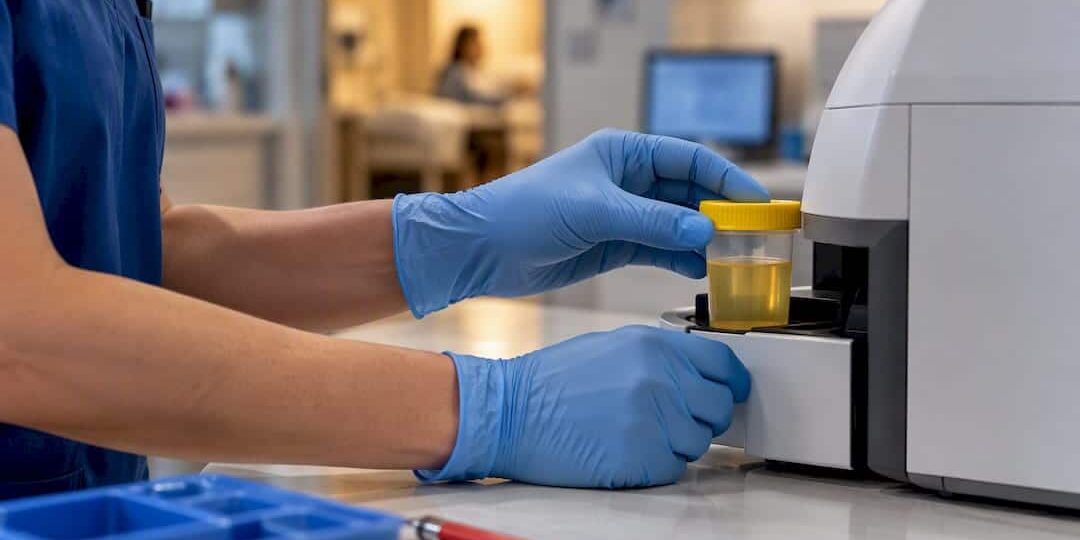
Yes, urgent care can test you and treat most uncomplicated UTIs the same day. A urinalysis usually confirms infection within minutes, and clinicians commonly prescribe antibiotics on the spot. The exceptions are pregnancy, a fever above 102°F, severe flank pain, or a weakened immune system, all of which need closer or hospital-level evaluation. Walk-in visits are typically fastest, and your clinic can adjust treatment if a urine culture comes back different.
TL;DR:
- Most uncomplicated UTIs can be diagnosed and treated on the same day with rapid urinalysis results within 15 to 30 minutes, while urine cultures take 24 to 48 hours if needed.
- About one-third of outpatient antibiotics prescribed for UTIs may be unnecessary, highlighting the importance of on-site testing to confirm infection before treatment.
- Urgent care is suitable for initial UTI treatment, but symptoms like high fever, severe back pain, or pregnancy require emergency room evaluation for potential kidney infection or sepsis.
- Telehealth is less effective for a first UTI diagnosis, whereas walk-in clinics offer faster, on-site testing and same-day antibiotic prescriptions for most cases.
- Bringing personal medication history, recent antibiotics, and symptom notes can streamline diagnosis and treatment during urgent care visits.
Table of Contents
- What Happens During a UTI Urgent Care Visit
- What Antibiotics Treat UTIs, and When Cultures Change the Plan
- When a UTI Needs the Emergency Room, Not Urgent Care
- Walk-In, Same-Day Appointment, or Telehealth: Which Is Fastest?
- What to Bring to Your UTI Visit
- Can You Manage UTI Symptoms at Home While You Wait?
- How Your Family Walk-In Clinic Approaches Same-Day UTI Care
- Book Same-Day UTI Care at Your Family Walk-In Clinic
- Sources
- FAQ
What Happens During a UTI Urgent Care Visit
Walking into an urgent care for UTI symptoms follows a predictable rhythm, and knowing it ahead of time takes some of the anxiety out of the visit.
You’ll check in, describe your symptoms, and give a brief history: when the burning or urgency started, whether you’ve had UTIs before, and any recent antibiotic use. Staff will take your vitals and hand you a specimen cup for a clean-catch urine sample, which means wiping first and collecting mid-stream urine to avoid contamination from skin bacteria.
From there, the timeline moves fast:
- Urinalysis: results in roughly 15 to 30 minutes, checking for white blood cells, bacteria, blood, and nitrites in the urine.
- Urine culture: sent to a lab if your case is complicated, recurrent, or not responding to typical antibiotics, with results back in 24 to 48 hours.
- Prescription decision: most clinicians start antibiotics based on the urinalysis and your symptoms alone, without waiting on the culture, since most uncomplicated UTIs respond predictably to first-line treatment.
If your symptoms are unusual or you’ve had multiple infections this year, the clinician may wait for culture confirmation before choosing your antibiotic. Some patients also receive a short-term prescription for phenazopyridine, a urinary analgesic that calms burning and urgency. It does not clear the infection itself and will turn your urine orange or red, which is expected and harmless. Think of it as symptom control while the antibiotic does the actual work.
What Antibiotics Treat UTIs, and When Cultures Change the Plan
Most uncomplicated UTIs respond to a short course of one of a handful of well-established antibiotics. Your clinician’s choice depends on your history, allergies, and local resistance patterns, not a one-size formula.
Common options include:
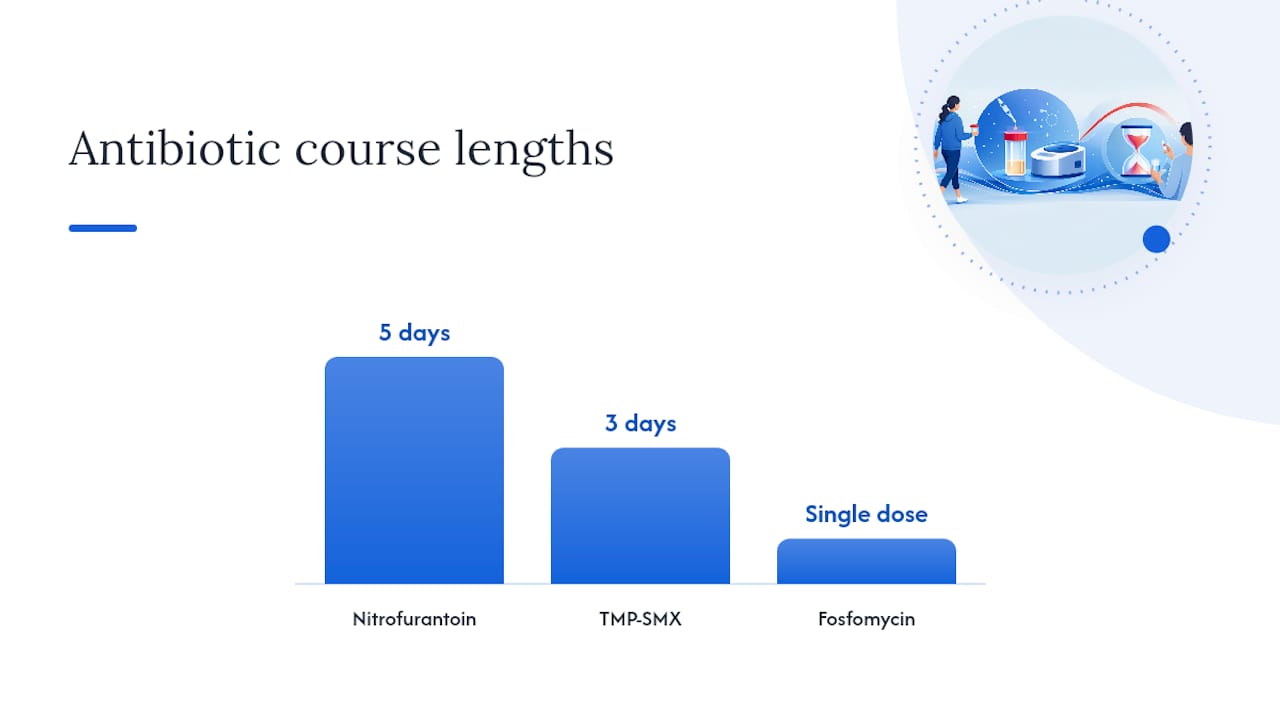
- Nitrofurantoin, typically taken for five days
- Trimethoprim-sulfamethoxazole, often a three-day course where local resistance is low
- Fosfomycin, notable for being a single-dose treatment
- Cephalexin, sometimes used for pregnant patients or when other options aren’t suitable
A JAMA Network Open study found roughly one in three outpatient antibiotic courses prescribed for suspected UTIs may be unnecessary. That’s the core argument for testing before treating: on-site urinalysis lets your clinician confirm an actual infection rather than prescribing on symptoms alone, which cuts down on antibiotics that don’t help and do carry resistance risk.
This is where urine culture earns its place. If your urinalysis is ambiguous, your infection keeps recurring, or you don’t improve on the first antibiotic, the 24 to 48 hour culture result tells the clinic exactly which bacteria you’re dealing with and which drugs will actually work against it.
Most people notice real improvement in 24 to 48 hours on the right antibiotic. Finish the full course even after symptoms fade. If nothing has changed by day three, that’s your signal to call the clinic back rather than wait it out.
When a UTI Needs the Emergency Room, Not Urgent Care
Most UTIs are uncomfortable, not dangerous. But certain symptoms mean the infection may be moving toward your kidneys or bloodstream, and that changes everything about where you should go.
- High fever, generally above 102°F to 103°F, especially with chills
- Severe flank or back pain, which can signal the infection has reached a kidney
- Persistent vomiting that prevents you from keeping fluids or oral antibiotics down
- Confusion or sudden disorientation, particularly in older adults
- Visible blood or heavy bleeding in your urine
- Pregnancy with any UTI symptoms, since infections can progress faster and risk the pregnancy
- A compromised immune system, from conditions like diabetes or cancer treatment, or a recent urinary catheter or procedure
These signs point toward pyelonephritis (kidney infection) or sepsis, both of which need IV antibiotics, imaging, and monitoring that only a hospital can provide. If any of these apply to you, skip urgent care and go straight to the ER. For everyone else, urgent care remains the appropriate first stop for a suspected UTI, and it’s also worth knowing that when to seek urgent versus specialist care generally comes down to the same question: is this a symptom your body can wait out or one that’s escalating fast?
Walk-In, Same-Day Appointment, or Telehealth: Which Is Fastest?
For a first UTI or new symptoms, walking into urgent care beats telehealth. A clinician can examine you and run an actual urinalysis on the spot, not just take your word for it. Telehealth works reasonably well for a repeat infection with a familiar symptom pattern, but it can’t confirm what’s actually in your urine.
- Walk-in urgent care: fastest option, on-site testing, typically same-day antibiotics if warranted
- Scheduled same-day visit: useful if you want to guarantee a specific time slot during busy hours
- Telehealth: reasonable for recurrent, clearly-patterned UTIs; not ideal for a first episode
- Emergency room: reserved for the red flags covered above, at a higher cost and longer wait for non-emergent cases
Urgent care clinics tend to run evening and weekend hours that primary care offices don’t, and treating a UTI at urgent care is consistently faster and less expensive than an ER visit for anything short of the warning signs above. Most insurance plans treat urgent care visits as a standard copay tier, well below ER cost-sharing. If you’re uninsured, ask about self-pay pricing before you’re seen so there are no surprises at checkout.
What to Bring to Your UTI Visit
A few minutes of prep before you leave the house makes your visit faster and your treatment more accurate.
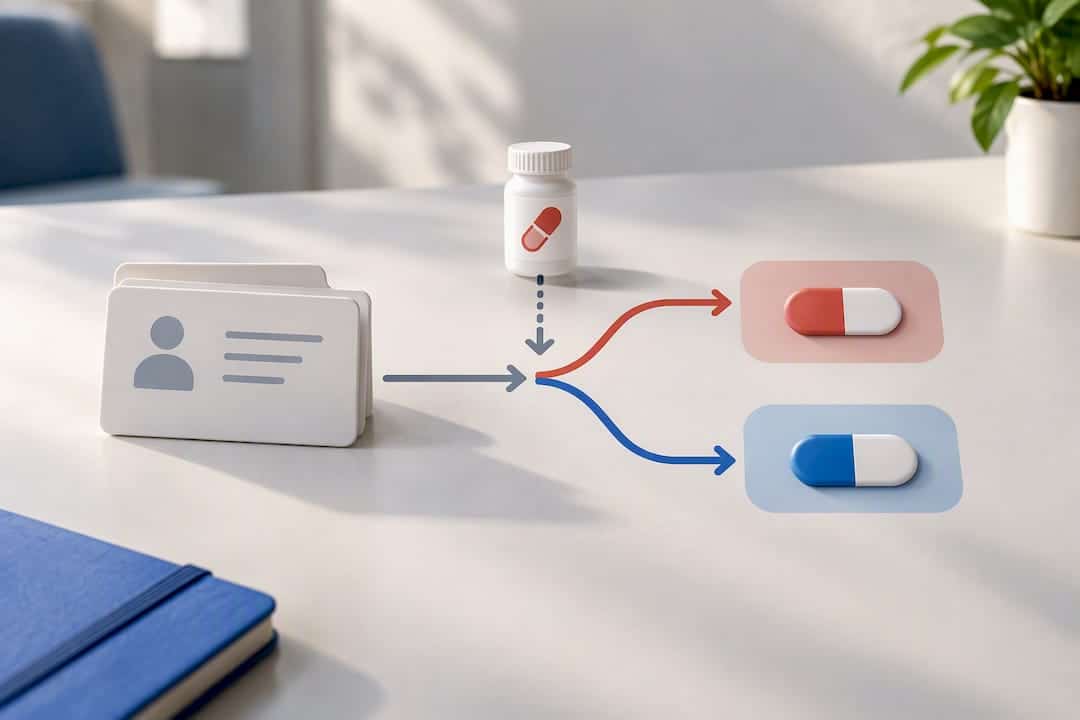
- Photo ID and insurance card, if you’re using insurance
- A list of current medications and any drug allergies
- Notes on when symptoms started and how they’ve changed
- Any history of recent antibiotic use or recurrent UTIs
Once you’re with the clinician, ask directly: “Do I need a urine culture?” “Which antibiotic am I getting, and why this one?” “When should I expect to feel better?” and “What symptoms mean I should come back or go to the ER?”
Pro Tip: Mention recent antibiotic use even if it feels unrelated. A course you finished three weeks ago for a sinus infection can shift which UTI antibiotic will actually work for you.
Can You Manage UTI Symptoms at Home While You Wait?
Drinking water and urinating frequently helps flush your bladder and can ease mild discomfort, but it will not cure a bacterial infection on its own. Over-the-counter phenazopyridine can dull the burning and urgency in the meantime, the same short-term relief clinicians sometimes prescribe.
- Drink water steadily throughout the day rather than large amounts at once
- Urinate as soon as you feel the urge instead of holding it
- Use a urinary analgesic for symptom relief, not as a substitute for antibiotics
- Avoid delaying care if symptoms worsen or don’t improve within a day
Cranberry products and probiotics get a lot of attention online, but the evidence behind them is limited and leans toward modest prevention benefits at best, not treatment. Neither replaces antibiotics once an infection has taken hold. If you suspect a UTI, home care can make you more comfortable, but it’s not a substitute for getting tested.
How Your Family Walk-In Clinic Approaches Same-Day UTI Care
A walk-in clinic open seven days a week, from 8 AM to 8 PM, can provide care for UTIs without waiting until the next weekday. On-site urinalysis and lab work often allow diagnosis and prescription in a single visit. When red-flag symptoms appear, patients are referred to the ER rather than treated onsite. If a urine culture result requires it, staff follow up to adjust the antibiotic. Insurance and self-pay options are handled at check-in for convenience.
— Lisa
Book Same-Day UTI Care at Your Family Walk-In Clinic
If you’re dealing with burning, urgency, or pelvic discomfort right now, you don’t need to wait days for an appointment. Your Family Walk-In Clinic offers same-day UTI testing and treatment with on-site urinalysis, so you leave your visit with an answer instead of a guess.

Walk in during clinic hours or book online ahead of time; either way, most patients are seen, tested, and started on treatment within the same visit. The clinic runs seven days a week, including evenings and weekends, and accepts major insurance plans along with self-pay pricing for those without coverage. If you’re pregnant, running a high fever, or experiencing severe back pain, call ahead or head straight to the emergency room instead. For everyone else, visit the urgent care page to see today’s hours and get started.
Sources
- JAMA Network Open study on outpatient UTI antibiotic use
- When to go to the hospital for a UTI (Healthline)
- Urinary tract infections – MedlinePlus
- Bladder infection (urinary tract infection) in adults – NIDDK
FAQ
Is It Okay to Go to Urgent Care for a UTI?
Yes, urgent care is an appropriate first stop for most UTI symptoms, especially when you can’t get a same-day appointment with your primary care provider. Clinicians can run a urinalysis and prescribe antibiotics in one visit, reserving the ER for red-flag symptoms like high fever or severe flank pain.
How Do You Flush Out a UTI as Fast as Possible?
Drinking water and urinating frequently helps flush bacteria from your bladder, but hydration alone doesn’t clear a bacterial infection. Getting tested and starting the right antibiotic is the fastest way to actually resolve a UTI, with most people feeling noticeably better within 24 to 48 hours.
How Quick Is a UTI Test at Urgent Care?
A urinalysis at urgent care typically takes about 15 to 30 minutes to produce results. If your case needs a urine culture for a more precise diagnosis, that result takes 24 to 48 hours, though treatment often starts before the culture comes back.
Can a UTI Go Away Without Seeing a Doctor?
A mild UTI occasionally resolves on its own, but relying on that is risky since untreated infections can progress toward the kidneys. If you suspect a UTI, testing at a clinic like Your Family Walk-In Clinic confirms the diagnosis and gets you on the right antibiotic before it worsens.