


Yes. Florida law lets minors of any age consent to STI and HIV testing and treatment, and it restricts sharing that care with parents in most cases, under Florida Statute 384.30. In health care settings, HIV testing follows an opt-out model: you are told a test is planned and may decline. The real privacy risk is often an insurance statement mailed to the policyholder.
TL;DR:
- At clinics, staff must tell you an HIV test is planned and that you may decline; community testing sites require counseling and documented consent.
- Using a parent’s insurance can trigger an Explanation of Benefits listing services and dates; paying yourself or testing anonymously avoids that billing trail.
- Confidential tests create a named medical record, while anonymous tests do not; county health departments maintain lists of anonymous HIV testing sites.
- Before booking, ask which phone or email will receive results, whether statements are mailed, and whether you can speak with the provider alone.
- Privacy has exceptions: providers must report suspected child abuse or neglect, and courts can order records released; ask clinics how they handle messages and billing.
Table of Contents
- What does Florida law say about minors consenting to STI testing?
- How do consent and testing work in clinics versus other settings?
- What are the limits to confidentiality?
- How can you protect your privacy when getting tested?
- Where can you find confidential or anonymous testing in Florida?
- Why confidentiality practices matter, and how clinics should support teens
- Your Family Walk-In Clinic can help with confidential testing
- FAQ
- Sources
What does Florida law say about minors consenting to STI testing?
Two statutes do most of the work here. The first is s. 384.30. Under that law, minors of any age may consent to examination and treatment for sexually transmissible diseases, including HIV, without the permission or knowledge of a parent or guardian. The statute also prohibits disclosing the fact of the minor’s consultation or treatment to parents or guardians in most cases. In practical terms, Florida treats a minor like an adult for this one purpose.
The second is s. 381.004, which governs HIV testing. Section 381.004 says that before an HIV test is performed in a health care setting, the person must be told the test is planned and must be told they have the right to decline. The same section requires county health departments to maintain lists of anonymous testing sites, and it names a limited set of exceptions to the usual confidentiality and consent rules.
Florida’s Department of Health also publishes model protocols that turn these statutes into day-to-day procedure. The Model Protocol for HIV Counseling and Testing in Non-Health Care Settings describes how counseling and testing should work across settings. It covers pre-test counseling, documentation of informed consent outside health care settings, and the maintenance of anonymous testing lists. Think of the statutes as the rules and the protocols as the playbook that clinics and outreach programs follow.
Confidential versus anonymous testing
These two words sound similar, but they mean different things.
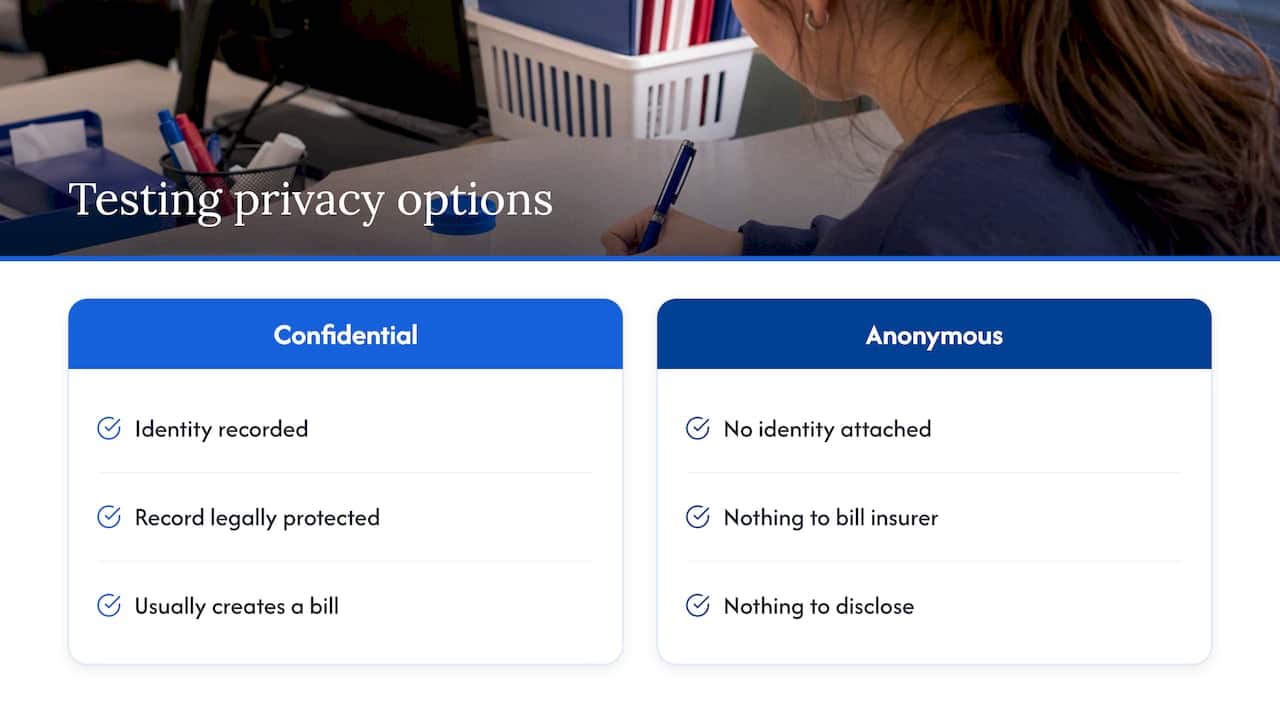
Confidential testing means the clinic knows who you are. Your name is in a medical record, and the law restricts who can see it. Florida’s Omnibus AIDS Act goes further for HIV, treating those records as “superconfidential” and attaching strict penalties to unauthorized disclosure.
Anonymous testing means your name is not attached to the test at all. Because there is no identity on file, there is nothing to bill to an insurer and nothing to disclose.
Anonymous HIV testing is the option that removes the paper trail. Confidential testing is protected by law, but it still creates a record and, usually, a bill. Knowing which one you are choosing helps you decide how much privacy you need.
Age and parental consent in Florida
For STI and HIV testing specifically, there is no minimum age in the statute and no parental consent requirement. A parent’s permission is not needed, and the law restricts the clinic from telling the parent. Other kinds of medical care for minors follow different rules, so this protection should not be assumed to extend to every service. If you are a parent, it helps to know that a clinician who keeps this visit private is following the law, not hiding something from you.
How do consent and testing work in clinics versus other settings?
What you experience at the appointment depends on where you go.
Health care settings: opt-out testing
In a clinic, urgent care or doctor’s office, Florida does not require written informed consent for an HIV test. According to the Florida Department of Health’s provider guide, patients must be told orally or in writing that the test is planned, and they have the right to decline. A general consent form for medical care can be enough to cover HIV testing in these settings.
In practice, this often sounds like a brief statement: “We include an HIV test with your other labs unless you tell us you don’t want it.” You do not have to sign a separate HIV form, and you can say no. Saying no should not change how the rest of your visit goes.
Non-health-care settings: informed consent
Outreach events, community testing programs and similar sites are treated differently. The model protocol describes a more involved process there. Staff provide pre-test counseling, explain how confidentiality is protected, tell you that anonymous testing is available, and document your informed consent. Expect a few more minutes and a bit more paperwork than at a clinic.
How consent or refusal gets documented
In a medical office, your consent or your decision to decline is typically noted in your record. Because HIV information is treated as superconfidential, access is limited and the penalties for improper release are serious. The practical takeaway: a note in your chart is not an open door for parents, employers or anyone else without a legal basis.
What you will hear and be asked at intake
Whether it is a clinic or a community site, a typical visit includes:
- A statement that an HIV test is planned and that you can decline
- Questions about your symptoms, your recent exposures and why you are coming in
- A request for contact information so the clinic can reach you with results
- A conversation about what happens if a test is positive, which can include partner services
It is fair to ask early on how results will be shared and who can see them. Good clinics expect that question and answer it plainly.
What are the limits to confidentiality?
Florida law protects your care, but the law cannot control everything that happens around it. Knowing the gaps lets you plan around them.
Insurance statements are the biggest practical risk
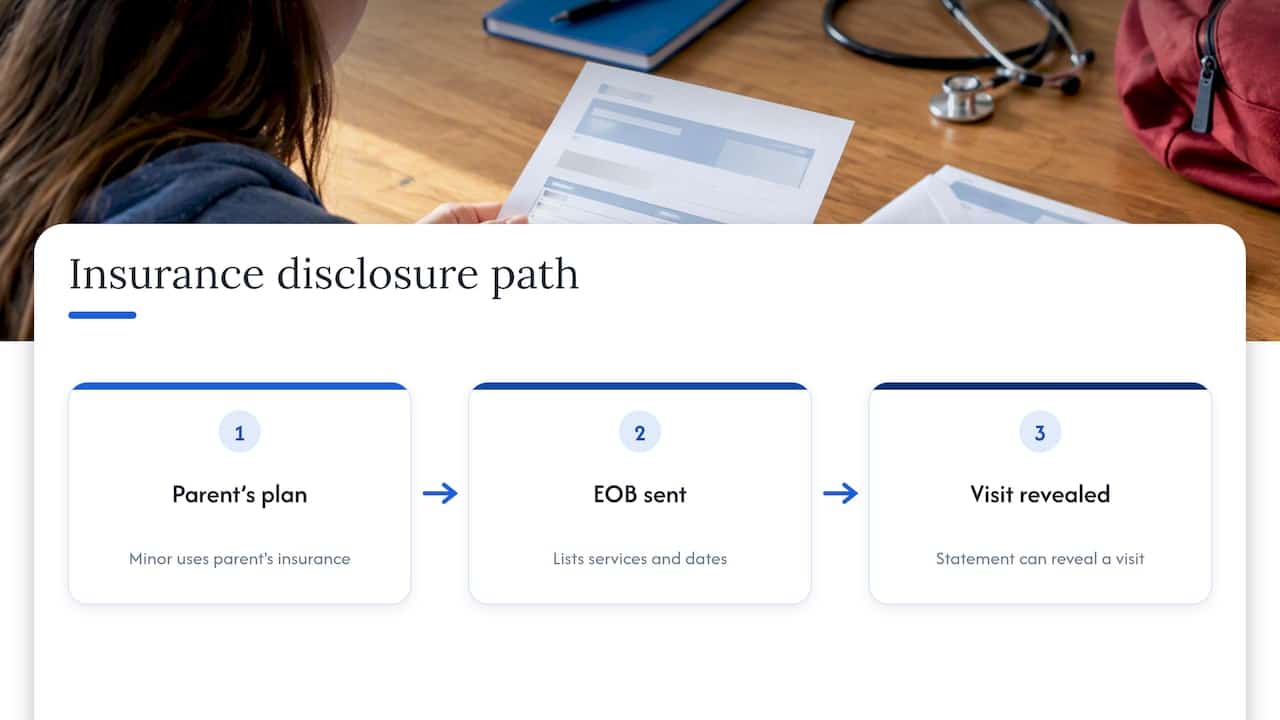
If you are a minor covered under a parent’s health plan, the insurer may send an Explanation of Benefits, usually called an EOB, to the policyholder. An EOB lists services and dates. Even when the clinical record is fully protected, that mailed statement can reveal a visit. A CDC content analysis found that fear of parents learning about a visit through insurance statements is a primary barrier for teens seeking STI services. The same analysis found that many clinic and public websites explained billing-related breaches inconsistently, and that their advice to verify confidentiality was often incomplete.
Our own walk-in clinic guidance on limiting insurance disclosure for minors makes the same point: using a parent’s insurance can inadvertently disclose a visit, which is why some patients pay out of pocket or choose anonymous options.
Legal exceptions
Statutory confidentiality has limits. The most common exceptions include:
- Mandatory reporting. Suspected child abuse or neglect must be reported, regardless of the reason for the visit.
- Court orders and subpoenas. A judge can order records released.
- Limited exceptions inside s. 381.004. The statute lists specific situations where HIV information may be released, and they are narrow.
Outside these situations, providers are prohibited from sharing medical information about an STI or HIV visit with parents.
Administrative messages versus the medical record
The legal protection attaches to your medical information. It does not automatically cover everything a clinic or insurer sends out. Appointment reminders, billing statements, patient portal notifications and phone calls to the number on file are administrative communications. They can slip through even when the chart itself is locked down.
How inadvertent breaches happen
Realistic examples include:
- A reminder text sent to a parent’s phone because it was the number on the account
- A billing statement mailed to the family address
- An EOB listing a lab panel by name
- A receptionist leaving a detailed voicemail on a shared line
None of these involve anyone breaking the law on purpose, which is exactly why verifying practices ahead of time matters. A quick phone call about how a clinic handles billing and contact is worth more than assuming everything is covered.
Confidentiality in other care settings
Confidentiality rules differ by type of care, so it helps to understand the general picture. This partner explainer on therapy confidentiality walks through what clients can expect and when confidentiality does not apply, a useful comparison if you are weighing several kinds of health care at once.
How can you protect your privacy when getting tested?
A few choices before and during your visit can close most of the gaps described above.
Payment and billing
Paying out of pocket may help avoid an insurance claim and an EOB. Ask the clinic how its billing and communication practices work. Clinics with sliding-fee schedules can make that affordable, and our overview of sliding fee clinics in Florida explains how the savings can add up. Ask whether the clinic uses generic billing descriptors if you do use insurance.
What to ask when you call
Sample questions that get straight answers:
- “Do you offer confidential STI testing for minors without a parent present?”
- “How do you bill, and will anything be mailed to the policyholder?”
- “Can I spend part of the visit alone with the provider?”
- “Which phone number or email will you use for results and reminders?”
Time alone with a provider matters. CDC data show that confidentiality concerns reduce teens’ use of sexual and reproductive health services, and that spending time alone with a provider makes it more likely they receive services like STI testing.
Insurance steps
If you do plan to use a parent’s plan, call the insurer first. Ask whether you can request confidential communications, whether EOBs can be sent electronically to a different account, or whether certain services can be excluded from mailed statements. Policies vary, so get the answer for your specific plan.
When anonymous testing fits
Anonymous testing works because nothing links your name to the result, so there is no bill to trace. If a result is positive, ask the testing provider what follow-up care and treatment options are available. That is a normal next step, and it remains protected by the confidentiality rules above.
Pro Tip: Before you book, confirm four things: which phone number they will use, how they bill, whether you can see the provider alone, and how results are delivered.
Your pre-visit checklist
- Choose your payment method before the visit
- Give a contact number that only you can answer
- Ask for time alone with the provider
- Ask how and when you will receive results
Where can you find confidential or anonymous testing in Florida?
Different kinds of sites offer different tradeoffs. Here is how the main options compare.
- County health departments. By law, each county health department maintains a list of anonymous HIV testing sites, per s. 381.004. This is the best starting point if anonymity is your priority.
- Community health clinics and sexual health programs. These tend to offer confidential services and often have sliding-fee options, which helps if you want to pay out of pocket.
- Urgent care and primary care clinics. They offer confidential testing and often same-day access. The billing risk described earlier is the thing to manage here.
- Mobile and outreach testing. Events and mobile units are often anonymous and follow the non-health-care-setting process in the model protocol.
Weighing the tradeoffs
Anonymity gives you the strongest privacy, but you may not get follow-up care at the same place. A clinic gives you continuity: the same team can test, treat and recheck. Speed matters too. Availability varies by site, so contact the provider or health department to ask about appointment options. Cost varies widely, and sliding fees can narrow the gap between free community options and a standard clinic visit.
How to find a local anonymous site
Start with your county health department’s website or phone line and ask for its anonymous testing list. The state health department also publishes testing resources. When you call any clinic, ask what kind of record is created, how they bill, and whether testing can be done without insurance. If you are unsure which tests you need, our guide to STD panel tests explains what is typically included, and our page on the testing window period helps you time a test so the result means something.
Why confidentiality practices matter, and how clinics should support teens
A teen who worries about being found out may simply skip testing, and an untreated infection is far worse than an awkward appointment. We think the right response from a clinic is to make privacy easy to ask about. That means being willing to talk through billing, offering time alone with the provider as a normal part of the visit, and answering questions without judgment. We do not promise what the law and insurers control, but we can be honest about where the gaps are and help you work around them.
If you are a parent, this protection is not a vote against you. It exists because teens who feel safe seeking care get tested and treated sooner. The best thing you can do is keep the door open at home, and make sure your teen knows where to go.
— Lisa
Your Family Walk-In Clinic can help with confidential testing
If you are in the Lutz and Tampa area, we offer STD screening and treatment for adults and teens, with appointments and extended hours at our clinic.
- STD screening and treatment
- Lab work
- Appointments available
- Check our website or call for current hours
When you call or book, ask us how we handle billing and privacy, and ask about time alone with the provider. Those are questions we expect. You can also see our urgent care page for hours and same-day access. Call today, and we will walk you through your options.
This article is general information, not a substitute for advice from a qualified doctor. Consult a qualified healthcare professional about your own circumstances before acting on anything here.
FAQ
Can a minor get STD testing in Florida without parental consent?
Yes. Florida law lets minors of any age consent to examination and treatment for sexually transmissible diseases, including HIV, under s. 384.30. Providers are generally prohibited from telling parents about the visit.
Does HIV testing in Florida require written consent?
Not in health care settings. According to the Florida Department of Health’s provider guide, patients must be told the test is planned and can decline, and a general medical consent form can be enough. Non-health-care sites use a documented informed consent process.
Can my parents find out through insurance?
They can. If you use a parent’s plan, an Explanation of Benefits may be mailed to the policyholder and list the service. Paying out of pocket or choosing anonymous testing avoids that risk.
What is the difference between confidential and anonymous testing?
Confidential testing records your name in a protected medical record. Anonymous testing does not attach your name to the test at all. Each county health department keeps a list of anonymous HIV testing sites.
Sources
- Flsenate
- Chapter 381 Section 004 – 2025 Florida Statutes – The Florida Senate
- Model Protocol for HIV Counseling and Testing in Non-Health Care Settings
- “Is It Really Confidential?” A Content Analysis of Online Information About Sexual and Reproductive Health Services for Adolescents