

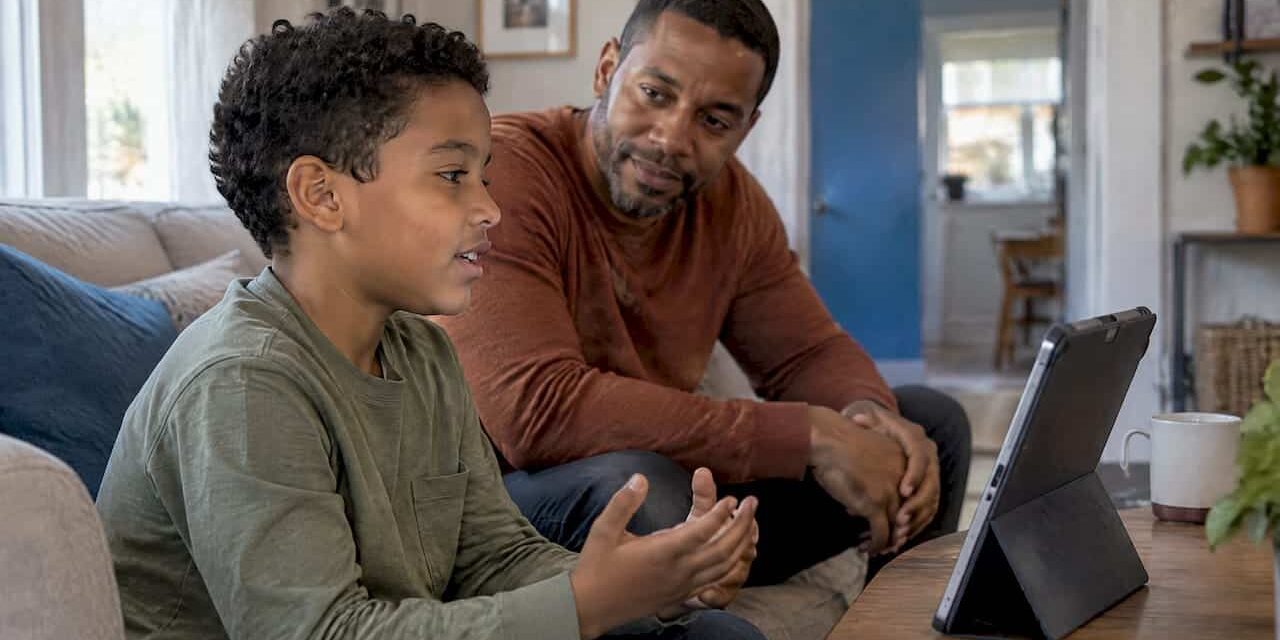
Teletherapy for kids is therapy delivered through a secure video visit instead of an office visit. Your child sees and talks with a licensed clinician on a screen from home, while you stay nearby. For many children it works well, especially for talk-based counseling, and it can save your family the drive and the waiting room. It is not right for every child or every problem, and a good provider will tell you so. This guide explains how sessions work, what the research says, how to get your child ready, and when to choose an in-person visit.
TL;DR
- Teletherapy is a live video session with a licensed clinician. It can cover behavioral health counseling and, with other providers, speech, occupational or physical therapy.
- A responsible adult should be with a younger child during the visit, and the space should be as private as you can make it.
- Research suggests telepsychotherapy can be as effective as in-person therapy for many concerns, but some situations call for face-to-face care.
- A little preparation (a test login, a quiet spot, a simple explanation for your child) makes the first session much easier.
- We offer both in-office and virtual therapy for adults and children in Lutz, Florida, and accept major insurance plans, Medicaid and self-pay.
Table of Contents
- What teletherapy for kids means
- How a teletherapy session works
- How therapists keep kids engaged on a screen
- What the research says about effectiveness
- Benefits for families
- Limits to know about
- How to prepare your child, step by step
- When in-person care is the better choice
- Our perspective
- Virtual and in-office therapy at our Lutz clinic
- Questions to ask any provider before the first session
- FAQ
- Sources
What teletherapy for kids means
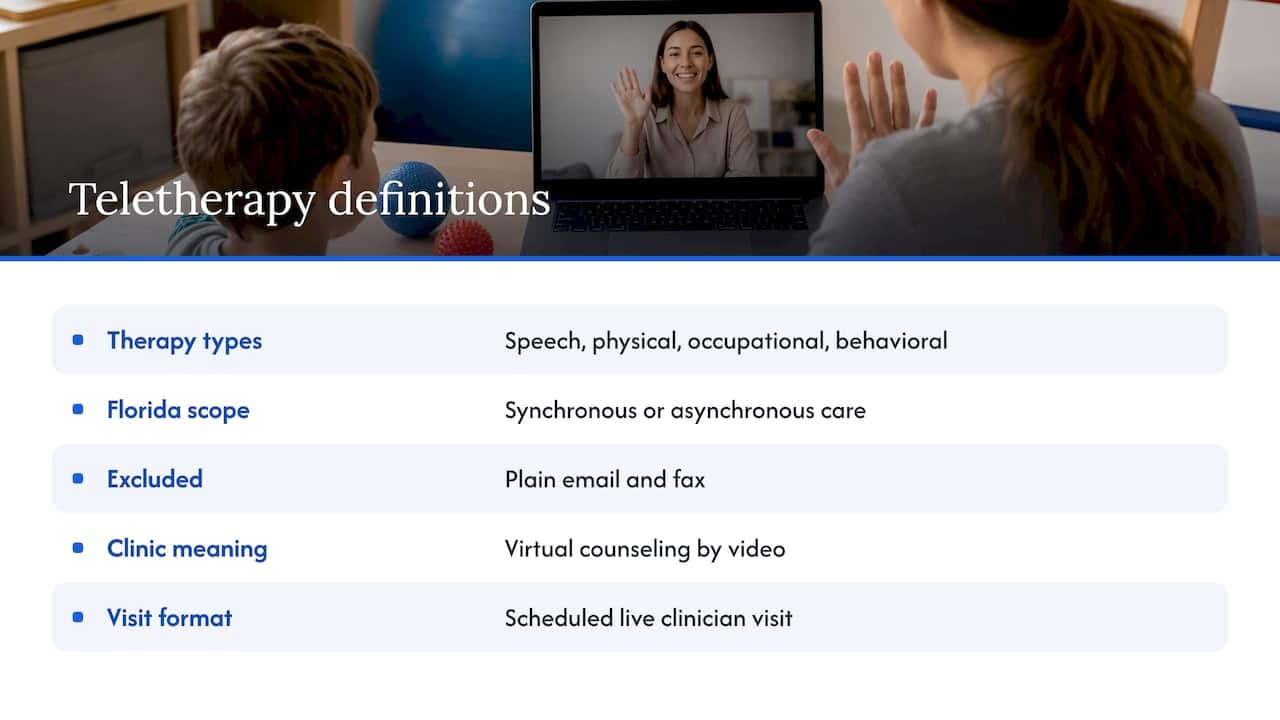
The word covers more than one thing. In pediatric care, teletherapy generally means speech, physical, occupational or behavioral therapy delivered through secure video sessions with licensed pediatric therapists. The profession changes, but the format is the same: a scheduled, live visit with a clinician on screen.
Florida law defines telehealth broadly, as the use of synchronous or asynchronous telecommunications technology to deliver care, and it excludes plain e-mail messages and fax. So a series of emails with a counselor is not what most clinics mean by teletherapy. A real-time video visit is.
At our clinic, teletherapy means virtual counseling sessions, the same kind of therapy we offer in the office, delivered by video. If you are weighing which type of counseling suits your child’s age, our guide to matching child therapy types to your child’s age and your role is a good companion to this article.
How a teletherapy session works
Here is what a typical virtual visit looks like from your side of the screen.
- Booking and paperwork. You schedule the visit and complete intake forms before the first session. Our new-client counseling packet is available as a downloadable PDF.
- A link and a test. You receive instructions to join by video. Log in a day early if you can, so a camera or password problem does not eat into session time.
- The session itself. Your child and the therapist see, hear and talk to each other in real time. Younger children often spend part of the visit with you beside them. Older children and teens may spend more of it talking alone with the therapist, with a parent nearby.
- Follow-up. The therapist shares what was covered, suggests things to practice between visits, and plans the next session.
What your role is
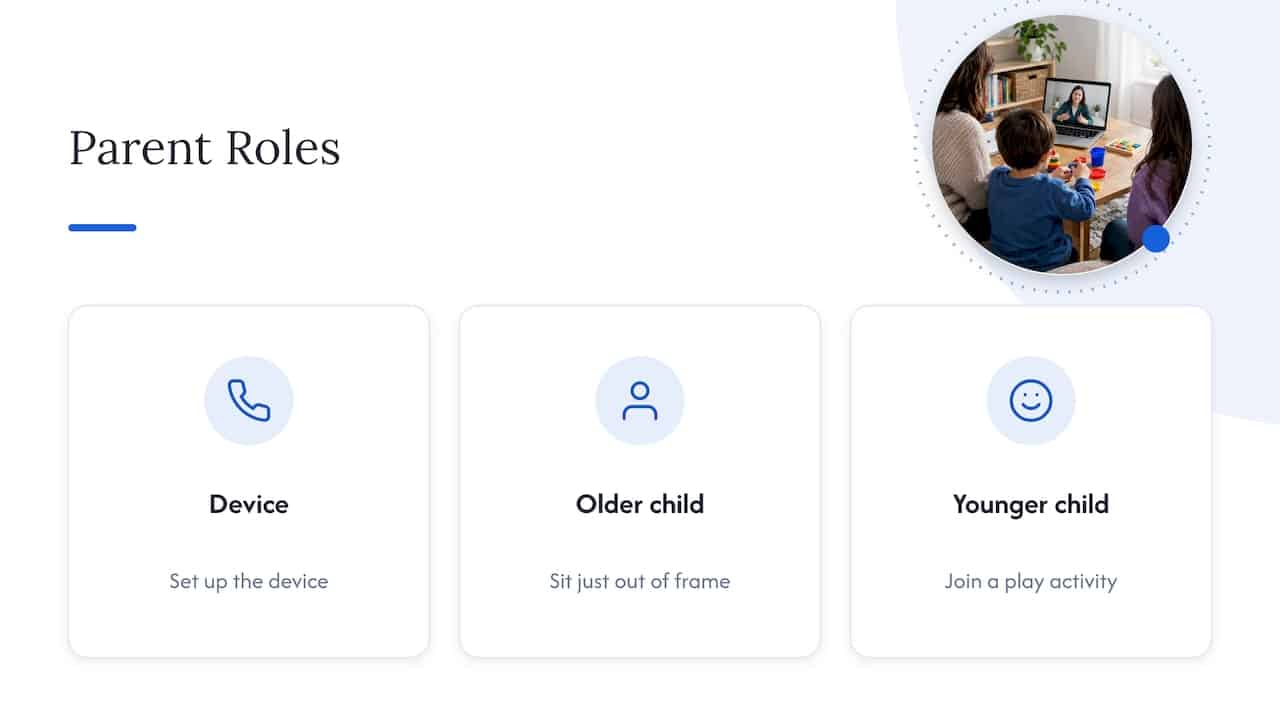
The American Academy of Pediatrics’ parent site says that, except in special situations where a child can legally consent to their own care, a responsible adult should be with the child during a telehealth visit. The same page says the patient and provider should be in as private an area as possible.
In practice, that means you are the child’s helper, not an audience member. You might set up the device, sit just out of frame for an older child, or join in a play activity with a younger one. Your therapist will tell you which fits your child.
Teens are a different case. Consent and privacy rules shift as children get older, and we cover them in detail in what to know before booking online therapy for teens and in our Florida guide on therapy for minors and who can see records.
How therapists keep kids engaged on a screen
The most common worry we hear from parents is simple: will my seven-year-old really sit still for a video call? Therapists who work with children do not expect them to. Sessions are built around activity, not conversation alone.
Common approaches include:
- Drawing and shared whiteboards. The therapist and child draw feelings, a worry, or a favorite place on a shared screen, then talk about the picture.
- Games over screen share. Board-style games, puzzles and spinners can be played digitally. Turn-taking and handling a loss become practice for frustration tolerance.
- Storytelling and puppets or toys. Children act out a situation with stuffed animals or figures from their own room, which keeps the session familiar and comfortable.
- Movement breaks. A short stretch, a dance, or a quick scavenger hunt for something blue in the house resets attention.
- Show and tell from home. Children can introduce a pet, a toy or a drawing. Home is where the child’s real routines happen, so the therapist sees more of them.
Practitioners who write about this describe the same toolkit: drawing-based games, virtual sand trays, puzzles, spinners and whiteboard prompts used to build communication and coping skills. We mention it so you know what to expect, not because every session looks alike. Your child’s therapist will choose activities that fit your child’s age and personality.
What the research says about effectiveness
Parents reasonably ask whether a video visit is as good as sitting in the same room. The evidence so far is encouraging, with limits.
- A review of telepsychotherapy with children and families notes that research suggests it may be just as effective for many diagnoses and therapeutic issues as traditional psychotherapy.
- A 2020 pilot study in the Journal of Psychotherapy Integration found that trauma-focused cognitive behavioral therapy delivered by telepsychotherapy in homes or schools produced clinically meaningful symptom change.
The word to notice is many. These findings do not say video works for every child or every condition. A child in an unsafe situation, a child whose symptoms are severe, or a child who cannot engage with a screen at all may need face-to-face care. We come back to this below.
Benefits for families
The benefits we see most often in Lutz and the Tampa area are practical ones.
- Less travel. No school pickup rush, no drive through traffic on a weekday afternoon, no waiting room.
- A comfortable setting. Many children open up more in their own room, with a pet on the bed, than in an unfamiliar office.
- Parent involvement. A therapist can watch how a child and parent interact in the home, and coach you on the spot in strategies you can use in daily routines.
- Access. The AAP notes telehealth can provide care at times and in places families may not usually be able to reach it. That matters when a parent works shifts or a child has a packed school and activity schedule.
- Continuity. A cold, a family trip or a rainy day does not have to cancel a session.
Limits to know about
Virtual therapy has trade-offs, and we would rather you hear them from us.
- Technology problems. A weak connection can break up a session. A shared tablet or a noisy home can make focus harder.
- Privacy at home. If siblings, roommates or thin walls make a private conversation hard, your child may hold back. Headphones, a white noise machine or a car parked in the driveway sometimes help.
- Hands-on needs. Some care needs an exam or testing. The AAP’s guidance is that needed tests and exams should still take place, and providers should refer for face-to-face care when needed.
- Very young children. Toddlers and preschoolers often do better with a caregiver-led approach, where the therapist coaches you, than with direct work through a screen.
How to prepare your child, step by step
The American Academy of Pediatrics advises parents to practice logging on to the platform, check that equipment works, and explain to the child what to expect, possibly using visual schedules or social stories. That advice is written for children with autism, but it helps any child who does better with predictability.
Our checklist:
- Test the setup. Check camera, microphone, speakers and Wi-Fi. Charge the device, and close other apps.
- Pick the spot. A table or floor space with good light, a closed door, and nothing distracting behind the child.
- Explain it in plain words. For example: you will talk with a helper named (therapist’s first name) on the screen. She can see and hear you, and you can play and draw together. You do not have to be perfect.
- Have materials ready. Paper, markers, a favorite stuffed animal. Ask the therapist if anything specific is needed.
- Plan for a snack and a bathroom trip before the session starts, and a calm activity afterward.
- Gather your questions. Write down what you want to tell the therapist about sleep, school, mood and changes at home, so you do not forget in the moment.
For a fuller walk-through of the day-of details, see our practical checklist for preparing for online therapy. If you also want to organize your child’s records and questions for the visit, this guide on how to prepare a telemedicine visit step by step is a handy way to get your paperwork in order.
When in-person care is the better choice
Video is a good fit for many families. It is not a substitute for a medical evaluation, and the AAP says telehealth should not replace a child’s pediatrician. The same page says that when a visit is with someone other than the pediatrician, the provider should send the pediatrician information about the visit, including any needed follow-up.
Consider in-person care, or tell your therapist right away, if:
- Your child talks about hurting themselves or someone else. In a crisis, call or text 988 (the Suicide & Crisis Lifeline) or call 911. Do not wait for a scheduled session.
- Your child has physical symptoms along with the emotional ones, such as a fever, pain, or sudden changes in eating or sleeping. Our guide to when a child’s fever needs urgent care can help you decide.
- Your child cannot stay engaged with a screen after a few tries, even with changes to the setup.
- Home is not a safe place to talk openly.
If you are not sure whether your child needs therapy at all, start with the signs that it is time to seek help for your child.
Our perspective
We see two kinds of parents asking about virtual therapy. Some are relieved they can fit care into a busy week. Others worry it will feel like second-best. Our view is that the format matters less than the fit. A child who feels safe with a therapist will usually do the work, on a screen or on a couch. A child who does not will struggle in either place.
So we start with a conversation, not a rule. We ask about your child’s age, what is going on, how comfortable they are with devices, and what your home is like during the day. Then we recommend virtual, in-office, or a mix. If a child needs a medical exam, we can also see them in our walk-in clinic for urgent care, immunizations or a physical, so mental and physical health are not split across places that never talk to each other.
Our team has more than 25 years of combined experience caring for families, and that shapes how we work: plain explanations, no judgment, and no pressure. Asking for help for your child is a good parenting decision.
— Lisa
Virtual and in-office therapy at our Lutz clinic
We offer therapy and counseling for adults and children, in the office and by virtual session. You can read about our therapist and how to reach us on our therapy page, or call (813) 793-8555.

We accept major health insurance plans and Medicaid, and we also see self-pay patients. If you are using Medicaid, our five-step guide to verifying Florida Medicaid therapy coverage shows what to check first. For everything else we offer, from physicals to lab work, see our services page.
Questions to ask any provider before the first session
Before you book, whether with us or anyone else, ask:
- Is the clinician licensed in Florida, and do they work with children your child’s age?
- Will the video platform be secure and private?
- How much will I be expected to take part, and in what way?
- What happens if the connection fails mid-session?
- What is the plan if my child needs more support than video can give?
- How are costs handled, including insurance, Medicaid or self-pay?
A clear, unhurried answer to each is a good sign. Vague answers are a reason to keep looking.
FAQ
Does teletherapy work for young children?
It can, with adjustments. Younger children usually do better with short, activity-based sessions and a parent beside them, and some therapists focus on coaching the parent instead of working with the child directly. Your child’s therapist will tell you what approach fits their age.
Does a parent have to stay in the room?
For younger children, yes: the AAP says a responsible adult should be with the child during a telehealth visit, except when a child can legally consent to their own care. For older children and teens, the therapist will explain how much privacy fits the situation and what stays confidential.
What equipment do we need?
A device with a working camera and microphone, a stable internet connection, and a quiet, private space. Test everything before the first session so you can fix problems without losing therapy time.
Does insurance cover virtual therapy for kids?
Coverage depends on your plan. We accept major insurance plans and Medicaid, and we see self-pay patients too. Call us at (813) 793-8555 before your first visit and we will help you understand what to expect.
What if my child does not like it?
Tell the therapist after the first session. Small changes, such as a different time of day, a new activity, or a parent sitting closer, often help. If video still is not working, an in-office visit is an option.
Sources
- Pediatric Teletherapy | Virtual Therapy for Kids
- Florida Statutes, Section 456.47: Use of telehealth to provide services
- Telehealth Services Start With Your Pediatrician (HealthyChildren.org)
- How can I help my autistic child take part in telehealth visits? (HealthyChildren.org)
- Telepsychotherapy With Children and Families: Lessons (PMC)
- Journal of Psychotherapy Integration, 2020 pilot study on TF-CBT via telepsychotherapy
- Fun, Games & Telehealth Activities for Kids and Teens