

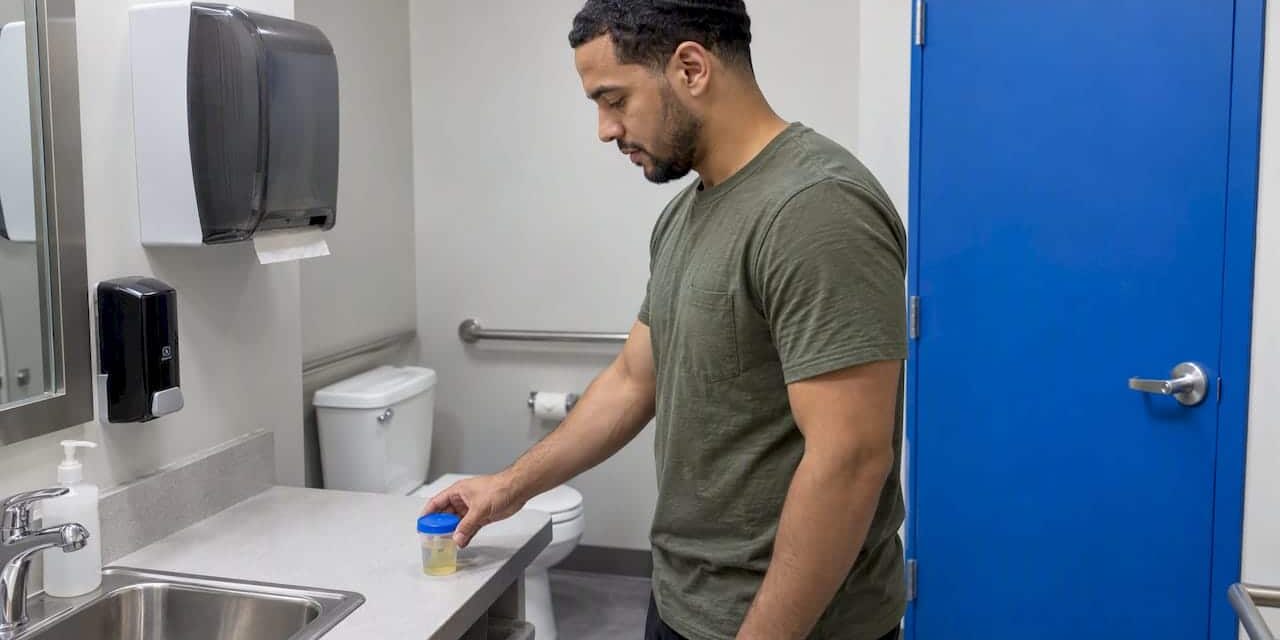
The most common gonorrhea symptoms in men are burning or pain when you pee and a white, yellow or green discharge from the penis. Some men notice painful or swollen testicles too. Others have no symptoms at all, which is why gonorrhea is often passed on without anyone knowing. If you have any of these signs, or a partner has been diagnosed, the next step is a simple test and, if it is positive, a course of treatment that can cure the infection.
This guide explains what the symptoms look like, what can happen in the throat and rectum, how testing works, and what to do after a diagnosis. It is written to inform you, not to alarm you. Gonorrhea is common, treatable, and nothing to be embarrassed about.
TL;DR
- Burning when you urinate and a white, yellow or green discharge from the penis are the classic signs of gonorrhea in men (CDC).
- You can have gonorrhea with no symptoms, especially in the throat, and still pass it to a partner.
- Testing is usually a urine sample. Throat or rectal swabs may be added depending on the type of sex you have had.
- The right treatment cures gonorrhea. Left untreated, it can cause painful problems in the tubes attached to the testicles and, rarely, spread to the blood or joints.
- Avoid sex until seven days after treatment and until your partners have finished theirs, then retest three months later.
Table of Contents
- The most common gonorrhea symptoms in men
- Gonorrhea in the throat and rectum
- Can you have gonorrhea without symptoms?
- What happens if gonorrhea goes untreated
- Symptoms that can look like something else
- How gonorrhea is tested
- Treatment and what to do after a positive test
- Our perspective: why we want you to come in sooner
- Get tested for gonorrhea in Lutz
- How to lower your risk and protect partners
- FAQ
- Sources
The most common gonorrhea symptoms in men
Gonorrhea is a bacterial sexually transmitted disease (STD). In men it most often infects the urethra, the tube that carries urine out of the body. That is why the first signs usually show up when you urinate.
According to the CDC’s overview of gonorrhea, the common symptoms in men are:
- A burning sensation when you pee
- A white, yellow or green discharge from the penis
- Painful or swollen testicles (less common)
In plain terms: peeing may sting or hurt, you may notice fluid on your underwear or at the tip of the penis, and one or both testicles may feel sore or look swollen. Not everyone has all three. Some men notice only mild burning that they assume will pass.
Other health sources describe the same pattern. A patient guide from JAMA lists pain or burning with urination and discharge from the penis among the main signs of infection in people assigned male at birth.
What gonorrhea discharge looks like
People often search for exactly this, so here is the direct answer. Discharge from gonorrhea may be white, yellow or green, and it often looks like pus. It may be thin or thick. It may be a small amount that you only notice in the morning, or enough to stain your underwear.
If you see discharge of any color from the penis, get tested. You cannot tell gonorrhea from other infections by color alone, and more than one infection can be present at the same time.
Gonorrhea in the throat and rectum
Gonorrhea does not only affect the genitals. It can infect the throat and the rectum, depending on the type of sex you have had.
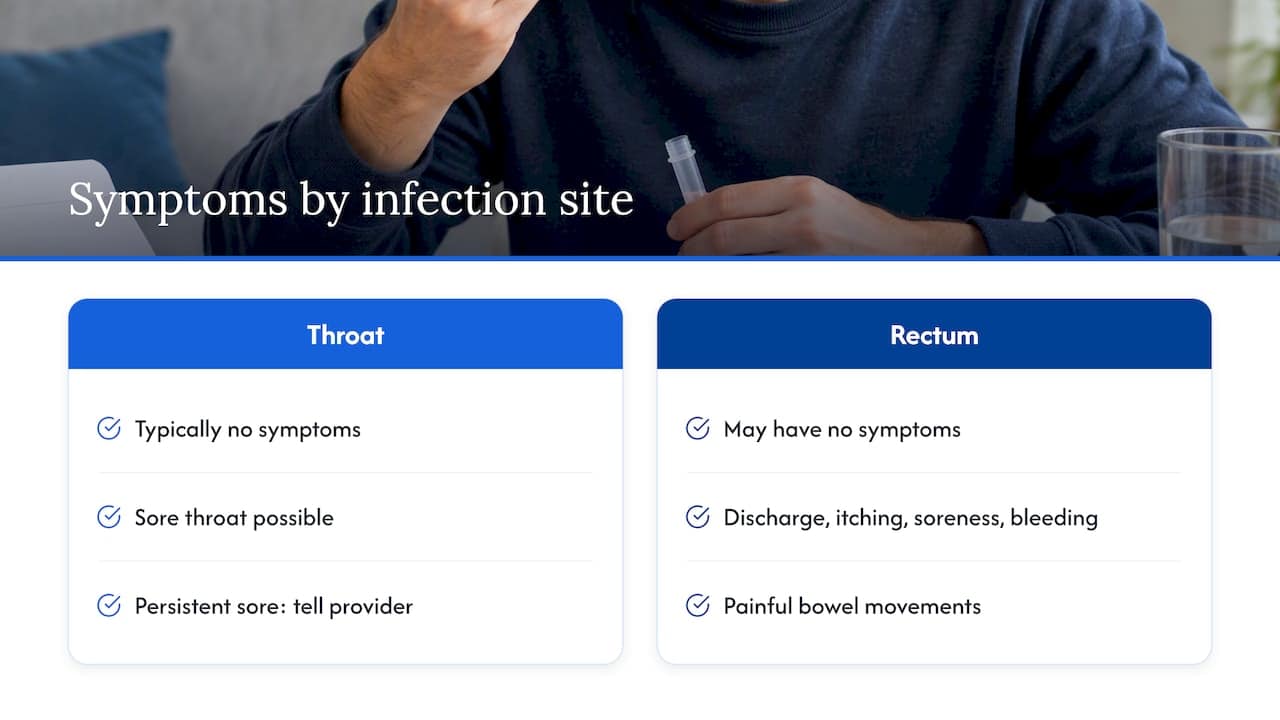
Throat. According to the JAMA patient guidance, throat gonorrhea typically causes no symptoms, although some people develop a sore throat. If you have a sore throat that does not go away, trouble swallowing, and recent oral sex, mention it to your provider. A sore throat on its own is far more often a cold or strep, so testing is how you find out.
Rectum. The CDC says rectal infections may cause discharge, anal itching, soreness, bleeding or painful bowel movements, or no symptoms at all. The Merck Manual’s consumer guide describes anal gonorrhea as potentially causing pain and thick yellow discharge from the anus.
The practical point: if the only place you have symptoms is your penis, but you have had oral or anal sex, the infection may be in more than one place. Tell your provider so the right samples are collected.
Can you have gonorrhea without symptoms?
Yes. MedlinePlus states that gonorrhea can occur without symptoms and that a person may spread it without knowing they are infected.
The CDC’s STI Treatment Guidelines add some detail. Urethral gonorrhea in men often produces symptoms, but transmission can happen before a man seeks treatment, and infections at other sites, especially the throat, can be asymptomatic.
This matters for three reasons:
- You may feel fine and still be infectious. Symptoms are not a reliable guide to whether you can pass it on.
- A new partner is a reason to test, not a reason to wait for symptoms. Many men test after a change in partners, after a condom breaks, or before starting something new.
- A partner’s diagnosis counts as exposure. The CDC advises seeking care if your partner has been diagnosed with gonorrhea, even if you feel perfectly well.
For a deeper look at gonorrhea without symptoms and screening, this page on gonorrhea without symptoms covers when testing makes sense.
If you are unsure how soon after exposure a test is reliable, our guides on when to test for STDs and the STD window period walk through timing step by step.
What happens if gonorrhea goes untreated
Gonorrhea does not reliably clear up by itself, and waiting is a gamble with your health and your partners’ health. The CDC explains that the right treatment can cure gonorrhea, while untreated infection carries real risks:
- Epididymitis. Untreated gonorrhea can cause a painful condition in the tubes attached to the testicles that can rarely lead to infertility. Signs include scrotal pain, swelling and sometimes fever.
- Spread to the blood or joints. This is rare, but it can become life-threatening.
- Higher HIV risk. Untreated gonorrhea may increase your chances of getting or giving HIV.
None of this is meant to frighten you. Most of these outcomes are preventable with a test and a short course of treatment. The point is that “it will probably go away” is not a safe plan.
When to get care right away
See a provider the same day if you have:
- Burning with urination plus any discharge from the penis
- A painful, swollen or hot testicle, especially with fever or chills
- A partner who has been told they have gonorrhea
If you have severe testicular pain that comes on suddenly, go to an emergency room. That can be a different emergency, and it should not wait.
Symptoms that can look like something else
Burning when you pee is not specific to gonorrhea. A urinary tract infection (UTI) can cause similar discomfort, and men can have more than one infection at once. That is a good reason to get a urine test rather than guess.
If you are trying to make sense of a urine result, our explainer on what urinalysis results mean can help. For same-day answers, see how urgent care tests urine in 15 to 30 minutes. A basic UTI check does not replace STD testing, so ask for both when you have reason to think you were exposed.
How gonorrhea is tested
Testing is quick and usually painless. According to the CDC, a provider will most often use a urine sample to diagnose gonorrhea. After oral or anal sex, they may add throat or rectal swabs, and in some cases a swab from the urethra.
The lab method is called a nucleic acid amplification test, or NAAT. The CDC notes that NAATs can use patient-collected urine or swab samples after instructions are provided, so you can often collect the sample yourself in private.
In men with symptoms, a provider may also look at a sample of urethral discharge under a microscope (a Gram stain). A positive result can diagnose gonorrhea in a symptomatic man, but the same CDC guidelines say a negative result cannot rule out infection in a man with no symptoms. That is one reason lab testing is the standard.
Testing every site of exposure
JAMA’s patient guidance makes a point worth repeating: testing should cover every site of sexual exposure, because a throat or rectal infection with no symptoms can otherwise be missed. For sexually active men who have sex with men, the CDC’s screening recommendations include testing at the sites of contact: the urethra, rectum and throat.
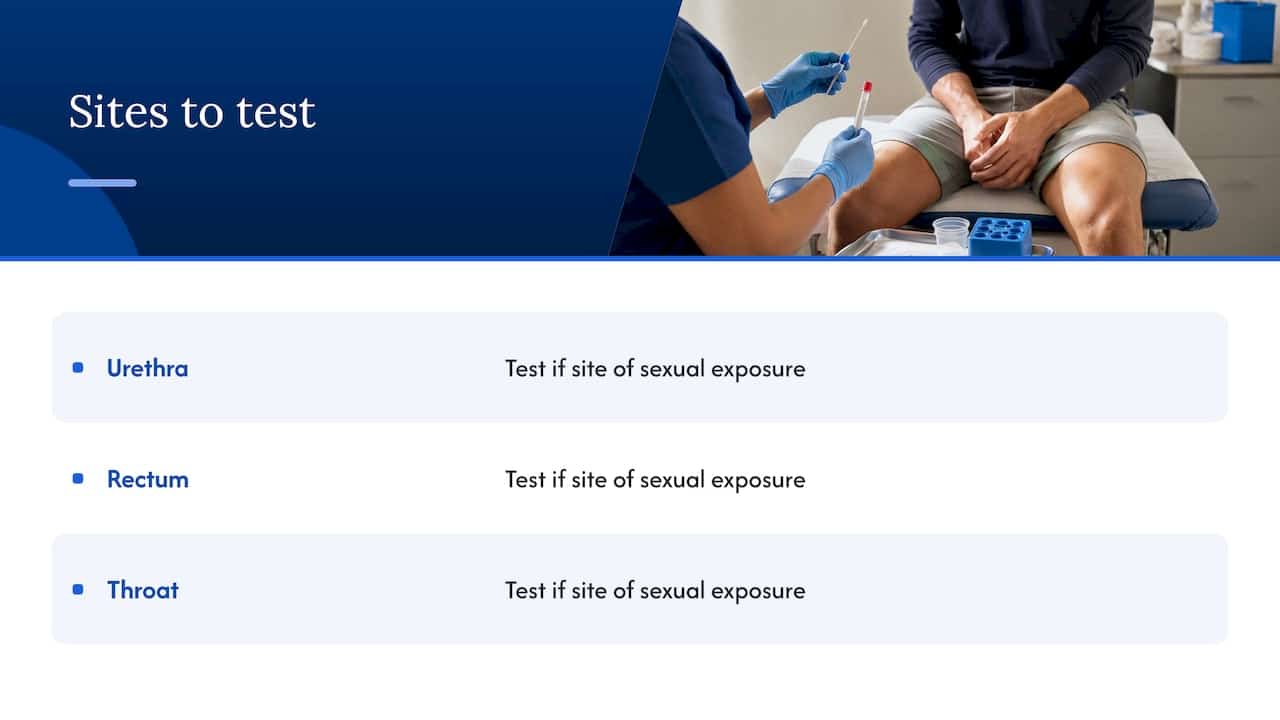
Be specific with your provider about the type of sex you have had. They hear it every day, and it changes which tests you need.
Is a single gonorrhea test enough?
Often you will be tested for other infections at the same time, since STDs can occur together. If you are not sure what to ask for, our guide to STD panel tests explains what is typically included and how to choose.
Treatment and what to do after a positive test
A positive result is manageable. The CDC states that the right treatment can cure gonorrhea. Your provider will choose the antibiotic based on current guidelines, and you will be told exactly how to take it.
After diagnosis, the CDC’s next steps after a positive test are straightforward:
- Take treatment exactly as prescribed. Do not stop early because you feel better.
- Tell your sex partners as soon as possible. They need testing and treatment too, even if they have no symptoms.
- Avoid sex until seven days after you finish treatment and until your partners have completed theirs.
- Retest three months later. Reinfection is common, and a follow-up test catches it.
Telling partners is often the hardest part. A simple, calm approach works: say you tested positive for an infection that is common and curable, and that they should get tested too. Keep it factual. Our clinic team can help you plan what to say if you ask.
If you would like to understand how retesting works for a related infection, see our page on chlamydia retest timing.
Our perspective: why we want you to come in sooner
We see the same pattern again and again in family medicine. A man notices burning or a little discharge, decides it is probably nothing, and waits. Sometimes the wait is about cost, sometimes about privacy, and sometimes it is simply the worry of sitting in a waiting room.
Our approach is built to remove those barriers. We are open seven days a week, 8 AM to 8 PM, and we offer same-day appointments, so you do not have to plan around a long wait. Our providers have over 25 years of experience, and STD testing and treatment is a routine part of what we do for adults, handled without judgment and with discretion.
If you remember one thing from this article, let it be this: you do not need to be sure it is gonorrhea to come in. You only need a reason to wonder. A test gives you a clear answer, and a clear answer lets you protect yourself and the people you care about.
— Lisa
Get tested for gonorrhea in Lutz
Your Family Walk-In Clinic provides STD screening and treatment in Lutz, Florida, with same-day visits and no long waits. We accept major health insurance plans and Medicaid, and we also see self-pay patients. You can walk in or call us at (813) 792-8555.

If you are paying out of pocket, read our guide to STD testing cost without insurance before your visit. If you want a broader checkup at the same time, our lab work and wellness services can be combined with your visit, and our urgent care team is available every day of the week.
How to lower your risk and protect partners
The CDC lists several ways to reduce the chance of getting or spreading gonorrhea, all on its gonorrhea page:
- Use condoms correctly every time you have sex.
- Have mutually monogamous sex with a partner who has been tested and is not infected.
- Ask your provider about testing, including throat or rectal testing after oral or anal sex.
- Avoid sex until seven days after treatment and until your partners have been treated.
- Retest three months after treatment.
If you are under 18 or helping a teenager, our page on STD testing consent in Florida explains how privacy and insurance statements work.
FAQ
What does gonorrhea discharge look like?
Discharge from the penis is usually white, yellow or green and may look like pus. The amount varies from a small drop to enough to stain underwear. Color alone cannot confirm gonorrhea, so a urine test is the way to know.
Can gonorrhea go away on its own?
You should not count on it. The CDC says the right treatment can cure gonorrhea, and untreated infection can lead to epididymitis, rare infertility, and rarely a spread to the blood or joints. Even if symptoms fade, you may still be infectious.
Can a man have gonorrhea and not know it?
Yes. Gonorrhea can cause no symptoms, and a person can spread it without knowing. Throat infections in particular often cause no symptoms, which is why testing every site of exposure matters.
How soon should I see a provider if I have symptoms?
As soon as you notice burning with urination or pus-like discharge, or when a partner tells you they have gonorrhea. Same-day care is ideal. Sudden severe testicular pain calls for the emergency room.
Do I need to retest after treatment?
Yes. The CDC advises retesting three months after treatment, because reinfection is common. Avoid sex until seven days after treatment and until your partners have finished theirs.
Sources
- About Gonorrhea, CDC
- Gonococcal Infections Among Adolescents and Adults, CDC STI Treatment Guidelines
- STI Screening Recommendations, CDC
- Next steps after testing positive for gonorrhea or chlamydia, CDC
- What to Know About Gonorrhea, JAMA Patient Information
- Gonorrhea Test, MedlinePlus
- Gonorrhea Quick Facts, Merck Manual Consumer Version