

Yes: Florida Medicaid covers medically necessary therapy and behavioral health services through the Medicaid State Plan and Managed Medical Assistance plans. Coverage typically includes individual, group, and family therapy, psychiatric medication management, and substance use treatment. Recipients under 21 get extra protection through EPSDT, and every member should confirm specifics like copays and prior authorization with their own plan. The steps for doing that follow below.
TL;DR:
- Children under 21 may receive additional covered therapy sessions through EPSDT if standard fee schedule limits are exceeded and proper medical necessity documentation is provided.
- Providers must be in your specific MMA plan’s network, and prior authorization is often required before scheduling therapy sessions, especially for services exceeding caps.
- Denied therapy claims are generally appealable, with the need to gather documentation of medical necessity, authorization, and ongoing treatment details for a successful contest.
- Telehealth therapy sessions require real-time audio and video, with providers needing to document the technology used and billing modifiers accurately to ensure reimbursement.
- Medicaid covers a broad range of behavioral health services, but physical, occupational, and speech therapies are separate benefits with differing authorization and billing processes.
Table of Contents
- What therapy and behavioral health services does Florida Medicaid cover?
- Who qualifies, and how does EPSDT protect kids and teens?
- How does Florida deliver this coverage, and how do you get started?
- What limits and fee-schedule rules should you expect?
- How do you find a therapist who accepts Medicaid in Florida?
- What happens if your therapy claim gets denied?
- What are Florida’s telehealth rules for therapy sessions?
- What Florida Medicaid families run into that policy documents don’t mention
- Getting started with therapy through Your Family Walk-In Clinic
- Sources
- FAQ
What therapy and behavioral health services does Florida Medicaid cover?
Florida Medicaid’s community behavioral health benefit covers a broad set of services meant to address mental health and substance use needs at every stage, from a first assessment through ongoing treatment. These are baseline benefits that Managed Medical Assistance plans must provide, though the exact provider network and referral process can vary by plan.
Covered categories generally include:
- Behavioral health assessments and diagnostic evaluations to determine medical necessity and a treatment plan.
- Medical and psychiatric services, including medication management with a psychiatrist or psychiatric nurse practitioner.
- Individual, group, and family therapy sessions with a licensed clinician.
- Psychosocial rehabilitation and clubhouse services that support daily functioning for people with serious mental illness.
- Substance use treatment, including counseling and, in some cases, medication-assisted treatment.
- Crisis intervention services for members experiencing an acute mental health emergency.
Physical, occupational, and speech therapy fall under a separate rehabilitative services benefit rather than behavioral health, so if your child needs speech therapy alongside counseling, expect two different authorization paths. For the most current and authoritative service definitions, Florida’s Agency for Health Care Administration publishes the policy language that governs what counts as a covered service and under what conditions.
Who qualifies, and how does EPSDT protect kids and teens?
To use these benefits, you need to be enrolled in Florida Medicaid on the actual date you receive care, and the service has to be documented as medically necessary by a licensed provider. A therapist’s note explaining the diagnosis and the reason therapy is recommended is usually enough to satisfy this requirement.
For recipients under 21, the federal Early and Periodic Screening, Diagnostic, and Treatment mandate expands what Medicaid must cover. EPSDT requires the state to provide medically necessary services to children and youth even when those services exceed standard fee schedule limits, which matters if your child needs more therapy sessions than the usual cap allows.
Services can be delivered by:
- Licensed mental health counselors, clinical social workers, psychologists, and psychiatrists.
- Community behavioral health agencies contracted with your MMA plan.
- Primary care providers who coordinate referrals for behavioral health.
How does Florida deliver this coverage, and how do you get started?
Most Florida Medicaid recipients get behavioral health care through Statewide Medicaid Managed Care, specifically Managed Medical Assistance plans, which are required to include these services as a minimum covered benefit rather than an optional add-on. Your specific plan determines which therapists are in network and whether a referral or prior authorization is needed before your first visit.
Here’s the sequence that works:
- Confirm you’re actively enrolled and check which MMA plan you’re assigned to on your Medicaid card or portal login.
- Call your plan’s member services line, or reach a Choice Counselor at 1-877-711-3662 if you need help comparing plans or understanding benefits.
- Log into the FL Medicaid managed care member portal to review your plan’s covered behavioral health benefits.
- Confirm the therapist you want to see is currently participating in your specific MMA plan, not just Medicaid generally.
- Ask whether prior authorization is required for your service, and submit it before scheduling if so.
Members generally owe a $2.00 copayment per visit unless exempt, an amount set under section 409.9081 of the Florida Statutes. Some plans waive this copay for certain behavioral health visits, so it’s worth asking directly. If you switch MMA plans mid-treatment, ask about continuity of care provisions so an existing authorization doesn’t get interrupted.
Pro Tip: Keep a printed or saved copy of your plan’s authorization approval. Providers occasionally need it re-sent if a claim gets flagged.
For a deeper walk-through of plan rules, copayments, and referral steps, our Florida Medicaid urgent care playbook covers similar verification steps that apply to behavioral health visits too.
What limits and fee-schedule rules should you expect?
Florida’s Community Behavioral Health Fee Schedule sets billing units, typically in 15-minute increments, along with daily and per-fiscal-year caps on how many units of individual, family, or group therapy a member can receive. These limits exist to manage the program, not to reflect a one-size-fits-all definition of what you actually need.
Florida’s Community Behavioral Health Fee Schedule lists per-unit reimbursement rates and fiscal-year unit caps for therapy services, so a denial based on hitting a unit limit is often appealable rather than final, especially for members under 21. Some services share a combined cap, meaning individual and family therapy sessions might count against the same yearly total rather than separate ones, which catches people off guard when a claim gets denied unexpectedly.
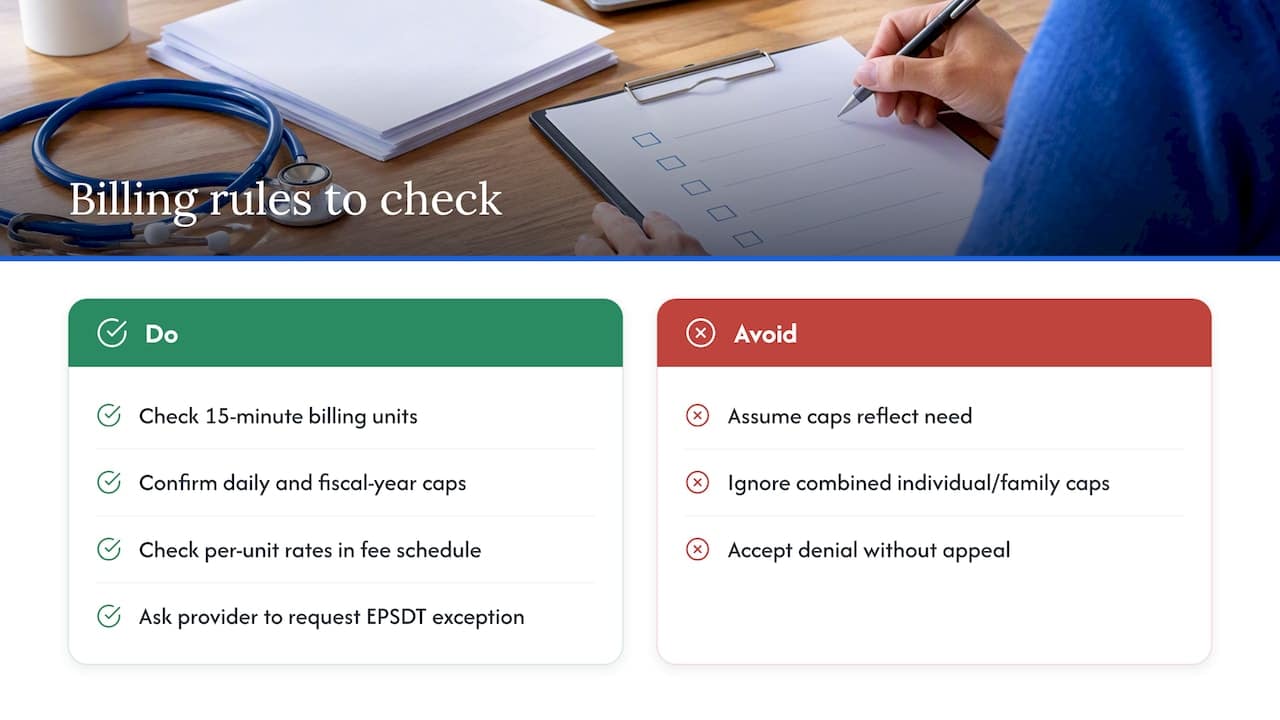
If you or your child is under 21 and a standard limit is blocking necessary care, ask your provider to request an EPSDT-based exception. That federal protection exists specifically for situations where the fee schedule’s cap doesn’t match a documented medical need.
How do you find a therapist who accepts Medicaid in Florida?
Start with your MMA plan’s provider directory, which you can usually access through the FL Medicaid managed care member portal or by calling member services directly. Directories aren’t always current, so a phone call to the practice confirming they still accept your specific plan saves you a wasted trip.
Before booking, verify these four things:
- The therapist currently accepts your MMA plan, not just Medicaid in general.
- Whether a referral from your primary care provider or prior authorization is required.
- Whether the practice offers telehealth sessions if in-person visits are hard to schedule.
- What your copay will be, since some visit types are waived and others aren’t.
For your first appointment, bring your Medicaid ID card, any referral or authorization paperwork, a list of current medications, prior treatment records if you’re transferring care, and your plan’s member services number in case something needs to be verified on the spot. Our guide on how to choose a therapist walks through what credentials and specialties to look for once you’ve confirmed Medicaid participation.
What happens if your therapy claim gets denied?
Florida Medicaid recipients generally must exhaust their MMA plan’s internal appeal process before requesting a state Medicaid Fair Hearing, and you’ll need a final Notice of Plan Appeal Resolution from your plan before that hearing can move forward.
To build a strong appeal:
- Request the denial in writing if you only received a verbal explanation.
- Gather your treatment plan, therapist’s notes on medical necessity, and any prior authorization paperwork.
- Keep copies of every call or letter exchanged with your plan.
- Ask about expedited review if delaying care would put your health at risk.
- Contact your plan’s member services or a legal aid or advocacy organization if the appeal stalls.
What are Florida’s telehealth rules for therapy sessions?
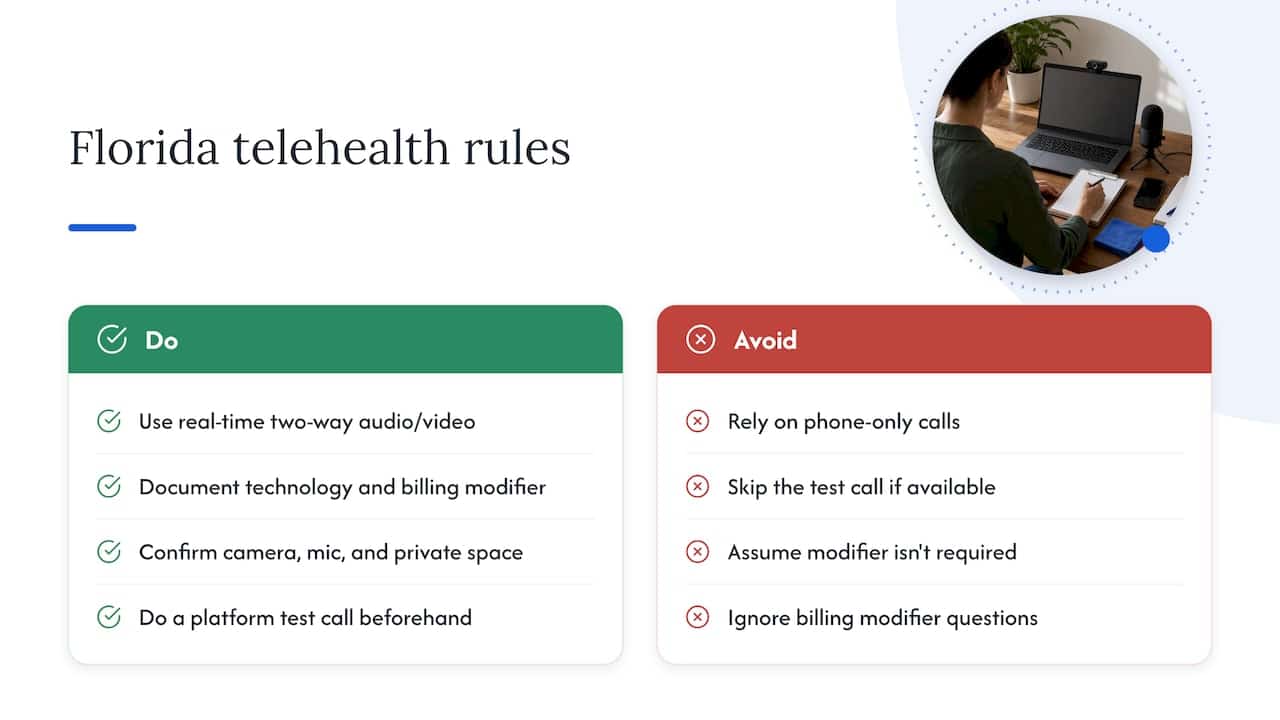
Florida Medicaid telehealth reimbursement generally requires real-time, two-way audio and video, and phone-only calls usually don’t qualify for coverage, according to telehealth policy guidance from the Center for Connected Health Policy. Providers must document the technology used and apply the correct billing modifier for the claim to process correctly.
Before your virtual session, confirm your device has a working camera and microphone, find a private space, and do a test call if the platform allows it. Ask your therapist’s office in advance whether your visit will be billed as telehealth and what modifier they use, since a technical mismatch is one of the more common reasons a teletherapy claim gets kicked back.
Pro Tip: If your internet connection is unreliable, ask if your provider offers a backup in-person slot so a dropped call doesn’t delay your session.
What Florida Medicaid families run into that policy documents don’t mention
Provider directories list therapists who stopped accepting Medicaid months ago, and prior authorization requests sit in queues longer than families expect, especially right before a plan’s fiscal year resets. Pre-verifying benefits before the first visit, and keeping a same-day slot open for continuity when a regular appointment falls through, prevents a lot of the frustration that pushes people to give up on care entirely.
Coordination between your primary care provider and your behavioral health provider matters more than most families realize. A PCP who documents symptoms clearly and sends a timely referral reduces the odds that an authorization gets kicked back for missing information.
— Lisa
Getting started with therapy through Your Family Walk-In Clinic
The clinic offers both in-person and virtual therapy sessions for adults and children, with same-day appointments and extended hours. If you’re not sure whether your Medicaid plan covers your visit or what your copay will look like, our staff can help verify your benefits before you come in, so there are no surprises at check-in.
What to bring:
- Your Medicaid card and any MMA plan information you have on hand.
- A referral or prior authorization document, if your plan requires one.
- A list of current medications and any prior mental health treatment records.
We also handle primary care, urgent care, physicals, and screenings under one roof, which makes it easier to coordinate a referral to therapy without bouncing between separate offices. You can review how we work with accepted insurance plans including Medicaid, or go straight to our therapy page to see current openings and request an appointment today.
This article is general information, not a substitute for advice from a qualified doctor. Consult a qualified healthcare professional about your own circumstances before acting on anything here.
Sources
- Florida State Medicaid Managed Care – Health – Health Plans and Program
- Florida Statutes §409.9081
- Medicaid
FAQ
How much does Medicaid cover for therapy sessions?
Florida Medicaid typically covers medically necessary therapy in full aside from a standard $2.00 copayment set under section 409.9081, F.S., though some visits and populations are exempt. Your exact coverage depends on your MMA plan and whether the service falls within fee schedule unit limits.
What is the new mental health law in Florida?
This article does not cover a specific new Florida mental health law, and policy changes should be confirmed directly through the Agency for Health Care Administration rather than assumed. Check AHCA’s policy pages for the most current legislative updates affecting Medicaid behavioral health benefits.
What are the changes to Florida Medicaid in 2026?
Policy or fee schedule changes are not detailed here; members should check AHCA’s Community Behavioral Health Fee Schedule directly for the current version. Calling your MMA plan or the Choice Counselor line at 1-877-711-3662 is also a reliable way to confirm what’s changed for your specific plan.
What is not covered by Medicaid?
Florida Medicaid generally does not cover services deemed not medically necessary, and separate benefits like physical, occupational, or speech therapy require their own authorization path distinct from behavioral health. If a service is denied, ask your plan for the specific policy reason and whether an EPSDT exception applies if you or your child is under 21.