


Most ankle sprains respond well to early protective care and a progressive return to movement, not strict rest. Start with protection, controlled swelling management, and gentle motion as soon as pain allows. Seek urgent evaluation right away if you cannot bear weight, notice visible deformity, feel numbness or tingling, or your symptoms worsen quickly instead of easing.
TL;DR:
- Four steps without significant pain make a fracture less likely, but inability to bear weight, deformity, numbness, or a cold foot warrants prompt evaluation.
- For most sprains, protect and compress the ankle, ice for 15 to 20 minutes, elevate it, and begin gentle motion when sharp pain subsides.
- Grade 1 and 2 sprains usually need early functional rehabilitation, while Grade 3 injuries may require 10 to 14 days of immobilization before exercise.
- Continue balance and strength training for six to eight weeks after pain fades; return to sport only when strength and balance approach the uninjured side.
Table of Contents
- How to tell a sprain from a fracture or serious injury
- What to do in the first 0 to 72 hours
- Sprain grades 1 to 3 and how treatment differs
- A phased rehab plan to restore strength and balance
- Choosing braces, tape, boots, or short immobilization correctly
- What to expect: recovery timelines and healing signs
- Red flags and choosing between urgent care, the ER, or a specialist
- Clinic-first follow-up for sprained ankles
- Clinician perspective: the mistake we see most often
- How Your Family Walk-In Clinic Can Help With Assessment and Follow-Up
- FAQ
- Sources
How to tell a sprain from a fracture or serious injury
A simple weight-bearing check helps you triage yourself before you even call a clinic. If you can take four steps without significant pain, a fracture is less likely, though it does not rule one out entirely. This idea underlies the Ottawa ankle rules, a screening tool clinicians use with high sensitivity to decide who actually needs an X-ray after an acute injury.
A clinical exam typically checks for:
- Tenderness over specific bone landmarks versus soft tissue
- Range of motion compared with the uninjured ankle
- Joint instability when gentle stress is applied
- Swelling pattern and ability to bear weight
Interestingly, waiting four to five days for a full clinical exam can sometimes give a clearer picture, since early swelling often obscures the exact structures involved. When imaging is needed, an X-ray usually comes first; an MRI or ultrasound gets reserved for ongoing soft-tissue concerns that don’t resolve as expected.
What to do in the first 0 to 72 hours
The classic advice to simply rest and ice has evolved. Current evidence-based clinical guidelines favor functional treatment, meaning early, controlled movement paired with support, rather than strict immobilization for most sprains.
In the first three days, we recommend this sequence:
- Protect the ankle from further twisting or impact, using a brace or wrap if needed.
- Apply ice wrapped in a cloth for 15 to 20 minutes at a time to ease pain and swelling.
- Compress gently with an elastic bandage, checking that toes don’t go numb or discolored.
- Elevate the ankle above heart level when resting.
- Begin gentle range-of-motion movements, like slow ankle circles, as soon as sharp pain subsides.
Early mobilization matters more than people expect: exercise therapy started early reduces recurrent ankle injuries compared with prolonged rest alone.
For pain, over-the-counter NSAIDs or acetaminophen can help, though anyone with kidney issues, stomach ulcers, or blood pressure concerns should check with a clinician before regular NSAID use.
Sprain grades 1 to 3 and how treatment differs
Ankle sprains are graded by how much ligament damage has occurred:
- Grade 1: ligament stretching with mild swelling and little instability.
- Grade 2: partial tearing, moderate swelling, and some looseness in the joint.
- Grade 3: complete tear, significant swelling, and a joint that feels unstable.
Grade 1 and 2 sprains usually respond to functional rehab started early. Grade 3 sprains often need a short immobilization period, typically 10 to 14 days, to let tissue stabilize before active rehab begins. Surgery is uncommon and generally reserved for persistent instability or certain high ankle (syndesmosis) injuries.
A phased rehab plan to restore strength and balance
Rehab works best as a staged process, not a single set of stretches you do once and abandon.
- Phase 1, early motion: gentle ankle circles, towel stretches, and weight-bearing as pain allows, usually in the first one to two weeks.
- Phase 2, strength and balance: once walking is comfortable, add single-leg balance work and resistance band exercises for the muscles that stabilize the ankle. Progress when you can balance steadily on the injured side for 30 seconds.
- Phase 3, return to activity: sport- or job-specific drills, agility ladder work, and cutting movements, cleared only once strength and balance roughly match the uninjured side.
A position statement from the National Athletic Trainers’ Association emphasizes that proprioception and balance training are not optional extras. Poor adherence to this kind of balance work is one of the main reasons sprains recur. For readers who want sample exercise progressions to follow at home, this step-by-step rehabilitation guide lays out practical drills by phase.
Pro Tip: Don’t stop rehab once the pain fades. Weakness and poor balance often linger well after discomfort disappears, and that gap is exactly when reinjury happens.

Supervised physical therapy tends to help more for Grade 2 and 3 sprains or when home progress stalls, while milder sprains often do fine with a disciplined home program.
Choosing braces, tape, boots, or short immobilization correctly
The right support depends on severity, not personal preference alone:
- Elastic wrap: light compression for mild swelling in Grade 1 sprains.
- Lace-up brace: good everyday support during early functional rehab.
- Semirigid stirrup brace: more stability for Grade 2 sprains or return to sport.
- Walking boot or short cast: reserved for Grade 3 sprains needing 10 to 14 days of relative immobilization.
Supports work best when they bridge pain control and movement rather than replacing movement entirely. Once you’re back to higher-risk activities like running on uneven ground or court sports, taping or a brace for the first several weeks can reduce the chance of a repeat sprain.
What to expect: recovery timelines and healing signs
Recovery speed depends heavily on how severe the initial injury was. Mild sprains often show real improvement within one to two weeks, while moderate sprains commonly need several weeks to a few months before a full return to normal activity.
Watch for these milestones along the way:
- Walking without a noticeable limp
- Full range of motion matching the uninjured ankle
- Strength that feels close to equal on both sides
- Comfort with sport- or job-specific movements before returning fully
Recovery timelines vary widely by severity: mild sprains may improve in as little as 7 to 10 days, while moderate to severe sprains often take 6 to 12 weeks for full functional return.
A few factors tend to slow things down: a history of prior sprains, skipping rehab once pain eases, older age, and other joint or circulation conditions.
Red flags and choosing between urgent care, the ER, or a specialist
Some symptoms mean you shouldn’t wait to see what happens. According to MedlinePlus patient guidance, seek evaluation promptly if you notice:
- Inability to bear weight or take three to four steps
- Visible deformity around the ankle or foot
- Numbness, tingling, or a cold, pale foot
- Signs of infection, like spreading redness or fever
- No improvement after five to seven days of appropriate self-care
Urgent care settings can typically handle initial assessment, order or refer for an X-ray, and provide splinting or bracing with a plan for follow-up. The emergency room becomes the right call for an obviously deformed joint, a foot that looks pale or feels cold, or sudden, severe swelling. When you go in, bring a quick timeline of the injury, how it happened, and any history of prior ankle problems. It speeds up the visit considerably.
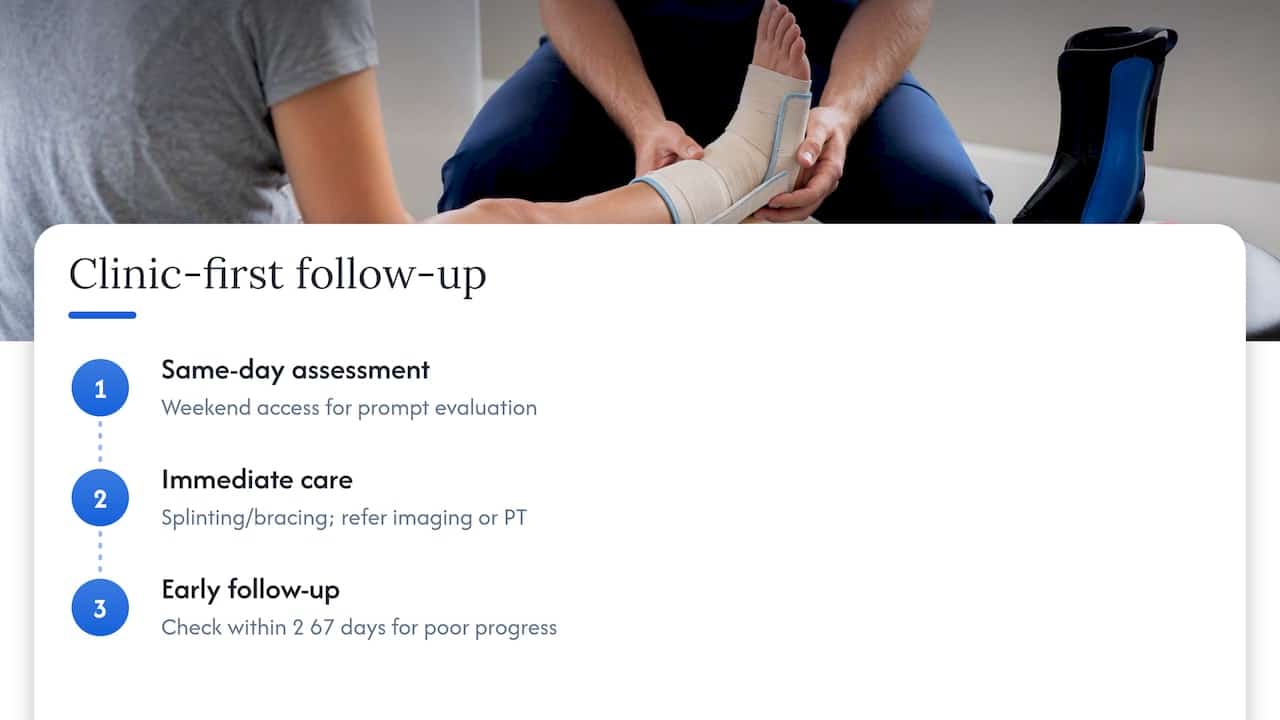
Clinic-first follow-up for sprained ankles
Our clinic’s hours support same-day assessment availability, which can be particularly helpful when an ankle swells on a weekend. The clinicians can evaluate the injury, provide splinting or bracing, and refer for imaging or physical therapy when appropriate. A follow-up check within two to seven days after initial assessment may help identify sprains that are not progressing as expected, preventing larger setbacks.
Clinician perspective: the mistake we see most often
The biggest mistake isn’t doing too little. It’s stopping too soon, usually right when the pain fades and before balance and strength have actually caught up. If you take one thing from this article, finish a full six to eight weeks of progressive balance and strength work, even after the ankle feels fine. That single habit does more to prevent a repeat sprain than almost anything else.
— Lisa
How Your Family Walk-In Clinic Can Help With Assessment and Follow-Up
Same-day urgent care assessments for sprained ankles are available, including basic splinting or bracing and referral to imaging or physical therapy as needed. If you’re dealing with ongoing swelling, uncertainty about severity, or an ankle that just isn’t improving the way it should, book a same-day urgent care visit and get a clear plan in one visit.

This article is general information, not a substitute for advice from a qualified doctor. Consult a qualified healthcare professional about your own circumstances before acting on anything here.
FAQ
How long does it take for a sprained ankle to heal?
Mild sprains often show noticeable improvement within 7 to 10 days, while moderate to severe sprains commonly take 6 to 12 weeks for a full functional return. Recovery speed depends on severity, how early rehab started, and whether you’ve had prior ankle sprains.
What are four signs an ankle sprain is bad?
Signs that point to a more serious injury include inability to bear weight or take three to four steps, visible deformity, numbness or tingling, and symptoms that keep worsening instead of improving. Any of these warrants prompt evaluation rather than waiting it out at home.
Is it okay to walk on a sprained ankle?
Gentle, controlled weight-bearing is usually fine and even encouraged for mild to moderate sprains once sharp pain eases, since functional treatment with early movement tends to work better than strict rest. If you truly cannot bear weight at all, that’s a different situation and needs evaluation to rule out a fracture.
What is the best way to heal a sprained ankle fast?
Protecting the joint, managing swelling with ice and elevation, and starting gentle range-of-motion exercises early give you the fastest realistic path to recovery, since guidelines favor functional treatment over prolonged immobilization for most sprains. Skipping balance and strength work once the pain fades is the most common reason recovery stalls or the ankle gets reinjured.
Sources
- Diagnosis, treatment and prevention of ankle sprains: update of an evidence-based clinical guideline (PubMed)
- Ankle sprain — patient instructions (MedlinePlus)
- Guidelines and evidence summary on ankle sprain interventions (NCBI Bookshelf)