
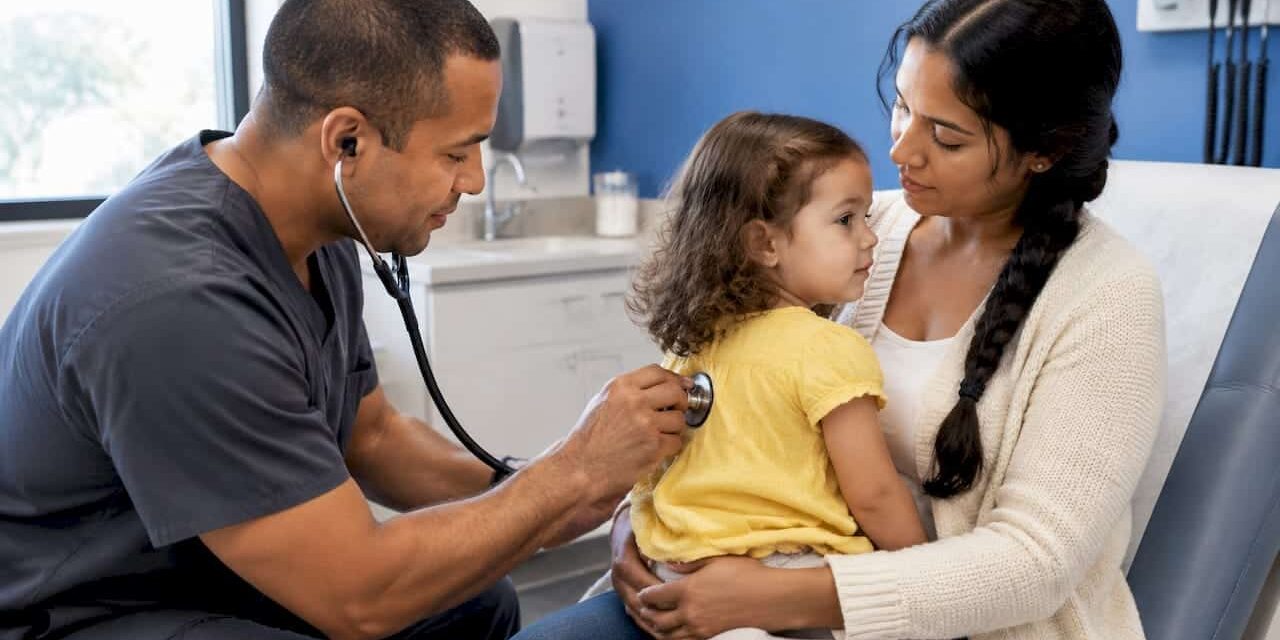
In most toddlers, RSV looks like a cold: a runny nose, congestion, a cough, and a lower appetite. The symptoms usually show up in stages, and the cough is often what changes. The signs that matter most are a cough that turns into wheezing, trouble breathing, and a toddler who is not drinking enough. Any of these means your child should be seen the same day. If your child is struggling to breathe, call 911.
This guide explains what RSV looks like day by day, how long it lasts, what you can do at home, and when to bring your child in. We see toddlers with respiratory illnesses at our Lutz clinic every week, and the questions parents ask are usually the same ones covered below.
TL;DR
- RSV usually starts like a cold: runny nose, congestion, sneezing, a cough, a lower appetite, and sometimes a fever.
- Symptoms tend to appear in stages. They often get worse a few days in, and most cases clear up in one to two weeks.
- A toddler can have RSV without a fever, so a normal temperature does not rule it out.
- Wheezing, trouble breathing, or not drinking enough fluids means a same-day medical visit.
- Handwashing, cleaning shared surfaces, and keeping a sick child home are the best ways to protect other children and young babies.
Table of Contents
- What RSV is and why toddlers get it
- Early RSV symptoms in toddlers
- How RSV symptoms develop over several days
- Can a toddler have RSV without a fever?
- Is it RSV, a cold, the flu, or COVID-19?
- How long RSV lasts
- How contagious RSV is
- Caring for a toddler with mild RSV at home
- When RSV needs a same-day visit
- Our perspective on RSV in toddlers
- Seeing your toddler at our Lutz clinic
- Reducing the spread of RSV in your home
- Frequently asked questions
- Sources
What RSV is and why toddlers get it
Respiratory syncytial virus (RSV) is a common respiratory virus. According to the CDC, it usually causes a mild, cold-like illness but can also cause severe illness such as bronchiolitis or pneumonia. Bronchiolitis is swelling in the smallest airways of the lungs. It is the reason a cold-like illness can sometimes become a breathing problem in young children.
Most toddlers handle RSV like any other cold. The risk is that it can look mild at first and then change. The CDC notes that RSV may not be severe when it first starts, but can become more severe a few days into the illness. That is why we ask parents to keep watching their child after the first few days, not only on day one.
Early RSV symptoms in toddlers
The CDC says RSV symptoms typically appear 4 to 6 days after a child is infected. Early on, the signs are easy to mistake for a regular cold:
- A runny nose
- Stuffy nose or congestion
- Sneezing
- A mild or dry cough
- A lower appetite than usual
- A fever, which may be low-grade
Parents often tell us the first thing they notice is behavior, not a symptom. A toddler who is fussier than usual, clingy, or less interested in food or play may be starting to feel sick. These changes are not specific to RSV, but they are a good reason to watch your child more closely for the next several days.
How RSV symptoms develop over several days
The CDC describes RSV symptoms as usually appearing in stages rather than all at once. Yale Medicine reports that the runny nose and fever typically begin, worsen, and peak three to five days after the infection starts.
Here is a plain-language timeline of what that can look like. Every child is different, so treat it as a general pattern and not a schedule.
| Stage | What you may see |
|---|---|
| First days | Runny nose, congestion, sneezing, a mild cough, lower appetite |
| Days 3 to 5 | Symptoms often peak. Fever may appear, the cough can get deeper, and your toddler may be more tired or fussy |
| Later days | The cough may linger as the nose clears. In some children, wheezing or breathing trouble appears at this point |
Yale Medicine points out that most children with RSV have nothing worse than a simple cold, but a worsening cough that turns into wheezing can be a sign of a more serious infection. Wheezing is a high-pitched whistling sound, usually heard when your child breathes out. If you hear it, do not wait to see if it passes.
Can a toddler have RSV without a fever?
Yes. The CDC notes that many infants will not have a fever with RSV infection. Parents sometimes take a normal thermometer reading as a sign that nothing serious is going on. With RSV, how your child is breathing, eating, and drinking tells you more than the temperature.
If your child does have a fever, our guides on when a child’s fever needs urgent care and when to see a doctor for a high fever explain what the numbers mean and which ones call for a visit.
Is it RSV, a cold, the flu, or COVID-19?
You usually cannot tell by symptoms alone. RSV, the common cold, flu, and COVID-19 all cause congestion, cough, and sometimes fever. The CDC says RSV symptoms are not specific to the virus, and a doctor decides what is going on by examining your child and, when needed, testing.
Some general points can help you decide what to do next:
- A cold tends to stay in the nose and throat. Your toddler is stuffy and coughing but breathes comfortably and eats and drinks reasonably well.
- RSV can start the same way, then move into the chest. Wheezing or fast, effortful breathing is the signal that it has.
- Flu and COVID-19 often bring a sudden fever, body aches, and more obvious exhaustion. Our guide to flu versus COVID-19 symptoms covers how to tell them apart and when to test, and the flu treatment page explains why timing matters for flu.
If you are not sure which illness your child has, that is a good reason to have them examined. You do not need to name the virus before you ask for help.
How long RSV lasts
The CDC says most RSV infections go away on their own in a week or two. A cough can last a little longer than the other symptoms. Plan on your toddler being under the weather for several days, with the worst of it often around days three to five.
If your toddler is getting better, you should see steady progress: more energy, better eating, an easier nose. If your toddler gets worse after seeming to improve, or has a fever and cough that are getting worse and not better, have them seen.
How contagious RSV is
The CDC reports that people with RSV are usually contagious for 3 to 8 days. Some infants and people with weakened immune systems can spread the virus for 4 weeks or longer, even after symptoms stop.
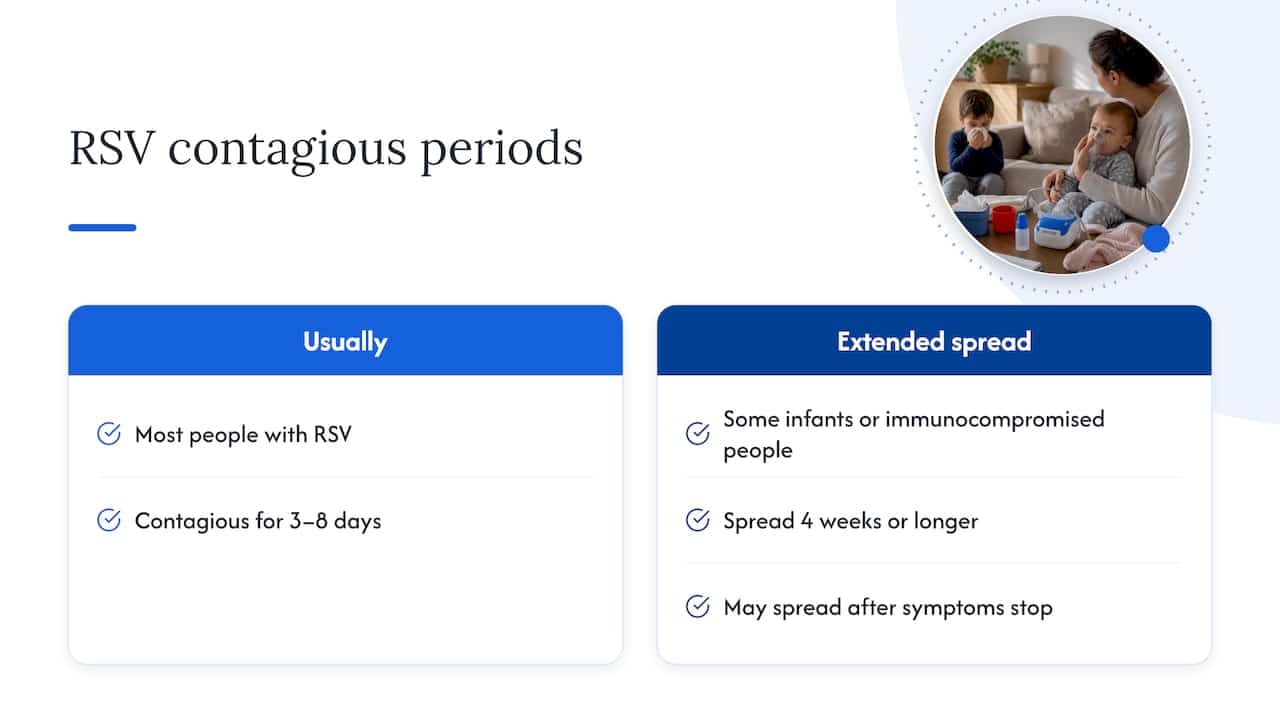
For families, that means a toddler who looks well may still be able to pass the virus on. This matters most when there is a newborn at home, or when a grandparent or a child with a chronic lung condition visits. The CDC also calls RSV the most common cause of hospitalization in infants, so protecting babies is the main reason to take hygiene seriously.
Caring for a toddler with mild RSV at home
There is no home remedy that makes RSV go away faster. The goal is comfort and hydration while the illness runs its course. The FDA advises that people with RSV should get enough fluids to stay hydrated and treat pain and fever as suggested by a health care provider.
Here is what that looks like in practice:
- Offer fluids often. Small, frequent sips of water, milk, or an oral rehydration drink are easier on a toddler with a stuffy nose than big drinks. Popsicles count.
- Let your child rest. Quiet play and extra sleep are normal.
- Ask before giving medicine. Check with your pediatrician or our team about fever and pain medicine and the right dose for your child’s age and weight. Do not guess at doses.
- Keep an eye on breathing. Watch how your toddler breathes when calm and when asleep, and check again a few times a day.
- Track what goes in. Note how much your child drinks and how often they urinate. This is the quickest way to spot early dehydration.
A stuffy nose can make eating hard for a toddler, which sometimes looks like a feeding problem. If your child is turning away from food or drink beyond what you would expect from a cold, these feeding red flags can help you tell a short-term appetite dip from something that needs professional attention.
When RSV needs a same-day visit
The CDC advises seeking medical care if symptoms worsen, your child has difficulty breathing, or they are not drinking enough fluids. These are the situations we want parents to act on quickly:
- Wheezing. A cough that turns into whistling or noisy breathing.
- Trouble breathing. Your toddler seems to be working hard for each breath, or breathing is faster than usual even when resting.
- Not drinking enough. Your child refuses fluids or is urinating much less than normal.
- Getting worse after a few days. Symptoms that are building, not fading, after the first three to five days.
- Unusual sleepiness or weakness. Your toddler is hard to wake, limp, or not interested in anything.
These are the signs to take most seriously, but they are not the only reasons to come in. If your instinct says something is wrong, that is reason enough to have your child checked.
Urgent care or the emergency room?
A toddler who is breathing with effort, has a bluish color around the lips or face, or is very hard to wake needs emergency care. Call 911 or go to the nearest emergency room. Do not drive if your child is in severe distress and you are alone; call for help.
For a toddler who is coughing, wheezing mildly, running a fever, or drinking less than usual but still alert and breathing without major struggle, same-day urgent care is often the right level. If dehydration is your main worry, our guide to dehydration and urgent care explains when to come in and when to call 911.
If your child already has asthma or has had wheezing before, tell the provider at the start of the visit. Our article on asthma flare treatment in Lutz explains why follow-up after a flare matters.
Our perspective on RSV in toddlers
We see many toddlers whose parents are unsure whether a cough is “just a cold.” Our view is that you should not have to decide that alone. A cold-like illness in a toddler is a good time to have someone listen to your child’s chest, look at how they breathe, and check whether they are staying hydrated.
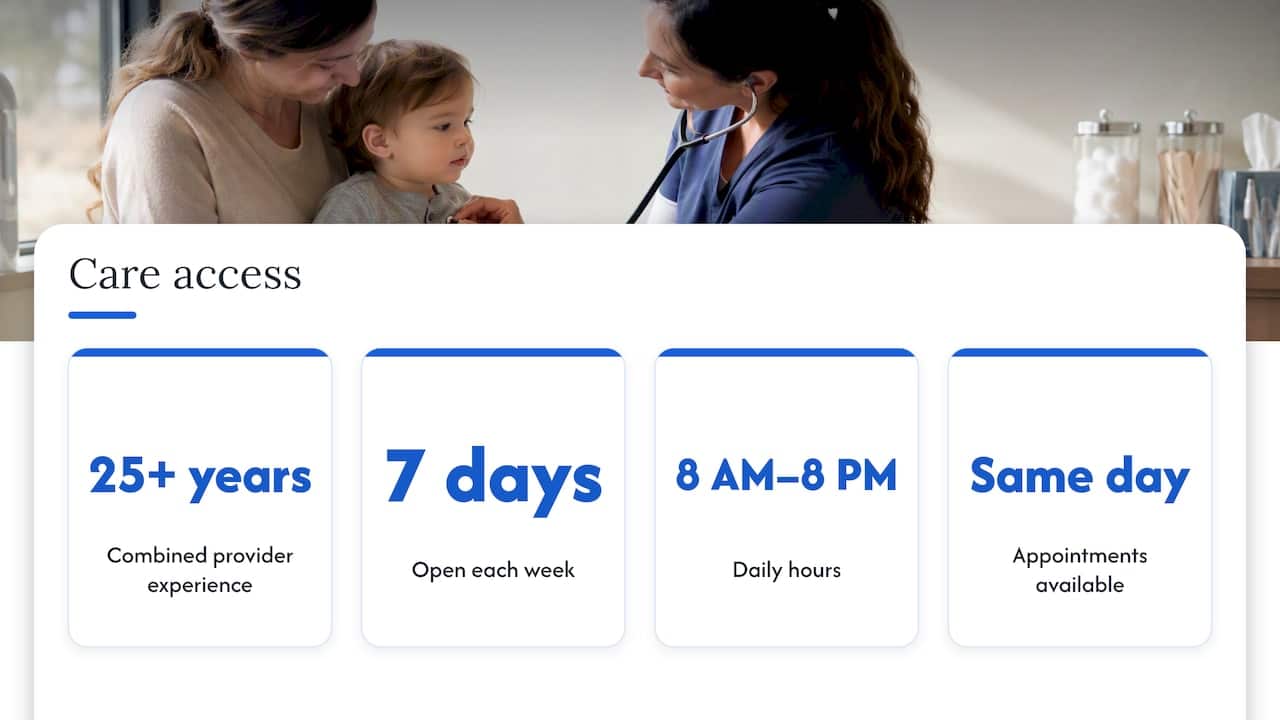
Our providers have more than 25 years of combined experience, and we are open seven days a week, 8 AM to 8 PM, with same-day appointments. That matters with RSV because the turning point often comes on day three, four, or five, which can land on a weekend or in the evening. You should not have to wait for a Monday appointment when your toddler is wheezing on a Saturday.
We also want to be clear about what we do not want you to do: sit at home worrying. Most toddlers with RSV recover with rest and fluids, and we are glad to tell you that after examining your child. If we see signs that call for a hospital, we will say so plainly and help you with the next step. A visit that ends with “this is a cold, here is what to watch for” is a good outcome, not a wasted trip.
— Lisa
Seeing your toddler at our Lutz clinic
If your toddler has cold symptoms that are getting worse, is wheezing, or is drinking less, you can walk in without an appointment or ask for a same-day visit. We take care of children and adults, accept major health insurance plans and Medicaid, and offer self-pay for families without coverage. Our urgent care in Lutz is open seven days a week.
For ongoing care, including checkups, immunizations, and keeping a record of your child’s health history, a primary care provider who knows your child can spot changes sooner. You can see everything we offer on our services page.
Reducing the spread of RSV in your home
The CDC says families can reduce the spread of RSV by washing or sanitizing hands often, cleaning frequently touched surfaces, and staying home and away from others when sick. Because a toddler can be contagious for days, and sometimes longer, these habits matter even after your child seems better.
A few practical steps for a household with a sick toddler:
- Wash hands after wiping noses, changing diapers, and before preparing food.
- Wipe down toys, doorknobs, table tops, and cups that your child has handled.
- Do not share cups, utensils, or pacifiers.
- Keep your child home from daycare or preschool while they are sick.
- Keep visits from newborns, very young babies, and anyone with a weakened immune system to a minimum until your toddler has recovered.
- Ask adults with cold symptoms to keep their distance from the baby of the house.
These habits also help against other respiratory illnesses. Our five tips to avoid COVID-19 overlap with them.
Frequently asked questions
Is RSV just a common cold?
In many toddlers, RSV looks and feels like a common cold, and the CDC describes it as usually causing a mild, cold-like illness. The difference is that RSV can also settle in the lower airways and cause bronchiolitis or pneumonia. That is why wheezing, trouble breathing, or poor drinking should always be checked.
Can RSV cause a cough in toddlers?
Yes. A cough is one of the most common RSV symptoms, along with a runny nose, congestion, and sneezing. It often starts mild and dry. A cough that gets deeper and turns into wheezing is a warning sign, according to Yale Medicine, and should be seen the same day.
Is RSV contagious without a fever?
Yes. Fever is not required for a child to spread RSV, and many young children with RSV do not have one. According to the CDC, people with RSV are usually contagious for 3 to 8 days. Some infants and people with weakened immune systems can spread it for 4 weeks or longer.
When should I take my toddler to urgent care for RSV symptoms?
Come in the same day if your toddler is wheezing, breathing with effort, drinking much less than usual, or getting worse after several days of illness. If your child is struggling to breathe, has a bluish color around the lips, or is very hard to wake, call 911 instead.
Sources
- Symptoms and Care of RSV, CDC
- RSV in Infants and Young Children, CDC
- How RSV Spreads, CDC
- Clinical Overview of RSV, CDC
- RSV (Respiratory Syncytial Virus), Yale Medicine
- Respiratory Syncytial Virus (RSV), FDA