


If you have moderate flu symptoms and can get to urgent care within 48 hours of when they started, that visit can genuinely speed your recovery by opening the door to antiviral treatment. Urgent care is the right choice for most people with fever, body aches, and fatigue that are bad enough to worry about but not life-threatening. Save the emergency room for red-flag symptoms like trouble breathing or a bluish tint to the lips. If you fall into a high-risk group, don’t wait to see how you feel tomorrow. Go now.
TL;DR:
- Early antiviral treatment within 48 hours is crucial, especially for high-risk groups like children under 5, seniors over 65, pregnant women, and those with chronic or immune conditions.
- Urgent care can quickly diagnose and prescribe antivirals, perform necessary tests, and provide IV fluids, but cannot handle emergency-level respiratory support or inpatient care.
- Symptoms worsening after the initial 48-hour window or signs of severe illness, such as difficulty breathing or bluish lips, require immediate emergency room attention.
- For mild symptoms past the 48-hour window and without signs of worsening, home care with rest, fluids, and over-the-counter medication is usually appropriate.
- Prompt same-day evaluation at clinics like Your Family Walk-In Clinic significantly improves the chances of shortening illness and avoiding complications.
Table of Contents
- When Should You Go to Urgent Care for Flu Symptoms?
- What Can Urgent Care Actually Do for Flu?
- How Do Antiviral Medicines Work and When Do They Help Most?
- Who Should Seek Flu Care Early Because of Higher Risk?
- What Symptoms Mean You Need Emergency Care, Not Urgent Care?
- What Happens During an Urgent Care Visit for Flu?
- How Should You Care for Yourself Before You Can Be Seen?
- Why Fast Access to Care Changes Flu Outcomes
- Get Same-Day Flu Care at Your Family Walk-In Clinic
- Sources
- FAQ
When Should You Go to Urgent Care for Flu Symptoms?
The clock matters more than most people realize. Antiviral medications work best when started within 48 hours of your first symptom, and their benefit shrinks the longer you wait. That’s the single biggest reason to consider flu treatment at urgent care instead of riding it out at home for a week and hoping for the best.
You don’t need to guess whether your symptoms qualify. A few patterns make an urgent care visit the smart move:
- Fever above 101°F that isn’t responding to over-the-counter medicine
- Body aches severe enough to keep you out of work or off your feet
- Signs of dehydration, like a dry mouth, dizziness, or noticeably less urination
- Vomiting or diarrhea that’s preventing you from keeping fluids down
- Symptoms that started less than two days ago and seem to be intensifying rather than easing
Antivirals can shorten flu illness by a small amount when started within that 48-hour window, according to CDC guidance on antiviral use for influenza. A single day sounds modest until you’re the one flat on your back with a toddler at home or a job you can’t miss.
Not every case needs a visit. If your symptoms are mild, you’re otherwise healthy, and you’re past the 48-hour mark with no signs of getting worse, resting at home is often reasonable, according to CDC guidance on what to do if you get sick with flu. Telehealth can be a reasonable stand-in when you mainly need reassurance or a same-day prescription and don’t have a fever spike or dehydration concern. But if you’re unsure which category you fall into, or if you’re inside that first two days and want antivirals on the table, urgent care versus a wait-and-see approach at your primary care office usually comes down to which one can see you today.
What Can Urgent Care Actually Do for Flu?
Urgent care isn’t just a place to get told “yes, it’s the flu.” It’s where you get evaluated, tested when appropriate, and treated on the same visit, usually faster than scheduling with a primary care provider and far faster than the wait in most emergency departments for a non-critical illness.
Here’s what a typical visit can include:
- A rapid flu test, though clinicians know these tests can miss real infections
- A clinical diagnosis based on your symptoms and local flu activity, even without a positive test
- Prescription antivirals when you’re inside or near the treatment window
- IV fluids if you’re dehydrated from fever, vomiting, or poor intake
- Basic labs or a chest x-ray if there’s concern about a secondary infection like pneumonia
- Guidance and prescriptions for fever, cough, and body aches
That second point deserves attention. A negative rapid test doesn’t always mean you’re in the clear. CDC guidance for clinicians on rapid influenza diagnostic tests notes that these tests can miss infections, especially during periods of active community spread. When flu is circulating heavily and your symptoms fit the picture, a clinician may treat you based on clinical judgment rather than waiting on a test result that could be a false negative anyway.
What urgent care can’t do is also worth knowing upfront. It’s not equipped for advanced respiratory support, ventilators, or inpatient admission. If your case needs that level of care, you’ll be evaluated and directed to the emergency room. For the majority of flu cases, though, an urgent care clinic can run basic labs and imaging that cover exactly what a moderate flu case requires.
How Do Antiviral Medicines Work and When Do They Help Most?
Antivirals don’t cure the flu overnight, and they’re not necessary for every case. What they do is interrupt the virus’s ability to replicate, and the timing of when you start them changes how much benefit you get.
Started within 48 hours of symptom onset, antivirals typically shorten the illness by about one day on average, according to CDC’s summary of antiviral use for seasonal influenza. That’s the headline number, but the more important detail is what happens outside that window: the benefit drops off substantially after 48 hours, though clinicians may still prescribe antivirals later for high-risk patients or those who are hospitalized.
Several antiviral options exist, and not all of them fit every patient:
- Oseltamivir (oral): the most commonly prescribed option, approved for infants as young as two weeks old
- Baloxavir (single oral dose): convenient for adults and older children, but not recommended during pregnancy
- Zanamivir (inhaled): not suitable for people with asthma or other chronic respiratory conditions
- Peramivir (IV): typically reserved for patients who can’t take oral or inhaled medication
Details on dosing and contraindications come from CDC’s clinical guidance on treating influenza with antiviral drugs.
Here’s something many patients don’t expect: your clinician may start treatment before your test results come back, or even without testing at all. CDC’s summary for clinicians recommends prompt antiviral treatment for high-risk outpatients and anyone with severe or progressive illness, without waiting for lab confirmation. When the diagnosis is clinically obvious and the clock is ticking, waiting on a lab result can cost you the window that makes the medicine worth taking.
Who Should Seek Flu Care Early Because of Higher Risk?
Some people don’t have the luxury of waiting to see how symptoms progress. If you fall into one of these groups, treat the 48-hour window as a hard deadline, not a suggestion.
Higher-risk groups include:
- Children younger than 5, especially those under 2
- Adults 65 and older
- Pregnant people, at any stage of pregnancy
- Anyone with a chronic condition like asthma, diabetes, heart disease, or kidney disease
- People who are immunocompromised, including those on immunosuppressive medication or undergoing cancer treatment
For these groups, flu isn’t just uncomfortable. It carries a meaningfully higher chance of complications like pneumonia, hospitalization, or worsening of an existing condition. CDC’s clinical guidance specifically calls for prompt antiviral treatment in higher-risk outpatients, which is exactly why waiting three or four days to “see if it gets better” is the wrong move if you’re pregnant, over 65, or managing a chronic illness. Call a clinician the same day symptoms appear, and say plainly that you’re in a higher-risk category. That detail can change how quickly you’re seen and treated.
What Symptoms Mean You Need Emergency Care, Not Urgent Care?
Most flu cases don’t need the emergency room. But certain symptoms mean you need care faster and at a higher level than urgent care can provide. If you or someone you’re caring for shows any of the following, go to the ER or call 911 rather than waiting for a walk-in slot.
- Difficulty breathing or shortness of breath at rest. This can signal pneumonia or another serious lung complication that needs immediate imaging and treatment.
- Persistent chest pain or pressure. Flu can strain the heart, particularly in people with existing cardiovascular disease.
- Sudden confusion or trouble staying awake. This can indicate the infection is affecting oxygen levels or spreading beyond the respiratory system.
- Bluish lips or face. A visible sign that oxygen levels have dropped to a dangerous point.
- Seizures. Always an emergency, particularly in children with high fevers.
- Not urinating for a full day, or urinating very little. A marker of severe dehydration that IV fluids in an ER setting may need to address more aggressively than urgent care can.
- Symptoms that improve, then suddenly return worse with high fever and worsening cough. This pattern can point to a secondary bacterial infection.
Choosing the right setting isn’t about which is “better.” It’s about matching the severity of what’s happening to the level of care it requires. As Ohio State University Health explains in comparing flu care settings, emergency departments are built to treat life-threatening conditions, and that focus means longer waits for anyone whose case isn’t in that category.
What Happens During an Urgent Care Visit for Flu?
Walking into urgent care without knowing what to expect adds stress you don’t need when you’re already feeling awful. The process is straightforward, and knowing the steps ahead of time helps you get through it faster.
A typical visit looks like this:
- Check-in and basic intake, including insurance or payment information
- Vitals check: temperature, heart rate, blood pressure, oxygen level
- A clinical exam, where the provider listens to your lungs and asks about your symptoms and when they started
- A rapid flu test, if appropriate for your situation
- A clinical diagnosis, sometimes made without waiting for test confirmation
- A prescription for antivirals, symptomatic relief, or both
- Instructions for follow-up, including when to seek further care if you don’t improve
Bring a photo ID, a list of any current medications, and your insurance card if you have one. Most urgent care clinics also accept self-pay for patients without coverage.
Pro Tip: Write down the exact time your symptoms started before you walk in, not just “a couple days ago.” That detail helps your clinician calculate where you stand in the 48-hour antiviral window and can be the deciding factor in whether they prescribe treatment on the spot.
How Should You Care for Yourself Before You Can Be Seen?
Whether you’re waiting for an appointment or just monitoring symptoms overnight, a few basic steps make a real difference and protect the people around you.
At home, focus on:
- Resting as much as your schedule allows, since your body needs energy to fight the infection
- Drinking water, broth, or an electrolyte drink regularly, even in small sips if you’re nauseated
- Taking acetaminophen or ibuprofen for fever and body aches, following package dosing
- Staying away from other household members as much as possible, and wearing a mask if you have to leave your room
- Washing your hands frequently and wiping down shared surfaces like doorknobs and counters
Leave home for care if your symptoms are worsening rather than improving, if you fall into a higher-risk group, or if you’re still within that 48-hour window and want to be evaluated for antivirals before it closes.
Pro Tip: Keep a simple note on your phone tracking when your fever started, how high it’s gotten, and any new symptoms. If things escalate and you end up at urgent care or the ER, that timeline speeds up triage significantly.
Why Fast Access to Care Changes Flu Outcomes
The 48-hour antiviral window isn’t just a clinical detail. It’s the entire reason access matters as much as diagnosis. A correct diagnosis delivered on day four of symptoms doesn’t help nearly as much as a same-day evaluation on day one.
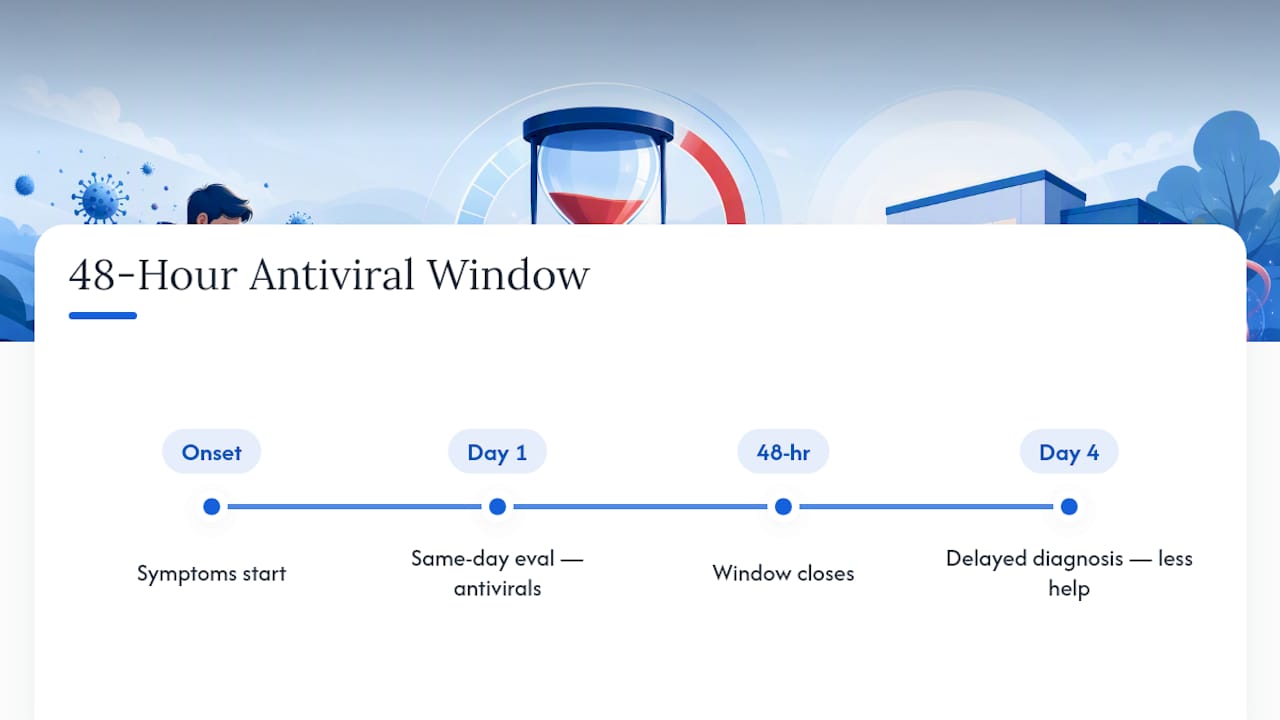
That’s the piece of flu care I think gets underappreciated. People assume the medicine is the hard part. It’s not. The hard part is getting seen fast enough for the medicine to matter. Author Lisa, who brings more than 25 years of clinical leadership experience to Your Family Walk-In Clinic, has seen this play out repeatedly: patients who wait to “see if it clears up” often end up outside the window where antivirals do the most good.
Same-day scheduling and seven-day-a-week hours aren’t just convenience features. They’re what actually keeps patients inside that treatment window. A clinic that can see you the same afternoon you notice a fever, and follow up within two to seven days if symptoms aren’t improving, closes the gap between symptom onset and treatment that determines whether antivirals help much at all.
— Lisa
Get Same-Day Flu Care at Your Family Walk-In Clinic
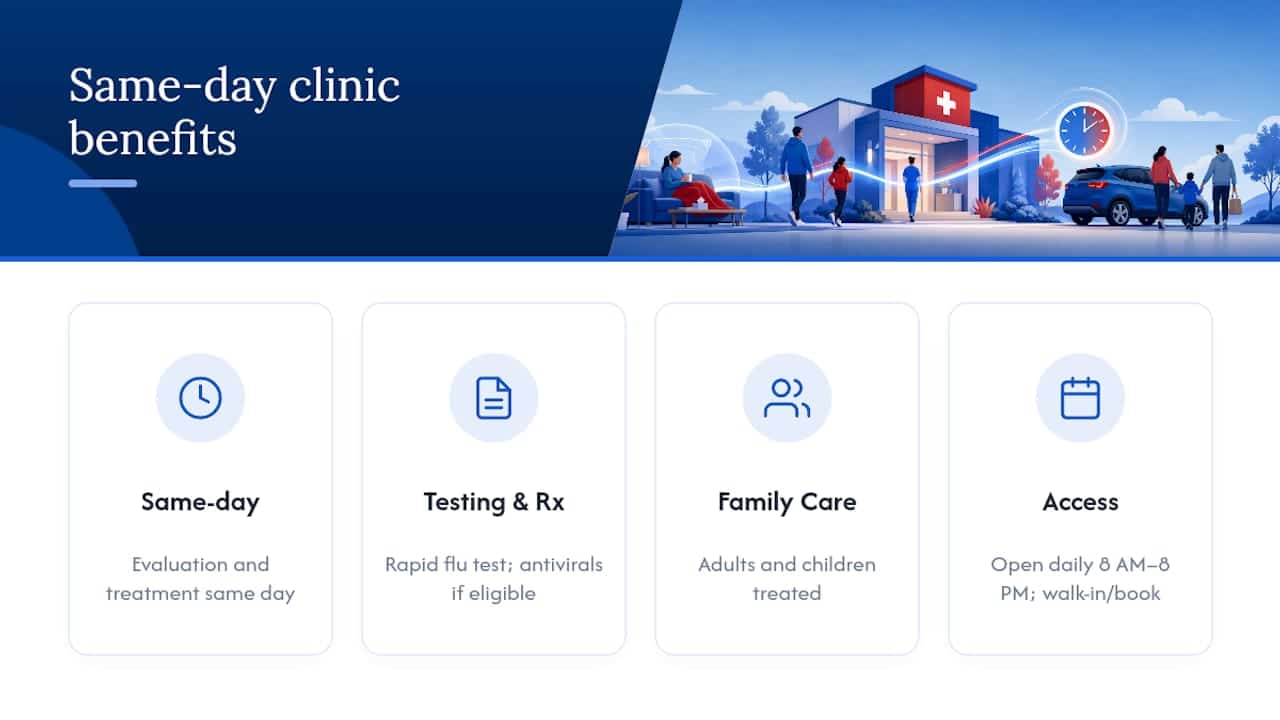
Your Family Walk-In Clinic gets you evaluated and treated the same day, without the multi-day wait for a primary care appointment or the long emergency room queue for symptoms that don’t need that level of care.

Whether you walk in or book online, you’ll be seen by a provider who can order a rapid flu test, make a clinical diagnosis even if that test comes back negative, and prescribe antivirals on the spot if you’re within the treatment window. That matters most in the exact situation this article covers: getting to a clinician fast enough for medication to actually shorten your illness. Your Family Walk-In Clinic treats both adults and children, accepts major insurance plans along with Medicaid and self-pay, and keeps its doors open seven days a week from 8 AM to 8 PM specifically so a fever on a Saturday morning doesn’t turn into a Monday appointment.
If you’re managing symptoms for your family, the clinic’s pediatric and adult care under one roof means you’re not shuttling between providers while a treatment window closes. Visit the urgent care page open seven days a week to see today’s availability, or head to the Lutz urgent care and primary care clinic to book your visit now.
This article is general information, not a substitute for advice from a qualified doctor. Consult a qualified healthcare professional about your own circumstances before acting on anything here.
Sources
- Antiviral use for seasonal influenza — CDC (archived)
- Flu: doctors office or emergency department? — Ohio State University (Health)
FAQ
Will urgent care do anything for the flu?
Yes. Urgent care can test for flu, make a clinical diagnosis, prescribe antivirals within the treatment window, and provide IV fluids or symptomatic medication for moderate cases.
Should you stay in bed all day with the flu?
Rest is important, but staying in bed all day isn’t required unless your fever or fatigue makes activity unsafe; moderate rest paired with fluids and monitoring your symptoms is generally enough for mild cases.
Will a doctor prescribe you anything for the flu?
Yes, clinicians commonly prescribe antivirals like oseltamivir or baloxavir, especially within 48 hours of symptom onset or for patients in higher-risk groups, along with medication for fever and body aches.
What helps the flu go away fast?
Starting antiviral treatment within 48 hours of symptom onset is the most effective step, since it can shorten illness by about a day, combined with rest, fluids, and fever management at home.