
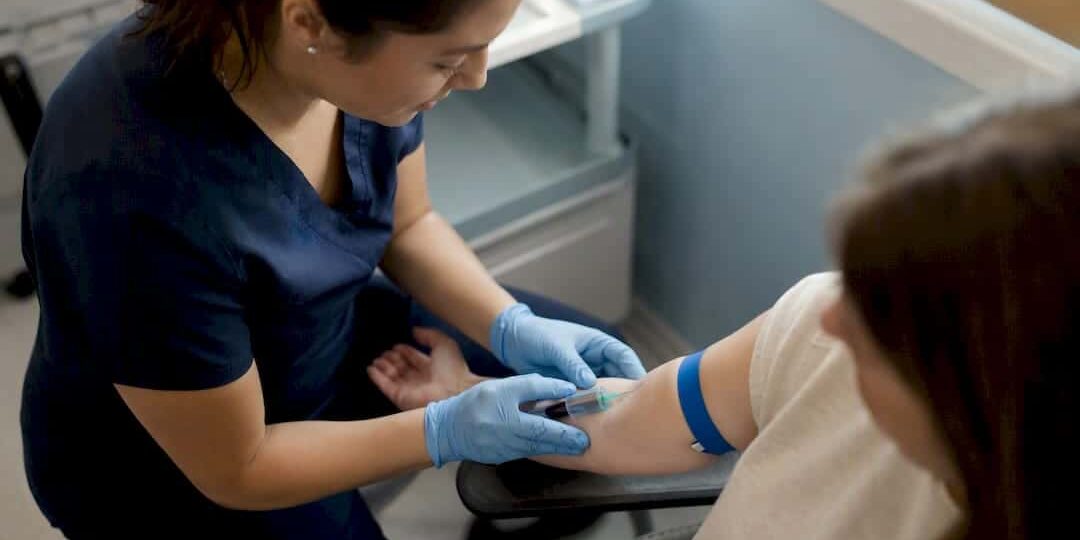
Herpes test accuracy depends entirely on which test you took and when you took it. A PCR swab from an active sore is highly reliable, catching viral DNA with sensitivity and specificity that most other STD tests can only envy. A blood antibody test is a different story: in someone at low risk for herpes, a positive result can easily be a false alarm, especially when the lab reports a low index value.
Here is what your result actually means, based on the test type behind it:
- A positive NAAT/PCR from an active lesion almost always confirms true infection. This is the gold-standard method when sores or blisters are present.
- A positive IgG antibody (blood) test with a low index value, under 3.0, carries a real chance of being a false positive, particularly if you had no known exposure or symptoms.
- IgM antibody tests are outdated for herpes diagnosis. They cannot reliably distinguish HSV types and often turn positive during recurrent outbreaks, not just new infections, so most clinicians will not use them.
- A negative test taken too soon after exposure doesn’t rule out infection. Antibodies take time to develop, and lesion samples taken too late in the healing process lose accuracy too.
If your lesion swab came back positive, talk with a clinician about treatment and next steps. If your blood test came back positive with a low index value, ask about confirmatory testing or a repeat test before treating it as a confirmed diagnosis.
Key Takeaways
Herpes testing accuracy depends on matching the right test to your symptoms and exposure timing, since no single method works well in every situation.
| Point | Details |
|---|---|
| Lesion PCR is most reliable | NAAT/PCR from an active sore offers the strongest sensitivity and specificity of any current method. |
| Low-index blood results need scrutiny | Index values under 3.0 carry a meaningfully higher false-positive risk on many commercial assays. |
| Timing changes the answer | Wait around 12 weeks after exposure before trusting a negative serology result. |
| Prevalence shapes predictive value | The same test produces more false positives in low-risk, low-prevalence groups than in high-risk ones. |
| Local testing closes the gap | Your Family Walk-In Clinic offers same-day lesion NAAT and IgG serology with clinician counseling on confusing results. |
Table of Contents
- Understanding Herpes Testing Accuracy: How Each Method Works
- What the Published Accuracy Numbers Actually Show
- When to Test for Herpes After Exposure: Timing Rules That Matter
- How to Interpret Your Herpes Test Result and What to Do Next
- Why Herpes Tests Sometimes Get It Wrong
- Who Should Actually Get Tested for Herpes
- How Your Family Walk-In Clinic Handles Herpes Testing
- The Number on Your Lab Report Isn’t the Whole Story
- Get Tested With Someone Who Reads the Whole Result
- Sources
- FAQ
Understanding Herpes Testing Accuracy: How Each Method Works
Accuracy of herpes tests hinges on matching the right test to the right moment in the infection. Three main tools exist, and they are not interchangeable.
-
NAAT/PCR from a lesion swab. This test detects the virus’s own DNA directly from a sore, blister, or ulcer. It’s the preferred diagnostic method when lesions are present, because it targets the virus itself rather than the body’s reaction to it. Turnaround is usually a few days, and the specimen needs to be collected properly from an open or unroofed lesion for the best yield.
-
Viral culture. Older labs still use this method, which attempts to grow live virus from a swab. It works, but it’s noticeably less sensitive than PCR, and that sensitivity drops fast as a lesion heals or crusts over. A culture taken on day five of an outbreak tells you much less than one taken on day one.
-
Type-specific IgG serology (blood test). This measures antibodies your immune system built against HSV-1 or HSV-2 at some point in the past. It cannot tell you where the infection is located. A positive HSV-1 IgG might reflect a childhood cold sore, a genital infection, or both. MedlinePlus notes that these blood tests are typically reserved for situations where no active lesion is available to swab. Results come back as an index value, and anything in the equivocal range near the cutoff deserves a second look rather than a snap judgment.
-
IgM testing. Skip this one. IgM antibodies aren’t type-specific, they show up during recurrences as well as new infections, and they add confusion rather than clarity. Most current clinical guidance leaves it out of the recommended toolkit entirely.
What the Published Accuracy Numbers Actually Show
Sensitivity tells you how often a test correctly catches a true infection. Specificity tells you how often it correctly clears someone who doesn’t have the virus. Both numbers sound reassuring in isolation, but what actually determines whether your result is trustworthy is a third concept: positive predictive value, or PPV, which depends heavily on how common the infection is in the group being tested.
Pro Tip: Ask your clinician for the exact index value on a positive blood test, not just “positive” or “negative.” The number itself tells you far more than the label does.
Lesion-based PCR testing performs the strongest of any current method, with published sensitivity commonly in the 91 to 100 percent range and high specificity when the sample is collected from active tissue. Viral culture trails behind on sensitivity, particularly on healing lesions.
Serology is where the numbers get messier. A large assay-comparison study found that automated HSV-2 IgG tests vary substantially by platform: some perform above 97 percent for both sensitivity and specificity, while others show meaningfully higher false-positive rates, especially near the low end of the index scale. HSV-1 serology tends to run less accurate across the board than HSV-2 testing, partly because HSV-1 antibodies are so common in the general population from childhood cold sores.
- Low-positive index values under 3.0 are associated with elevated false-positive rates across multiple commercial assays, a pattern strong enough that some labs now recommend a second confirmatory test before a low-index result is treated as a genuine finding.
- Prevalence changes everything. If HSV-2 prevalence in a tested population is around 12 percent, a positive result on a good assay is fairly likely to be a true positive. Drop that prevalence to 2 percent, the rate typically seen in low-risk groups with no symptoms and no known exposure, and the same test produces a meaningfully higher share of false positives simply because there are fewer true cases to find. This is the exact math behind why the USPSTF cautions that routine screening in low-prevalence groups can do more harm than good.
The FDA has separately flagged that certain HSV-2 serologic tests can generate false-reactive results, which is exactly why a single positive blood test, especially an unexpected one, deserves a second conversation rather than an immediate diagnosis.
When to Test for Herpes After Exposure: Timing Rules That Matter
Testing too early is one of the most common reasons people get a misleading result. Your immune system needs time to build detectable antibodies, and a lesion needs to be sampled while it’s still active for a swab to work.
- If you have an active sore or blister, get swabbed immediately for NAAT/PCR. Waiting lets the lesion heal and drops your accuracy.
- If you were exposed but have no symptoms, hold off on blood testing. Seroconversion, meaning the point where your body has produced enough antibody to be detected, typically takes six to sixteen weeks, and clinical guidance generally suggests waiting around 12 weeks for the most reliable serology result.
- If an early test comes back negative but exposure was recent, don’t treat that as final. Schedule a retest once you’ve cleared the window period.
- If you’re pregnant or immunocompromised, timing recommendations may shift, since both antibody response and disease risk can behave differently. A clinician should tailor the schedule to your situation rather than applying a one-size answer.
How to Interpret Your Herpes Test Result and What to Do Next
A result on paper is not the same as a diagnosis. What happens next depends on which test you took and what the number actually says.

If your lesion NAAT/PCR came back positive, this is generally accepted as a confirmed infection in most clinical settings. The next step is a conversation about treatment options, outbreak management, and how to talk with partners, not more testing.
If your blood test (IgG) came back positive with a low index value and you’re at low risk, don’t let that result stand alone.
- Ask whether a confirmatory test, such as Western blot where available, or a different assay platform can double-check the finding.
- Consider a repeat IgG test after the appropriate interval rather than accepting a single low-index number as definitive.
- Talk with a clinician about your actual exposure history before deciding what the result means for you.
If your test was negative but your exposure was recent, the window period is the most likely explanation, not a false test. Retesting after the recommended interval closes that gap.
Where Western blot confirmation isn’t accessible, which is common outside specialty labs, the pragmatic path is a second assay on a different platform or a repeat serology draw after 12 weeks. Either way, counseling matters as much as the number: understanding what a result does and doesn’t prove shapes decisions about disclosure and treatment far more than the raw lab value does.
Why Herpes Tests Sometimes Get It Wrong
Most false results trace back to a handful of predictable causes, and knowing them helps you ask sharper questions instead of just worrying.
- Low index values near the assay’s cutoff are the single biggest driver of false-positive blood tests, and the problem shows up across multiple commercial assays, not just one brand.
- Widespread HSV-1 exposure from childhood means a positive HSV-1 IgG frequently reflects an old cold sore, not a genital infection, which is why type alone can’t tell you the location of exposure.
- Poor timing on lesion sampling (swabbing a healing or crusted sore) drops NAAT and culture sensitivity noticeably compared to sampling a fresh lesion.
- Lab-to-lab variability and limited Western blot access mean two different labs can occasionally hand back different confidence levels on the same borderline sample.
Who Should Actually Get Tested for Herpes
Not everyone benefits from herpes testing, and testing the wrong population is where accuracy problems cause the most real-world harm.
- Get tested if you have genital symptoms, including sores, unusual discharge, or recurring irritation your clinician hasn’t already explained.
- Get tested if your partner has a confirmed genital herpes diagnosis, even if you have no symptoms yourself, since knowing your status shapes prevention conversations.
- Get tested if you have HIV or another condition affecting immune function. Immunocompromised patients can have atypical lesion presentation and sometimes need more careful interpretation of test results, since the immune response driving standard antibody tests may behave differently.
- Skip routine screening if you’re asymptomatic with no known exposure. The CDC does not recommend testing people without symptoms for this exact reason: false positives in low-risk groups create anxiety and relationship strain without a clear clinical benefit. The USPSTF has reaffirmed this position for adolescents, adults, and pregnant patients specifically.
- If you’re pregnant, testing decisions typically focus on symptomatic evaluation and known partner status rather than blanket screening, since the same low-PPV problem applies during pregnancy too.
How Your Family Walk-In Clinic Handles Herpes Testing
Getting the right test at the right time takes more than a lab order. It takes someone who can read the result in context.
- Lesion swab NAAT testing when you’re actively symptomatic, so you get the most reliable answer available.
- Type-specific IgG serology when appropriate, with counseling on what an index value actually means for your specific situation.
- Same-day appointments seven days a week, so you’re not waiting weeks to get evaluated during an active outbreak.
- Follow-up testing plans for low-index results or recent exposures that fall inside the window period.
Your Family Walk-In Clinic has provided community-based STD testing and treatment in Lutz for years, with clinicians experienced in exactly the kind of nuanced result interpretation this article describes. If a lab hands you a confusing number, that context is what turns it into an answer you can act on.
The Number on Your Lab Report Isn’t the Whole Story
Most people treat a herpes test result as a yes-or-no answer, and that’s the conventional wisdom this article pushes back on. The math behind these tests, particularly the blood antibody versions, means a positive result can mean radically different things depending on your risk profile going in.
What gets underestimated is how much the index value matters compared to the simple positive/negative label. Two people can get the identical word “positive” on their paperwork, and one result is nearly certain to be a true infection while the other has a real shot at being wrong. That distinction rarely gets explained at the point of care, which is where a lot of unnecessary distress comes from.
If there’s one thing to prioritize, it’s asking for the actual number, not just the verdict, and asking whether a low-index result warrants confirmation before you accept it. Testing method and timing matter more than most people assume, and a clinician who understands that nuance is worth more than a faster result.
— Lisa
Get Tested With Someone Who Reads the Whole Result
Your Family Walk-In Clinic gives you something a home test kit or a rushed urgent care visit often can’t: a clinician who explains what your specific number means, not just whether the box says positive or negative. That distinction, as this article has shown, is exactly where herpes testing accuracy gets complicated.
Whether you have an active sore that needs same-day NAAT testing or a confusing low-index blood result from another provider, Your Family Walk-In Clinic in Lutz offers walk-in access seven days a week, from morning to evening, with extensive combined clinical experience behind every result. The clinic also works alongside complementary care resources, including options like herbal support information for genital herpes for patients exploring symptom management alongside standard treatment. If you’re dealing with symptoms now or need a follow-up test after a window-period wait, schedule STD testing and get an answer you can actually trust.
This article is general information, not a substitute for advice from a qualified doctor. Consult a qualified healthcare professional about your own circumstances before acting on anything here.
Sources
- Comparison of the Accuracy of HSV1 and HSV2 Antibody Tests with PCR in the Diagnosis of Recurrent Genital Herpes
- HSV-2 tests for genital herpes can produce false reactive results (FDA communication)
FAQ
What Are the Chances of Being Misdiagnosed With Herpes?
Misdiagnosis risk depends on the test. Lesion PCR is rarely wrong, but a low-index blood antibody result in someone at low risk carries a meaningfully higher chance of being a false positive, which is why confirmatory testing matters before accepting the result as final.
Can HSV-1 Blood Tests Give a False Positive Result?
Yes. HSV-1 antibodies are extremely common from childhood cold sores, so a positive HSV-1 IgG doesn’t confirm genital infection, and low-index results on HSV-1 assays carry a real potential for false positives similar to those seen in HSV-2 testing.
What Can Be Mistaken for Herpes in Women?
Conditions like ingrown hairs, yeast infections, contact dermatitis, and other skin irritations can visually resemble a herpes outbreak. That overlap is one reason clinicians prefer swabbing an active lesion for NAAT/PCR testing rather than relying on appearance alone.
My Doctor Told Me Not to Disclose My Herpes. Was This Normal?
That guidance would be unusual and doesn’t reflect standard clinical practice. Most care providers, including those at Your Family Walk-In Clinic, support shared decision-making around disclosure rather than advising against it, especially once a diagnosis has been appropriately confirmed.
Recommended
- Same-Day UTI Treatment & STD Testing in Lutz | Women’s & Men’s Care
- STD Tests Lutz (813) 793-8555 – STD Screening & Testing Clinic – 33558
- The Imperative Call: Why STD Testing is Crucial for Your Health – Your Family Walk In Clinic
- Rapid Covid 19 Test is Available at Your Family Walk in Clinic in Lutz – Your Family Walk In Clinic