

Your recommended vaccines depend on two things: your age and your specific health risks. The CDC’s Recommended Adult Immunization Schedule, built with the Advisory Committee on Immunization Practices (ACIP), is the authoritative reference. Most adults need annual flu and updated COVID-19 vaccines, a Tdap booster every 10 years, age-triggered shingles and pneumococcal vaccines, and select others based on pregnancy, chronic illness, or occupation. Pull your immunization record and book a visit with a provider to confirm exactly where you stand.
TL;DR:
- Adults aged 50 and older now universally should receive pneumococcal vaccines, including PCV21, at their routine checkups to ensure timely protection.
- The CDC recommends COVID-19 updated vaccines seasonally, with increased dosing or booster considerations for immunocompromised and older adults.
- The recommended schedule emphasizes annual flu shots for most adults, with high-dose or adjuvanted vaccines preferred for those over 65.
- Pregnancy requires specific timing for Tdap and RSV vaccines, which should be administered during defined windows to protect both mother and infant.
- Vaccination needs may change over time as schedules are revised, making annual status checks with a healthcare provider essential.
Table of Contents
- What Does the Adult Vaccine Schedule Recommend by Age?
- How Do Health Conditions Change Your Vaccine Recommendations?
- What Are the Most Important Vaccine Updates for 2026?
- How Do You Get Vaccinated and Confirm You’re Covered?
- How Your Family Walk-In Clinic Helps Adults Stay Current
- What Adults Actually Get Wrong About Vaccine Timing
- Ready to Check Your Vaccine Status Today?
- Where to Verify the Official Adult Immunization Schedule
- Sources
- FAQ
What Does the Adult Vaccine Schedule Recommend by Age?
The CDC organizes its adult immunization schedule into two tables. Table 1 sorts recommendations by age group, while Table 2 covers medical conditions. Age is the simpler starting point, so here’s what applies at each stage of adulthood.
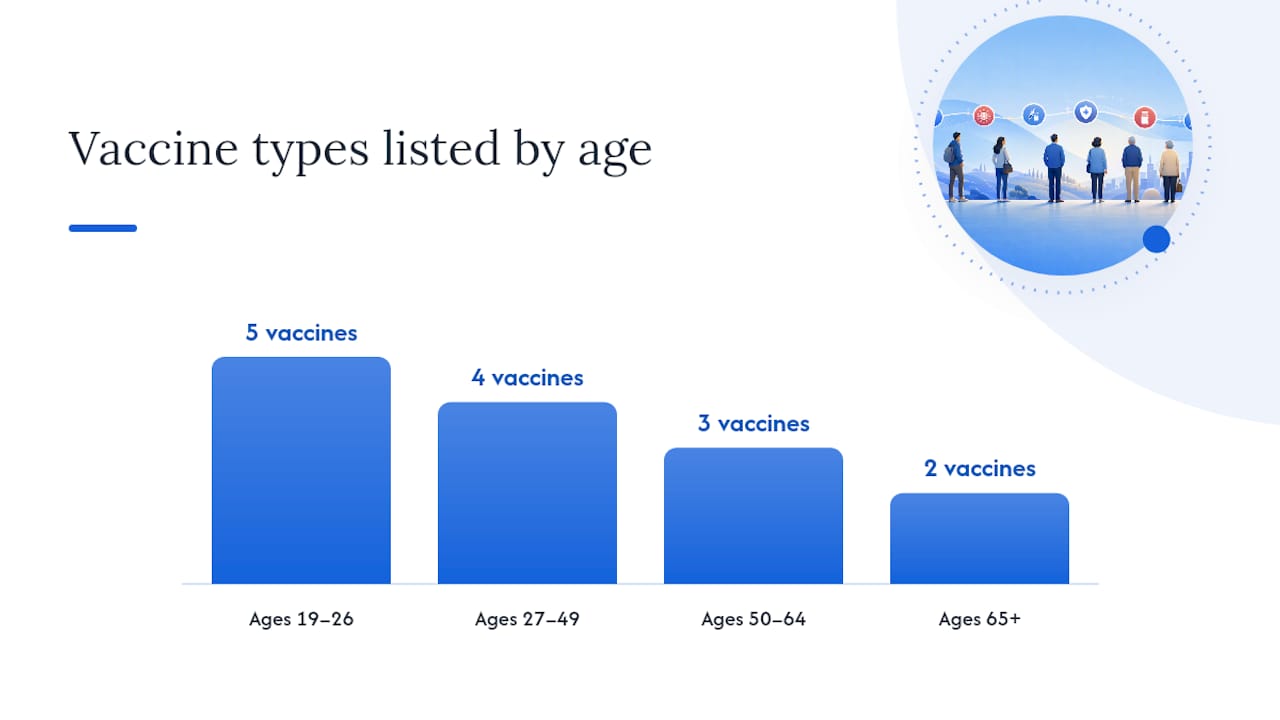
Ages 19 to 26. If you missed HPV vaccination as a teenager, this is the window for catch-up doses; the series works best before age 26, though shared decision-making extends it further for some adults. You’ll also want an annual flu shot, an updated COVID-19 vaccine per current recommendations, and MMR or varicella vaccines if you never had them or lack documented immunity. A college-bound reader often needs a meningococcal booster too, since many campuses require it for dorm living.
Ages 27 to 49. Tdap timing gets specific here: if you haven’t had a Tdap dose as an adult, get one now, then switch to Td or Tdap boosters at regular intervals thereafter. HPV vaccination remains an option through age 45 under shared clinical decision-making, meaning you and your provider weigh your individual risk and benefit rather than following a blanket rule. Annual flu and updated COVID-19 vaccines still apply, and any condition-based vaccines (covered below) layer on top.
Ages 50 to 64. This decade often triggers the recombinant zoster vaccine (RZV, brand name Shingrix), recommended for most adults starting at 50 regardless of whether they remember having chickenpox. Pneumococcal vaccination becomes relevant earlier for people with certain chronic conditions, even though the universal recommendation doesn’t start until 50 for the vaccine series or 65 for others. Flu vaccination continues annually, and standard-dose flu vaccines remain appropriate for most people in this range.
Ages 65 and older. Two vaccines become near-universal at this stage. RZV is recommended for essentially everyone 50 and older who hasn’t received it, and pneumococcal vaccination is recommended for all adults 50 and up under the 2025 schedule update, using PCV21 among the newer options available. For flu, the CDC’s Notes specify a preference for higher-dose or adjuvanted products, specifically HD-IIV3, aIIV3, or RIV3, when they’re available, because standard-dose flu vaccines produce a weaker immune response in older adults. COVID-19 dosing guidance may differ for this group, sometimes allowing additional doses based on timing and risk factors.
- 19 to 26: HPV catch-up, MMR/varicella if needed, annual flu, updated COVID-19, meningococcal vaccination as appropriate
- 27 to 49: First adult Tdap then boosters every 10 years, HPV through 45 (shared decision-making), annual flu, updated COVID-19
- 50 to 64: RZV (Shingrix) typically starts here, condition-based pneumococcal vaccination, and annual flu vaccination
- 65 and older: RZV and pneumococcal vaccinations commonly recommended, preferred high-dose or adjuvanted flu vaccines for older adults, and COVID-19 vaccine dosing per current guidance
None of this replaces a conversation with your provider.
How Do Health Conditions Change Your Vaccine Recommendations?
Age is only half the picture. Table 2 of the CDC schedule lists vaccines tied to specific medical conditions, pregnancy status, and lifestyle factors, and these recommendations frequently call for additional doses or a different schedule entirely than age alone would suggest.
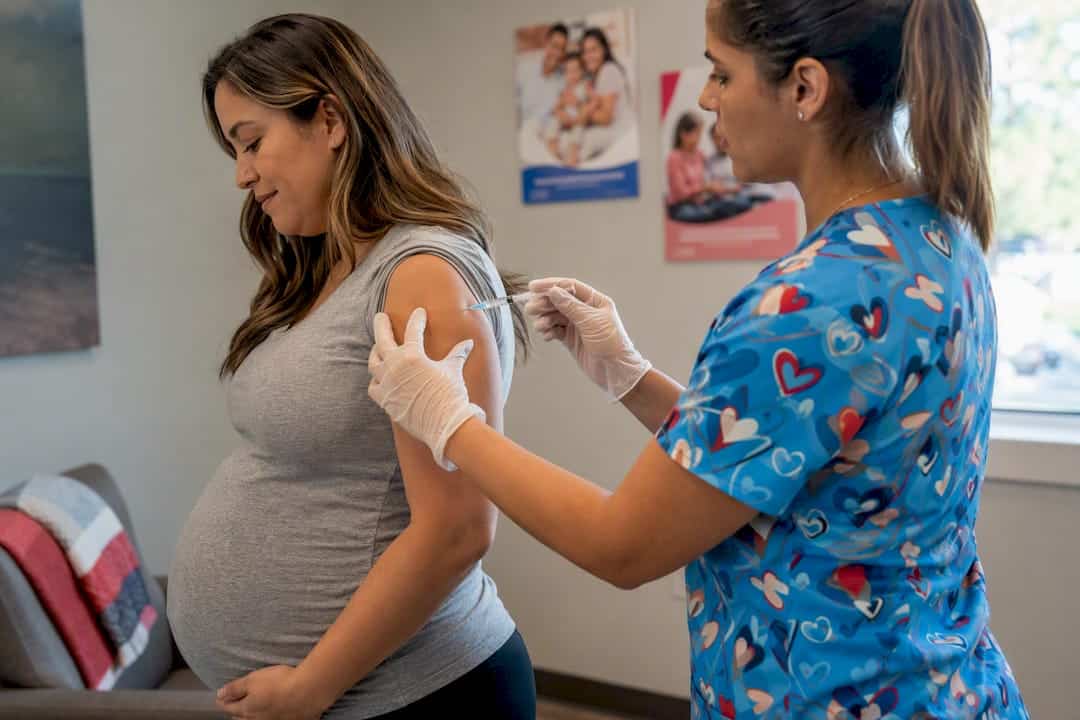
Pregnancy changes several recommendations at once. Every pregnancy calls for a Tdap dose, ideally between 27 and 36 weeks, to pass pertussis antibodies to the newborn before their own vaccination series starts. RSV vaccination during pregnancy follows a specific window too, generally 32 weeks 0 days through 36 weeks 6 days of gestation during RSV season, to protect the infant during the vulnerable first months of life.
Immunocompromising conditions, whether from HIV, cancer treatment, organ transplant, or immunosuppressive medication, often mean additional COVID-19 doses, a different RZV approach, and expanded pneumococcal coverage compared to healthy adults of the same age. Asplenia (a missing or nonfunctioning spleen) raises the priority of pneumococcal and Hib vaccination because the spleen normally helps filter certain bacteria from the blood. Chronic conditions like diabetes, kidney disease, and liver disease each carry their own adjustments in Table 2.
Lifestyle and occupation matter too. Healthcare personnel typically need documented immunity to MMR, varicella, and hepatitis B, plus annual flu vaccination as a condition of employment in many settings. Men who have sex with men fall under expanded hepatitis A and B recommendations. International travelers may need vaccines that don’t appear on the routine adult schedule at all, including yellow fever, typhoid, or additional hepatitis A doses depending on the destination.
- Pregnancy: Tdap is recommended each pregnancy, and RSV vaccine is recommended during a specific gestational window in pregnancy
- Immunocompromise: Modified COVID-19, RZV, and pneumococcal schedules
- Asplenia: Prioritized pneumococcal and Hib vaccination
- Occupational risk: Healthcare workers need documented MMR, varicella, hepatitis B immunity
- Travel: Destination-specific vaccines beyond the routine adult schedule
Pro Tip: If you can’t locate your childhood or early-adult vaccine records, don’t guess. A provider can order a titer, a blood test that checks for existing antibodies, for vaccines like MMR or varicella rather than automatically re-vaccinating you.
What Are the Most Important Vaccine Updates for 2026?
The 2025 ACIP schedule introduced changes across several vaccine categories that carry into 2026 recommendations, and a few of them are worth understanding in plain terms before your next appointment.
COVID-19. Updated vaccines are recommended on a seasonal basis, similar to flu, with dosing intervals and additional-dose guidance that differ for immunocompromised adults. If you’re unsure whether you’re due, that’s a normal question for a same-day visit rather than something to research alone.
Influenza. Get vaccinated annually, ideally before flu activity picks up in your area. For adults 65 and older, the CDC Notes specify a preference for HD-IIV3, aIIV3, or RIV3 formulations over standard-dose vaccines when supply allows. Flu season timing in Florida can shift earlier than the national average, which is why local seasonal patterns matter for scheduling.
Tdap and Td. One Tdap dose in adulthood, then Td or Tdap every 10 years after. Pregnancy resets this clock with a dose every pregnancy. A deep or dirty wound can also trigger an earlier booster regardless of your 10-year schedule.
RSV. Vaccination is recommended for adults 75 and older, and for adults aged 60 to 74 years with certain risk factors or chronic health conditions. Pregnant patients follow the gestational-window recommendation described above. CDC notes list RSV vaccine options including Arexvy, Abrysvo, and mResvia as examples of currently available products.
Pneumococcal. PCV21 was added to the list of pneumococcal conjugate options in the 2025 update, and recommendations now extend pneumococcal vaccination to all adults 50 and older. Your prior vaccination history, PCV13, PCV15, PCV20, or PPSV23, determines exactly which product and how many doses you still need.
HPV. Routine vaccination is recommended for younger adults, with shared clinical decision-making extending eligibility through age 45.
Zoster (RZV). A two-dose series, spaced two to six months apart, recommended starting at age 50, with an accelerated schedule for immunocompromised adults.
MMR, varicella, hepatitis A and B, and IPV mostly follow routine childhood catch-up logic for adults who missed doses, while mpox vaccination remains targeted at specific risk groups rather than the general adult population.
- COVID-19: seasonal updated doses, adjusted for immunocompromised status
- Influenza: annual, high-dose/adjuvanted preferred at 65+
- Tdap/Td: once per pregnancy, every 10 years otherwise
- RSV: universal at 75+, risk-based 60 to 74, gestational window in pregnancy
- Pneumococcal: PCV21 added, universal recommendation from 50+
- HPV: routine through young adulthood, shared decision-making to 45
- RZV: two doses starting at 50
The extension of pneumococcal vaccination recommendations to age 50 and older is an important update in the schedule. It moves an entire decade of adults, people in their 50s and early 60s, from “not yet eligible” to “recommended now,” and it’s exactly the kind of update that a records review at a visit will catch even if you haven’t heard about it elsewhere.
How Do You Get Vaccinated and Confirm You’re Covered?
Turning the schedule into action follows a predictable sequence, and it’s the same one a provider will walk through with you at a visit.
- Identify your age-based needs. Match your birth year to Table 1’s categories to get your baseline list.
- Layer on condition-based needs. Pregnancy, chronic illness, immunocompromise, or occupational exposure can add vaccines Table 1 alone wouldn’t flag.
- Check the Notes for intervals and contraindications. Some vaccines require spacing of at least 28 days between doses; others are contraindicated with specific allergies or immune conditions.
- Bring or request records. If your history is incomplete, your provider can accept self-report for some vaccines or order a titer for others rather than starting over.
Most adults get vaccinated through primary care, urgent care, or retail pharmacies, and all three are reasonable options for routine vaccines like flu and COVID-19. Less common vaccines, RSV, certain pneumococcal formulations, or mpox, aren’t always in stock everywhere, so a quick call ahead saves a wasted trip.
Cost is usually the deciding factor in where people go. Most major insurance plans, along with Medicare and Medicaid, cover CDC-recommended adult vaccines at no out-of-pocket cost, and self-pay options exist for uninsured patients. If you’re ever concerned about a reaction to a vaccine, two federal programs exist for very different situations: the Vaccine Injury Compensation Program (VICP) covers routine vaccines, while the Countermeasures Injury Compensation Program (CICP) covers vaccines administered under emergency use, such as certain pandemic-era COVID-19 doses.
- Primary care and urgent care clinics for routine and same-day vaccination
- Retail pharmacies for quick access to flu and COVID-19 vaccines
- Specialty vaccines (RSV, mpox, some pneumococcal products) often require calling ahead
- VICP and CICP as the two federal compensation pathways, depending on vaccine type
Young adults establishing their own preventive care routine for the first time can find a broader overview in this preventive care guide for ages 18 to 25, which covers vaccination alongside other screening priorities for that age group.
How Your Family Walk-In Clinic Helps Adults Stay Current
Your Family Walk-In Clinic is open seven days a week from 8 AM to 8 PM in Lutz, and immunizations are part of the same-day services offered alongside urgent and primary care. During a vaccine visit, staff review your immunization history, order titers when records are incomplete, and schedule any follow-up doses your series requires. The clinic has handled seasonal flu surges and the annual wave of college-bound patients needing meningococcal and other required shots before move-in day, so the workflow is built for exactly these situations. Bring whatever records you have, along with your insurance card, and the review moves faster.
What Adults Actually Get Wrong About Vaccine Timing
The biggest misconception isn’t about which vaccines exist. It’s the assumption that “staying up to date” is a one-time task you finish and forget. It isn’t. The schedule itself gets revised annually, and a vaccine that wasn’t recommended for you two years ago, pneumococcal at 50 instead of 65 is the clearest recent example, can become recommended without anyone notifying you directly.
Conventional advice tends to treat vaccination as a young-adult and elderly concern, with everyone in between assumed to be low priority. That gap is where preventable gaps actually form. A healthy 40 year old skipping Tdap boosters or ignoring an HPV shared decision-making conversation is just as exposed to an outdated schedule as anyone else.
My honest read: check your status annually, the same way you’d check a smoke detector battery, rather than waiting for a specific illness or a doctor’s prompt to bring it up.
— Lisa
Ready to Check Your Vaccine Status Today?
Reading the CDC schedule only gets you halfway; matching it to your own history takes a provider who can pull records, order titers, and administer whatever you’re missing in one visit. Your Family Walk-In Clinic offers same-day urgent care appointments throughout the week to help close immunization gaps promptly.

The clinic accepts major insurance plans along with self-pay options, and staff can confirm ahead of your visit which specific vaccines, including flu shots, are currently in stock. If you’re due for your annual flu vaccine, visit the flu shots page to see current availability, or head straight to same-day urgent care to get your full immunization history reviewed and updated in one stop.
Where to Verify the Official Adult Immunization Schedule
For the complete tables and Notes behind everything above, go to the source directly. The CDC hosts Table 1 by age, Table 2 by medical condition, and the detailed Notes covering intervals and contraindications. The MMWR ACIP announcement documents each year’s changes, and AAFP’s adult immunization page shows how family physicians apply the schedule in practice.
This article is general information, not a substitute for advice from a qualified doctor. Consult a qualified healthcare professional about your own circumstances before acting on anything here.
Sources
- Adult Immunization Schedule by Age (Addendum updated July 2, 2025) | Vaccines & Immunizations | CDC
- Adults 19 and older immunization schedules | AAFP
FAQ
What Is the Vaccine Schedule for Adults in the U.S.?
The CDC/ACIP Recommended Adult Immunization Schedule assigns vaccines by age (Table 1) and by medical condition (Table 2), covering flu, COVID-19, Tdap, RZV, pneumococcal, RSV, and several risk-based vaccines.
What Vaccines Do Most Adults Need Every Year or on a Regular Schedule?
Annual flu and updated COVID-19 vaccines apply to most adults, Tdap/Td boosters are due every 10 years, and RZV and pneumococcal vaccines become relevant starting at age 50.
Does Canada Use the Same Adult Vaccine Schedule as the U.S.?
No. Canada’s National Advisory Committee on Immunization sets its own recommendations, which differ from the CDC/ACIP schedule in product choices and age thresholds, so Canadian residents should consult their own provincial health guidance rather than the U.S. schedule.
What Changed in the Adult Immunization Schedule for 2026?
The most recent updates carried into 2026 include the addition of PCV21 as a pneumococcal option, universal pneumococcal recommendations from age 50, and expanded RSV guidance for pregnancy and older adults.
Where Can I Get My Vaccine Records Reviewed and Get Vaccinated the Same Day?
Primary care offices, urgent care clinics, and retail pharmacies all offer routine vaccines; Your Family Walk-In Clinic provides same-day record review and vaccination seven days a week in Lutz.