


Florida Medicaid generally covers medically necessary urgent care visits for most enrollees, but your actual coverage depends on three things: whether you’re in MMA managed care or fee-for-service, whether the clinic you choose participates in your specific plan, and whether the service meets medical necessity rules. Before you head anywhere, check your member ID for your plan name, search the Florida Medicaid provider directory or call your Choice Counselor, and call the clinic directly to confirm they take your plan.
TL;DR:
- Florida Medicaid covers urgent care visits that are medically necessary and involve participating providers within your specific managed care plan network.
- Confirm your enrollment type, plan participation, and whether services require prior authorization before visiting an urgent care clinic.
- Use the official provider directory or call your Choice Counselor to verify in-network clinics and understand the coverage for out-of-area or out-of-state visits.
- For non-emergency issues, urgent care usually offers quicker service and lower costs compared to emergency room visits, with clear distinctions based on symptoms.
- Always bring your Medicaid card, photo ID, and any pre-authorization paperwork, and ask the staff about coverage details and whether labs or imaging need separate approval.
Table of Contents
- How Florida Medicaid covers urgent care through MMA plan rules
- How to find and confirm a covered urgent care provider
- What to bring and ask at your urgent care visit
- Emergency vs. urgent care under Medicaid: what’s the difference?
- A clinic’s view on helping Florida Medicaid members get seen
- Getting care through Your Family Walk-In Clinic with Florida Medicaid
- FAQ
- Sources
How Florida Medicaid covers urgent care through MMA plan rules
Most Florida Medicaid recipients get their care through the Statewide Medicaid Managed Care program, specifically its Managed Medical Assistance component. Under this structure, the state contracts with private health plans to deliver and pay for your covered services rather than paying providers directly for every visit.
The MMA program’s required services%20Program_July%202026.pdf) include physician services, hospital and outpatient care, laboratory and imaging, and emergency services. These categories cover the kinds of visits you’d typically bring to an urgent care clinic: a sprained ankle, a child’s fever that won’t break, a minor laceration that needs stitches. The service gets paid when it’s medically necessary and the provider participates in your plan’s network.
That second condition matters as much as the first. Two neighbors on Florida Medicaid, living on the same street, can have completely different coverage experiences if they’re enrolled in different managed care plans. One plan’s network might include your local urgent care clinic; another plan’s might not. Florida Medicaid managed care plans vary their networks and extra benefits by plan and county, so a generic answer like “urgent care is covered” only tells you part of the story.
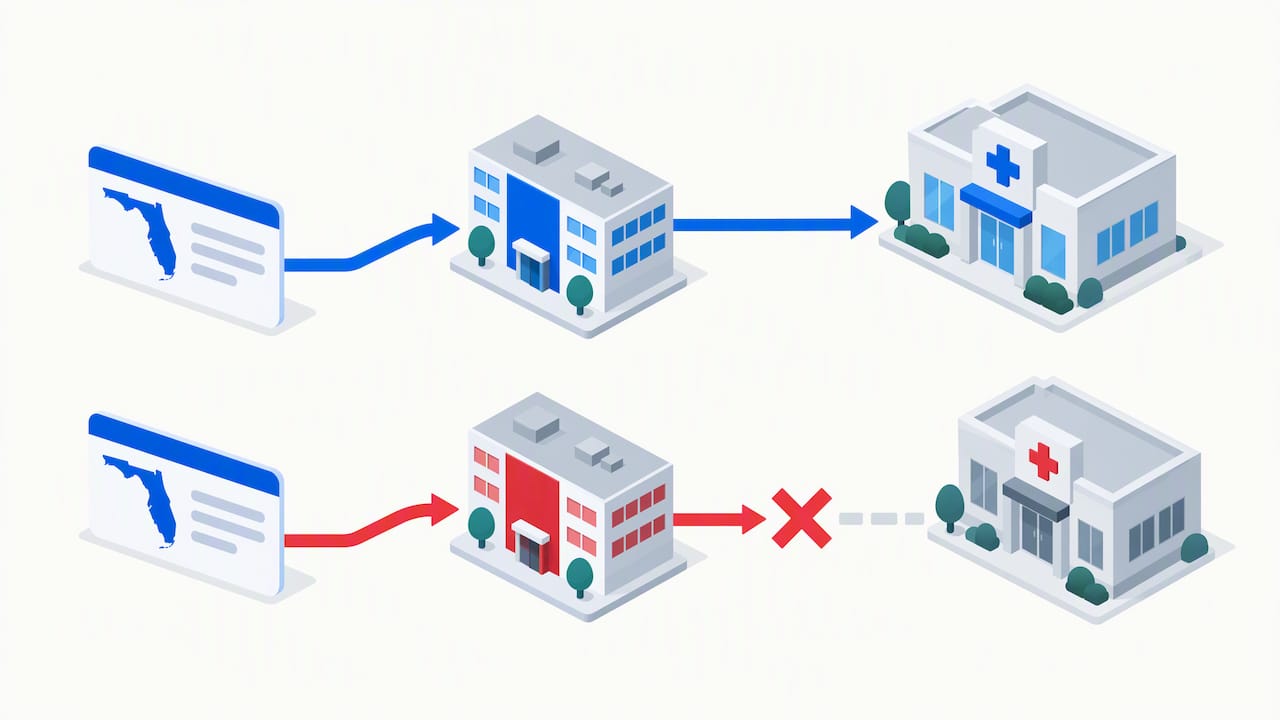
Medical necessity is the other gatekeeper. A visit for a broken bone, a bad infection, or a deep cut almost always qualifies. A visit requesting a cosmetic procedure or a non-urgent prescription refill might not, regardless of which clinic you walk into. Fee-for-service enrollees, a smaller group that includes some people with specific exemptions, follow slightly different rules and may face prior authorization requirements that managed care members don’t.
Before any visit, it helps to know where you stand:
- Check your enrollment type first: your member ID card shows whether you’re in an MMA plan or fee-for-service.
- Confirm the clinic participates in your specific plan, not just “Florida Medicaid” generally.
- Ask about medical necessity if your symptom is borderline, like a mild rash versus a spreading infection.
- Expect prior authorization for certain tests, imaging, or specialist referrals, especially under fee-for-service.
Most Florida Medicaid enrollees receive care through MMA managed care plans, which set the specific terms for coverage of emergency and outpatient services rather than the state paying claims directly.
How to find and confirm a covered urgent care provider
Finding a clinic that takes your plan takes a few minutes, and skipping this step is how surprise bills happen.
- Search the official provider directory. Visit the Florida Medicaid Managed Care provider search, select your county, choose your specific health plan from the dropdown, and filter for urgent care or clinic-type providers.
- Call your Choice Counselor if you’re stuck. The Choice Counselor line, 1-877-711-3662, can walk you through plan details, confirm your enrollment, and help you understand which providers are in-network.
- Call the clinic before you go. Ask three things: do you accept my specific MMA plan, is this particular service covered, and will any labs, imaging, or prescriptions need pre-approval.
- Pull up your plan materials. Your member ID card and welcome packet list your plan name, ID number, and member services phone number, all of which the clinic’s front desk will need.
If you’re traveling and need care outside your home county, or if you’re visiting from out of state, treat the visit as emergency-only unless you’ve confirmed coverage first. Non-emergency, out-of-network care is rarely paid without prior contact with your plan.
Pro Tip: Save your plan’s member services number in your phone under “Medicaid Plan” so you’re not digging through paperwork when you’re already not feeling well.
What to bring and ask at your urgent care visit
A little preparation at the front desk can prevent a confusing bill weeks later. Bring your Medicaid card, a photo ID, and any authorization paperwork your plan has already issued for the visit.
Once you’re there, ask the staff directly:
- Are you currently enrolled with my plan, not just Medicaid in general?
- Will this specific visit or any test require prior authorization?
- Will labs or imaging be billed separately, and do they need separate approval?
- If I need transportation, does my plan cover a ride to this type of visit, including details explained in this Non-Emergency Medical Transportation guide?
| Before the visit | At the visit | If something’s unclear |
|---|---|---|
| Confirm plan participation by phone | Show Medicaid card and photo ID | Ask for the exact plan name they verified |
| Check if the service needs prior authorization | Ask if labs/imaging need separate approval | Request a note or authorization number for your records |
| Review your plan’s transportation benefit | Ask about alternate-destination rules for rides | Ask how to appeal if a service is denied |
If a claim gets denied, your plan’s member services line can explain the appeals process, and the Agency for Health Care Administration helpline can point you toward general member resources if your plan isn’t responsive.
Emergency vs. urgent care under Medicaid: what’s the difference?
An emergency medical condition is one where a reasonable person would expect serious harm, like a life-threatening injury, chest pain, or difficulty breathing, without immediate treatment. Emergency services are always covered, and federal guidance supports flexibility for alternate destinations like urgent care when that setting is appropriate instead of a hospital emergency room.
Urgent care, by contrast, handles conditions that need prompt attention but aren’t life-threatening: ear infections, minor fractures, mild dehydration, cuts that need stitches but aren’t bleeding uncontrollably. Choosing the right setting affects what you pay and how quickly you’re seen.
- Go to the ER for chest pain, severe bleeding, stroke symptoms, or difficulty breathing.
- Go to urgent care for fevers, minor injuries, infections, or symptoms that need same-day attention but aren’t life-threatening.
- Post-stabilization care after an ER visit is also a covered benefit under MMA plan rules, which matters if you’re transferred or need follow-up.
Picking urgent care for a non-emergency issue usually means a shorter wait and lower cost-sharing than an ER visit for the same condition.
A clinic’s view on helping Florida Medicaid members get seen
We’ve built our day-to-day operations around a simple reality: Medicaid coverage questions shouldn’t be a barrier to getting seen quickly. We offer same-day appointments and see both adults and children for urgent care issues such as infections, minor injuries, and immunizations.
Our front desk team verifies plan participation before your visit starts, documents the medical necessity of the visit in your chart, and helps identify when a referral or prior authorization is needed rather than letting you find out after the fact.
- Call the Choice Counselor first to confirm your plan and enrollment status.
- Call our clinic next and ask us to explicitly verify your plan participation before you arrive.
- Bring your Medicaid card and photo ID to every visit, even a repeat one.
Pro Tip: Ask the clinic to note the plan name and member ID they verified. A quick photo of that note saves you a headache if a claim question comes up later.
— Lisa
Getting care through Your Family Walk-In Clinic with Florida Medicaid
We make it straightforward for Florida Medicaid members to get same-day care without the wait times or confusion that often come with urgent care visits. We provide care for urgent issues, immunizations, minor procedures, and more.
Before your visit, our staff confirms whether we participate in your specific MMA plan and flags anything that might need prior authorization, so you’re not caught off guard by a bill later. Here’s what helps us move fast:
- Bring your Medicaid card, photo ID, and any plan paperwork you’ve received.
- Call ahead if you want us to verify your plan participation before you arrive.
- Ask us directly whether your specific service needs pre-approval.
You can review our urgent care services or reach out through our contact page to confirm your plan and book a same-day visit.
This article is general information, not a substitute for advice from a qualified doctor. Consult a qualified healthcare professional about your own circumstances before acting on anything here.
FAQ
How can I find a Medicaid provider in Florida?
Use the Florida Medicaid Managed Care provider search to filter by county, plan, and provider type. You can also call the Choice Counselor at 1-877-711-3662 for help confirming which providers accept your specific plan.
How do I know if I have Medicaid?
Check for a Florida Medicaid member ID card, which lists your plan name and ID number, or log in to your managed care plan’s member portal. If you’re unsure of your enrollment status, the Choice Counselor line can confirm it directly.
What does Medicaid Florida cover?
Florida Medicaid’s MMA program covers physician services, hospital care, emergency services, and laboratory and imaging, among other required benefits. Exact coverage for a specific visit depends on medical necessity and whether the provider participates in your particular plan.
Does Florida accept New York Medicaid?
No, Medicaid is administered separately by each state, so New York Medicaid generally does not cover routine, non-emergency care received in Florida. Emergency care is typically an exception, but you should confirm coverage with your home state’s plan before any non-emergency visit while traveling.
Sources
- Florida Medicaid Managed Care – Compare health plans
- SMD 23-006 — Assurance of Transportation: A Medicaid Transportation Coverage Guide