


Yes, Florida Medicaid covers urgent care, but only when the clinic is contracted with your specific managed care plan. Start by calling your plan’s nurse advice line or checking the Florida Medicaid Managed Care provider search, and always bring your Medicaid ID card to the visit. If your symptoms feel life-threatening, skip these steps entirely and call 911 or go straight to the emergency room.
TL;DR:
- Florida Medicaid covers urgent care only at contracted clinics within your specific managed care plan, requiring confirmation before visiting.
- Urgent care is appropriate for non-life-threatening issues that can wait up to 48 hours, excluding severe symptoms like chest pain and heavy bleeding.
- Plans typically schedule urgent care appointments within 48 hours without prior authorization, but verifying coverage and network status beforehand prevents unexpected bills.
- Find in-network urgent care clinics using the official directory, then cross-check with your plan and confirm acceptance via phone or nurse advice lines.
- Keep essential documents ready, such as Medicaid ID and a medication list, and seek emergency services immediately for severe symptoms or life-threatening conditions.
Table of Contents
- What Counts as Urgent Care in Florida?
- Does Florida Medicaid Cover Urgent Care Visits?
- How to Find an In-Network Urgent Care That Takes Your Plan
- What to Bring and Expect at Your Visit
- Urgent Care vs. Emergency Room: How to Decide
- Your Rights If You Can’t Get a Timely Appointment
- From Our Clinic: Practical Tips From Lisa
- An Editorial Take on Navigating Florida Medicaid Urgent Care
- Need Urgent Care Today? Here’s Your Local Option
- Official Florida Resources and Quick Links
- Sources
- FAQ
What Counts as Urgent Care in Florida?
Florida Medicaid defines urgent care as treatment for a non-life-threatening illness or injury that still needs attention within about 48 hours to keep it from getting worse or limiting your ability to function. That 48-hour window is the practical test: if waiting a day or two won’t put you in danger, urgent care is almost always the right setting.
Conditions that typically fit this category include:
- High fever that isn’t responding to home treatment
- Flu symptoms, sore throat, or uncomplicated infections
- Sprains, strains, and minor fractures that don’t require surgery
- Animal or insect bites without severe swelling
- Cuts that need stitches but aren’t bleeding heavily
Chest pain, trouble breathing, stroke symptoms, or heavy bleeding push you into emergency territory instead. If you’re ever unsure which category your symptoms fall into, that uncertainty is itself a reason to call a nurse line before deciding where to go.
Does Florida Medicaid Cover Urgent Care Visits?
Coverage exists, but it isn’t automatic. Most Florida Medicaid managed care plans cover urgent care visits when you go to a clinic that’s contracted with that specific plan, and participation varies quite a bit from one clinic to the next.
A key detail members often miss: appointment standards require managed care plans to schedule urgent care within 48 hours when no prior authorization is needed, or within 96 hours when it is. Source. Knowing that timeline gives you a concrete benchmark if a clinic tries to push your visit out further.
Here’s what typically applies once you’re covered:
- Routine urgent care visits usually don’t require prior authorization
- Certain diagnostics or specialty procedures might need approval first
- Small co-pays or cost-sharing can apply depending on your specific plan
- Your Summary of Benefits and Evidence of Coverage (SBEOC) spells out your exact cost details
Because plans differ this much, the clinic that took your neighbor’s Medicaid plan without a hitch might not take yours. That’s worth confirming before you walk in, not after.
How to Find an In-Network Urgent Care That Takes Your Plan
Finding a participating clinic takes a few extra minutes, but skipping this step is how members end up with bills they shouldn’t have. Here’s the order that works best:
- Search the official directory first. Use the Florida Medicaid Managed Care provider search tool, or call Choice Counselors directly at 1-877-711-3662 if you’d rather talk to a person.
- Cross-check with your plan. Directory listings can lag behind real-world participation, so call your plan’s Member Services line or the clinic’s front desk to confirm they currently accept your exact plan.
- Use your nurse advice line for triage. Many Medicaid managed care organizations run 24/7 nurse lines that can assess your symptoms and point you toward a participating urgent care in your area.
Pro Tip: Call both the clinic and your MCO before you leave the house. A clinic can technically accept “Medicaid” while still being out-of-network for your particular managed care plan, and that mismatch is exactly what causes surprise bills.
If you’re searching for provider options more broadly, resources like Core Insurance Solutions’ provider directory can also help you compare listings while you verify.
What to Bring and Expect at Your Visit
Walking in prepared saves time and prevents billing confusion later. Pack these items before you head out the door:
- Your Medicaid ID card and a photo ID
- Current pharmacy name and location
- A list of medications you’re currently taking
Once you’re checked in, expect a standard triage process: a nurse or medical assistant reviews your symptoms, then a provider examines you and orders basic labs or an X-ray if needed. Diagnostics like imaging or bloodwork sometimes require prior authorization depending on your plan, so it’s smart to ask before the test is run rather than after the bill arrives. If anyone at the front desk seems unsure whether your plan is in-network, ask them to confirm it in writing or over the phone with your MCO before you’re seen.
Urgent Care vs. Emergency Room: How to Decide
Choosing the wrong setting either wastes hours in an ER waiting room or delays care you actually need urgently. Go to the emergency room or call 911 immediately for:
- Chest pain or pressure
- Severe or uncontrolled bleeding
- Difficulty breathing
- Sudden numbness, confusion, or slurred speech (possible stroke)
Urgent care is the right call for:
- Minor fractures that don’t need surgical repair
- Sprains, strains, and sports injuries
- Sore throat, ear infections, or flu-like symptoms
- Uncomplicated cuts or infections
When you genuinely can’t tell which bucket your symptoms belong in, call the nurse line first. That five-minute conversation can save you both a wasted ER copay and a dangerous delay.
Your Rights If You Can’t Get a Timely Appointment
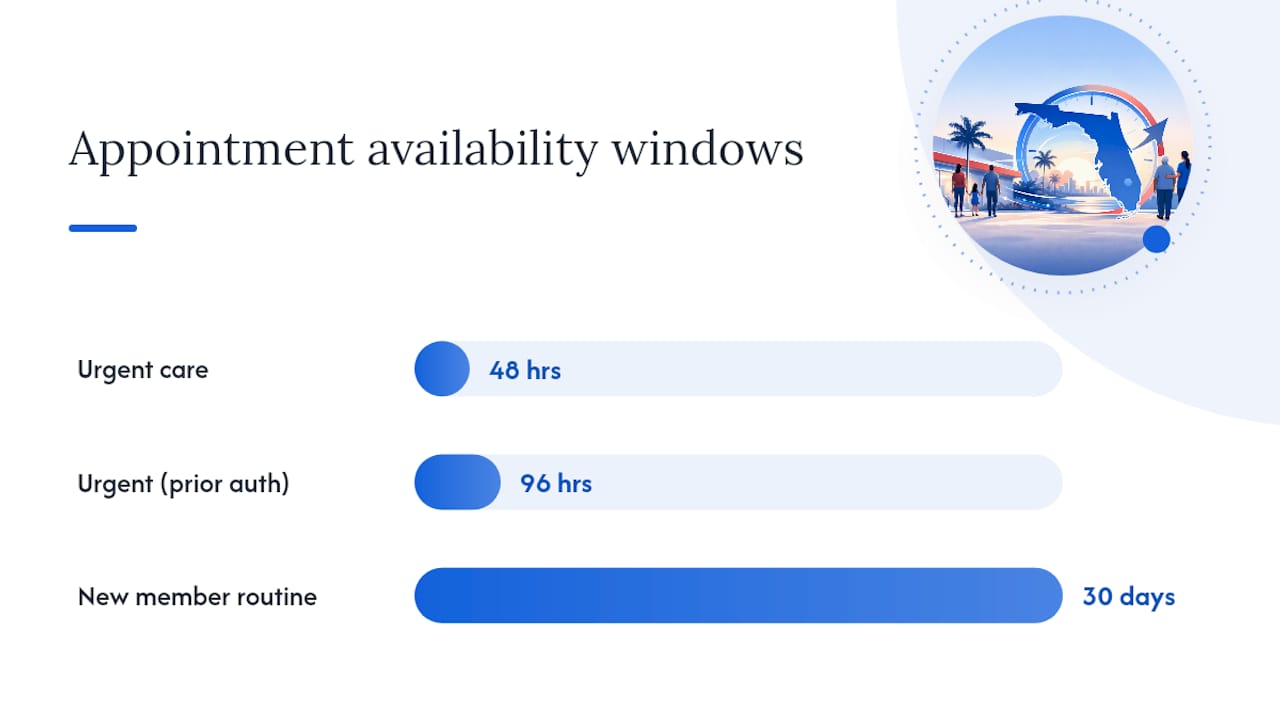
Florida Medicaid managed care plans are held to real standards, not vague promises. Urgent care appointments generally must be available within 48 hours, or 96 hours if prior authorization is required, and new members should get routine appointments within 30 days.
If a plan can’t meet that window:
- Contact Member Services and ask them to document the delay
- Call Choice Counselors for help finding an alternative provider
- Keep a written log of every call, date, and response
- File an access complaint with the Agency for Health Care Administration (AHCA) if the issue stays unresolved
From Our Clinic: Practical Tips From Lisa
Lisa, who oversees patient care standards at a local family walk-in clinic, sees the same pattern repeatedly: members lose time not because care is unavailable, but because nobody confirmed enrollment details in advance. Her advice is simple. Call ahead to confirm your Medicaid plan is active and accepted, bring your member ID to every visit, and ask directly whether the clinic bills your plan or bills you. Same-day visits are scheduled for exactly this reason, and Medicaid members commonly come in for urgent evaluations, basic labs, and sports or school physicals without waiting days for an opening.
An Editorial Take on Navigating Florida Medicaid Urgent Care
The official rules around Florida Medicaid urgent care are clearer than most members realize. The problem isn’t the policy. It’s that the policy lives in three different places: a provider manual, an MCO directory, and a nurse line script, and no one hands a member all three at once.
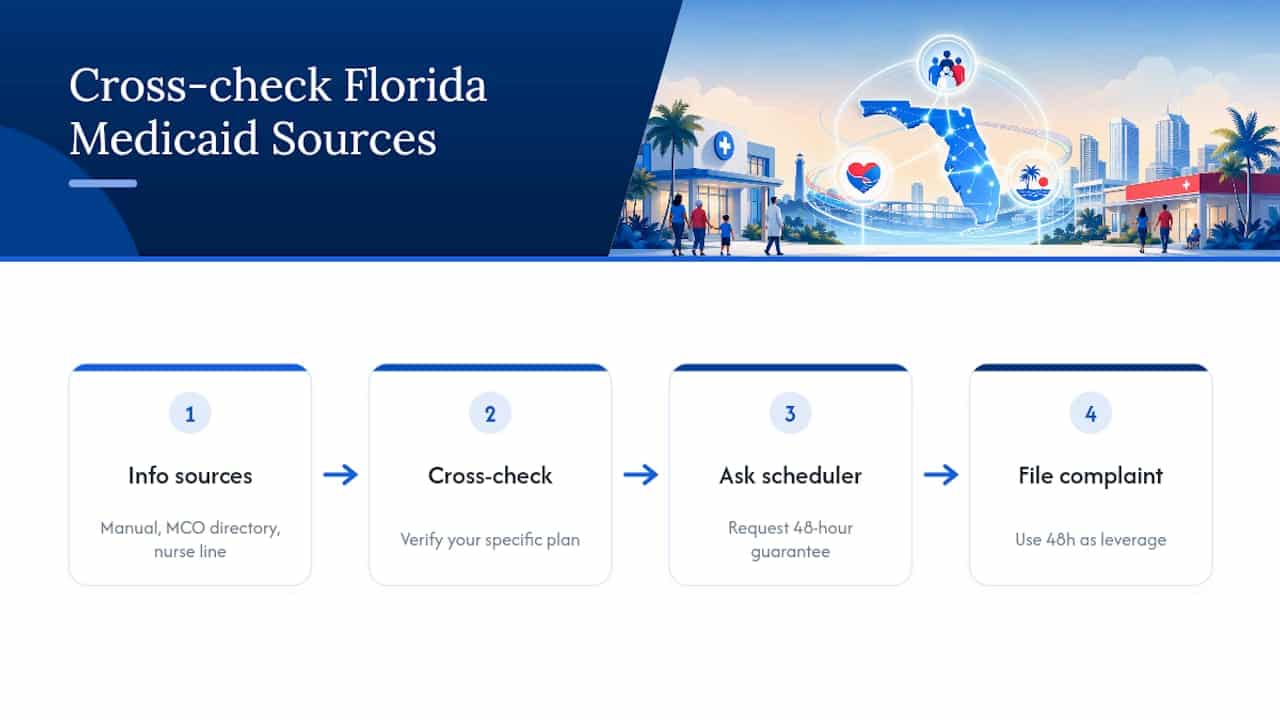
Conventional advice tells people to “check if their clinic takes Medicaid,” which is almost useless. Medicaid isn’t one plan. It’s a dozen managed care organizations, each with its own contracted network, and a clinic accepting one doesn’t mean it accepts yours. The advice that actually protects members is narrower and less satisfying: verify your specific plan, not the generic Medicaid label, every single time you seek care somewhere new.
What deserves more attention than it gets is the appointment standard itself. Most members have no idea that 48 hours is a contractual obligation, not a courtesy. That single fact turns a frustrating phone call into a documented complaint with real leverage. Know that number, and you stop being at the mercy of whatever a scheduler tells you.
— Lisa
Need Urgent Care Today? Here’s Your Local Option
Waiting on hold with an MCO directory isn’t anyone’s idea of a good afternoon, especially when you’re running a fever or nursing a sprained ankle. A local walk-in clinic in Lutz offers Florida Medicaid members a same-day alternative: it is open seven days a week from 8 AM to 8 PM, accepts Medicaid alongside major insurance plans, and confirms coverage details before patients are seen.
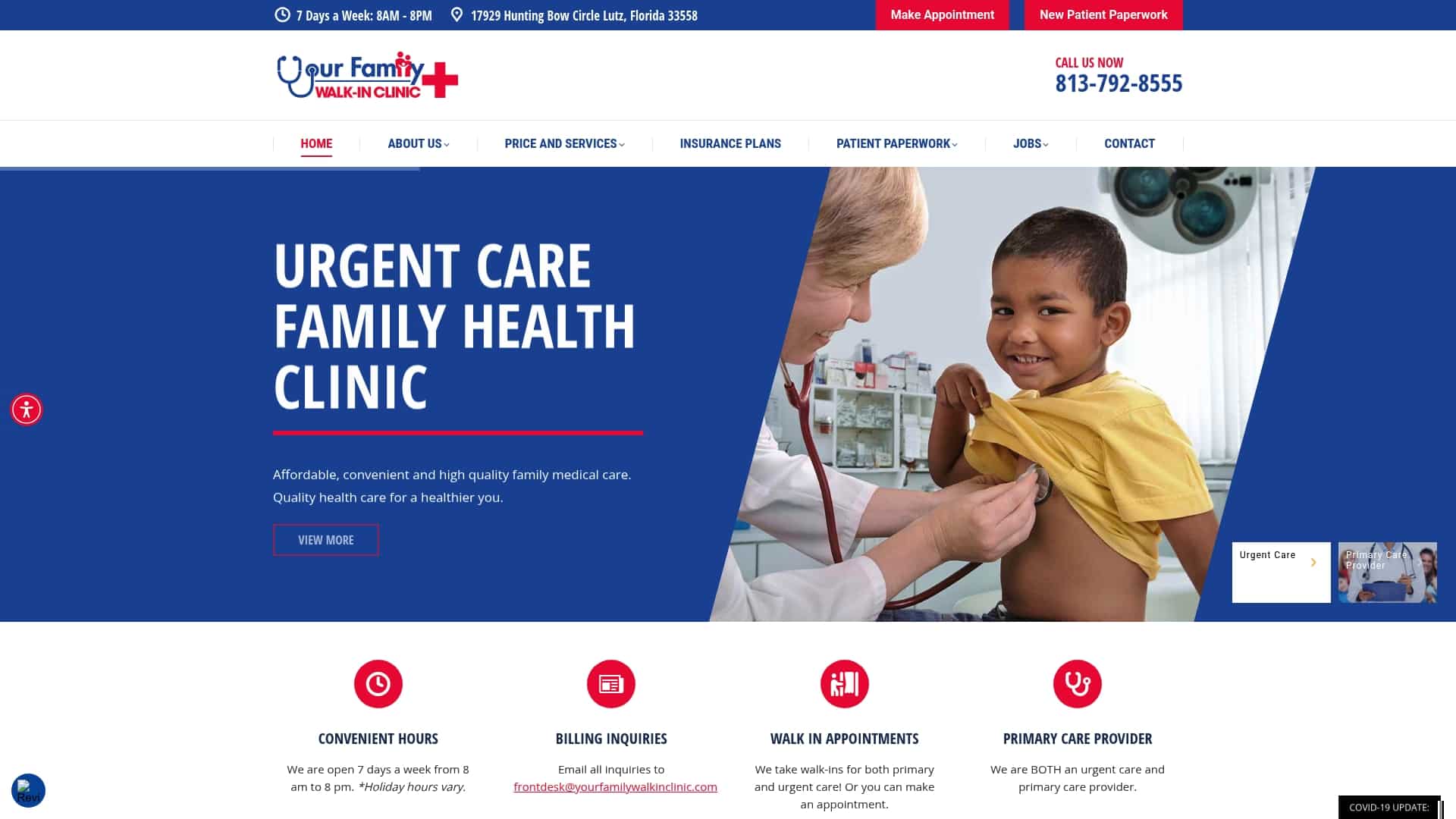
Beyond urgent evaluations for fevers, infections, sprains, and minor injuries, this clinic also handles basic labs, immunizations, and school and sports physicals under one roof, so a single visit can cover more than one need. If you’re weighing whether to spend your afternoon on hold or in a waiting room, consider calling or visiting a clinic’s urgent care page to confirm your plan is accepted and book a same-day appointment.
Official Florida Resources and Quick Links
Bookmark the Florida Medicaid Managed Care provider search or call Choice Counselors at 1-877-711-3662 to verify network status. Review AHCA’s core contract provisions for access standards, and visit Medicaid for general program rules.
This article is general information, not a substitute for advice from a qualified doctor. Consult a qualified healthcare professional about your own circumstances before acting on anything here.
Sources
- Emergency and Urgent Situations | Sunshine Health
- Florida State Medicaid Managed Care – Provider Search
- Florida State Medicaid Managed Care – Care Provider Manual (UnitedHealthcare)
- Attachment II – Core Contract Provisions (AHCA)
- Does Urgent Care Take Medicaid in Florida? | Catalyst Legal
FAQ
Does Medicaid Cover Urgent Care in Florida?
Yes. Florida Medicaid managed care plans generally cover urgent care visits when the clinic is contracted with your specific plan, though co-pays and prior authorization rules vary by plan.
Does Urgent Care Take Medicaid?
Many urgent care centers in Florida accept Medicaid, but acceptance varies by clinic and by managed care organization, so confirming with both the clinic and your plan before your visit is essential.
How Can I Find a Doctor Who Accepts Medicaid in Florida?
Use the Florida Medicaid Managed Care provider search tool, call Choice Counselors at 1-877-711-3662, or contact your plan’s Member Services line to confirm a provider currently accepts your exact plan.
What Should I Do if I Can’t Get an Urgent Care Appointment in Time?
Contact your plan’s Member Services immediately, document every call, and escalate to AHCA if you can’t get an appointment within the required 48 or 96 hour window.
Should I Go to Urgent Care or the ER for a Medicaid Visit?
Choose the ER for chest pain, severe bleeding, breathing difficulty, or stroke symptoms; choose urgent care for sprains, minor fractures, infections, and similar conditions that can safely wait a day or two.