


Grief counseling for teens is often appropriate when sadness turns into persistent distress, withdrawal, or dangerous behavior that lasts beyond a short period. The strongest evidence points to CBT for grief, often paired with peer support groups, as the most effective combination for grieving adolescents. If your teen talks about wanting to die or shows signs of self-harm, call 988 or head to an emergency room right away. Everything else can wait for an appointment.
TL;DR:
- Longer individual therapy sessions focused on grief are the most effective for teens experiencing severe anxiety or depression symptoms.
- Signs that professional help is urgent include persistent withdrawal, self-harm, risky behaviors, or declining school performance lasting beyond one to two months.
- Peer support groups and family therapy can be helpful but should complement, not replace, evidence-based individual CBT when symptoms are more intense.
- Immediate consultation with a nurse or therapist is recommended if a teen talks about wanting to die, plans self-harm, or shows any emergency warning signs.
- Caregiver support involves maintaining routines, calmly observing warning signs, and respecting the teen’s autonomy during the grief process.
Table of Contents
- Signs a Grieving Teen May Need Professional Help
- The Evidence Behind Grief Counseling for Teens
- How Teen Grief Therapy Actually Works
- Where to Find Teen Grief Support Near You
- What Caregivers Can Do This Week
- Getting Started With Grief Support at a Family Clinic
- An Editorial Note on Listening First
- Get a Same-Day Assessment for Your Teen
- Sources
- FAQ
Signs a Grieving Teen May Need Professional Help
Grief in adolescents rarely looks like the movies. Some teens cry openly. Others go quiet for weeks, snap at siblings, or bury themselves in schoolwork or video games to avoid feeling anything at all. Both can be normal.
Watch for these common reactions in the weeks after a loss:
- Withdrawing from friends, family, or activities they used to enjoy
- Irritability, anger outbursts, or acting out at school or home
- Trouble concentrating, dropping grades, or forgetting assignments
- Headaches, stomachaches, or fatigue with no medical cause
Some signs mean you should not wait to get support. According to Mayo Clinic, professional help becomes necessary when grief starts interfering with daily functioning or includes thoughts of suicide. Red flags include talk of death or self-harm, new substance use, cutting or other self-injury, or a decline in school performance that continues. If any of these show up, reach out to a counselor promptly.
The Evidence Behind Grief Counseling for Teens
Cognitive behavioral therapy for grief has the strongest research support of any approach studied in adolescents. A 2022 systematic review and meta-analysis of 27 studies covering 2,740 young people found that CBT for grief produced a large effect on anxiety symptoms and a medium effect on depression symptoms.
By the numbers: CBT for grief showed a pooled effect size of d = -0.81 for anxiety and d = -0.53 for depression, according to the same systematic review. Interventions delivered individually, focused specifically on grief, and running more than 10 sessions produced the largest gains.
That last detail matters when you’re comparing programs. A four-week group workshop might help a teen feel less alone, but it’s not built to move the needle on clinical anxiety or depression the way a longer individual course of CBT can.
A few practical takeaways for choosing a treatment path:
- Look for individual therapy running longer than 10 sessions when anxiety or depression symptoms are significant.
- Reserve group or supportive therapy for teens whose grief is complicated but not accompanied by severe anxiety or depression.
- Ask about trauma-focused cognitive behavioral therapy (TF-CBT) if the death was sudden, violent, or witnessed by the teen.
- Be cautious of writing-only or journaling-only programs marketed as standalone treatment. The APA Monitor notes that other structured approaches, including TF-CBT adaptations and multidimensional grief therapy, carry more evidence than expressive writing alone.
How Teen Grief Therapy Actually Works
A first session usually starts with intake, and most therapists want at least part of that first meeting alone with the teen. Parents typically cover history and immediate concerns, then step out so the teen can speak freely. Confidentiality applies with one hard exception: if the therapist believes the teen is at risk of harming themselves or someone else, that information gets shared.
From there, format depends on what the teen needs:
- Individual therapy works best for significant anxiety, depression, or trauma symptoms tied to the loss.
- Group therapy helps teens who feel isolated and benefit from hearing peers describe similar losses.
- Family sessions address how grief is reshaping communication or routines at home.
- Telehealth removes transportation barriers and often feels more private to teens who don’t want to be seen walking into a counselor’s office.
Adolescents disengage fast when therapy feels imposed on them. A Delphi consensus study on bereavement care found that client-led, strengths-based approaches with real choices in format and activities lead to better engagement than a rigid, adult-directed plan.
Pro Tip: Let your teen pick between two or three qualified therapists instead of assigning one. That small bit of control often makes the difference between a teen who shows up and one who shuts down.
Where to Find Teen Grief Support Near You
Start close to home. School counselors are often the first to notice changes in a grieving student and can refer to outside providers when needed. Community grief centers, like the Dougy Center, offer age-specific peer support groups and free resources built specifically for teens processing loss.
When you’re evaluating a counselor or program, look for:
- A license in counseling, social work, or psychology, plus documented experience with adolescents specifically.
- Direct experience with grief, not just general mental health treatment.
- A clear answer on session length, expected number of sessions, and how progress gets measured.
- A plan for parent involvement that respects teen privacy while keeping you informed of safety concerns.
- Availability of telehealth if transportation or scheduling is a barrier.
Before booking, call your insurance provider to confirm mental health coverage and ask whether the clinic offers sliding-scale fees. If your teen already has a trusted general therapist relationship, our guide to choosing a therapist walks through the credentials and questions worth asking before that first appointment.
What Caregivers Can Do This Week
You don’t need a clinical degree to help. You need consistency, honesty, and a willingness to sit with discomfort instead of fixing it.
- Open the door without forcing it. Try, “I’ve been thinking about how you’re doing since we lost [name]. I’m here whenever you want to talk, no pressure.”
- Keep routines steady. Regular meals, sleep, and school attendance give a grieving teen’s brain something predictable to hold onto.
- Watch quietly for warning signs. New substance use, self-harm, or talk of hopelessness needs immediate action: call 988 or go to urgent or emergency care.
- Support therapy from the outside. Ask how sessions went in general terms rather than demanding details, and respect the confidentiality your teen was promised.
The National Child Traumatic Stress Network recommends seeking professional help if grief-related problems continue beyond one to two months or if risky behavior appears at any point. Also keep an eye on secondary losses, like a move, a parent’s reduced income, or a shift in household roles, since these often deepen a teen’s distress without anyone naming them directly.
Pro Tip: Therapists working with teens often say the goal isn’t to erase grief but to build coping skills that outlast it. Your job as a caregiver is to be a steady witness, not a problem-solver.
Getting Started With Grief Support at a Family Clinic
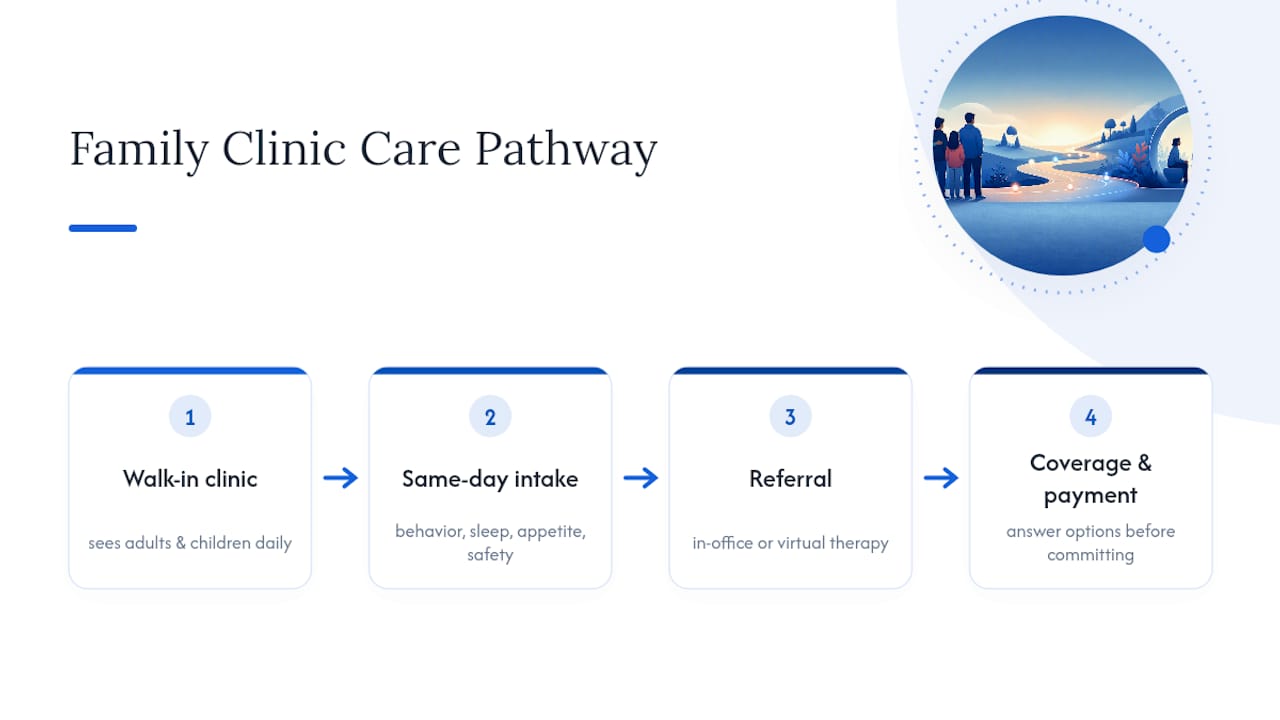
Grief that’s affecting sleep, school, or safety deserves a same-day conversation, not a two-week wait for an opening. A family walk-in clinic that sees both adults and children seven days a week may provide evaluation without a long waitlist while symptoms get worse.
A visit typically starts with a same-day intake covering behavior changes, sleep, appetite, and any safety concerns, followed by a referral to in-office or virtual therapy suited to the teen’s needs. Bring a list of recent changes you’ve noticed and any current medications. Various payment options may be accepted, so coverage questions can get answered before you commit to a plan.
An Editorial Note on Listening First
The most useful thing I can tell a worried parent is this: your job is not to fix your teen’s grief. It’s to listen, stay steady, and keep them safe while professionals help with the rest. Seeking counseling is common, not a sign you’ve failed as a caregiver. Lean on school counselors and community grief resources early. They see this constantly, and that experience is worth more than any script.
— Lisa
Get a Same-Day Assessment for Your Teen
Some walk-in clinics offer families a faster starting point than typical pediatric practices or standalone counseling offices, with same-day visits available seven days a week without the multi-week wait many mental health offices require.

A visit to a qualified provider includes an intake to assess whether grief reactions look typical or need immediate attention, followed by referral to in-office or virtual therapy. Bring your insurance card, a note on recent behavior changes, and any medications your teen currently takes. The clinic coordinates referrals so you’re not left figuring out the next step alone. If you’re noticing warning signs today, book a same-day urgent care visit and get your teen evaluated before the situation escalates further.
Sources
- A systematic review and meta-analysis of the efficacy of grief interventions for anxiety and depression in young people
- How best to provide help to bereaved adolescents: a Delphi consensus study
- Helping teens with traumatic grief: Tips for caregivers (NCTSN)
- How to help a grieving teenager (Mayo Clinic)
- Evidence-based practices for grief (APA Monitor)
This article is general information, not a substitute for advice from a qualified doctor. Consult a qualified healthcare professional about your own circumstances before acting on anything here.
FAQ
How do I help a teenager deal with grief?
Stay honest about the loss, keep daily routines steady, and invite conversation without forcing it. Watch for warning signs like withdrawal or risky behavior lasting beyond a month or two, and seek professional grief counseling for teens if those signs appear.
What are the three C’s of grief?
Grief counselors commonly reference “connect, communicate, and cope” as a simple framework, though exact wording varies by source. The core idea holds regardless of phrasing: stay connected to the teen, keep communication open, and build coping skills together.
How do I help a 13-year-old with grief?
Younger teens often need more direct guidance than older adolescents, including simple, honest explanations of the loss and extra reassurance that routines and relationships will stay stable. If withdrawal, school decline, or behavior changes last more than a few weeks, a counselor experienced with early adolescents can help.
What is the hardest year of grief?
There’s no single universal “hardest year,” since grief timelines vary by relationship, cause of death, and the teen’s own temperament. Many families find that the first anniversary of the loss, along with major milestones the person would have shared, bring renewed intensity even after initial grief has eased.
Is CBT for grief effective for teenagers?
Yes. A systematic review of 2,740 young people found CBT for grief produced a large reduction in anxiety and a medium reduction in depression, with the best results from individual sessions running more than 10 weeks.