


A first therapy session is typically an intake and fit check, not a full therapeutic deep dive. Most first therapy sessions last about an hour and include paperwork covering consent and confidentiality. You control how much you share on day one, and no therapist expects you to have your whole story sorted out by the closing minutes. Some therapy providers build that first hour around getting to know you, not fixing everything at once.
TL;DR:
- Most first therapy sessions focus on information gathering, consent, and establishing rapport rather than diagnosing or creating a treatment plan.
- The session typically includes explaining confidentiality limits, completing paperwork, and discussing your main concerns in broad terms.
- Preparing your ID, insurance info, and a brief list of concerns can help reduce nerves and make the session more productive.
- Asking your therapist about their approach, experience, and how they handle emergencies can help determine if they are a good fit.
- Feeling emotionally drained after the first session is normal, and a quiet self-care routine can aid in processing the experience effectively.
Table of Contents
- What Happens During Your First Therapy Session, Step by Step
- Paperwork, Consent, and Confidentiality: What Therapists Must Explain
- How to Prepare for Your First Therapy Session
- What to Ask Your Therapist and How to Tell If It’s a Good Fit
- Common Reactions After Your First Session and How to Recover
- Why the First Session Matters More Than People Realize
- A Note From the Clinical Side
- Booking Your First Session With Your Family Walk-In Clinic
- Sources
- FAQ
What Happens During Your First Therapy Session, Step by Step
Walking in without a mental map of what’s coming is one of the biggest sources of first-session nerves. You can’t control everything about the experience, but knowing the general shape of the hour takes away a lot of the guesswork.
Here’s what a typical first session looks like, in order:
- Welcome and role explanation. Your therapist introduces themselves, describes their approach or specialty, and sets expectations for how the session will run.
- Informed consent and confidentiality review. Before any deep conversation starts, the therapist walks through what stays private and the legal exceptions to that privacy, such as imminent harm or abuse reporting.
- Intake conversation. This is the bulk of the session. Expect questions about what brought you in, along with brief touchpoints on your health history, relationships, work or school life, and sleep. Clinicians often call this a biopsychosocial picture, meaning they’re looking at biological, psychological, and social factors together, not diagnosing you on the spot.
- Early goal-setting. Toward the back half of the session, most therapists start sketching out what you’d like to work on and what a realistic first stretch of treatment might look like.
- Wrap-up logistics. The last few minutes usually cover scheduling, fees or copays, cancellation policy, and what to do in a crisis between sessions.
Notice what’s missing from that list: a diagnosis, a treatment plan, or a breakthrough. A full clinical picture almost never forms in one meeting. Clinicians intentionally structure the first session to gather essential information first, which is why some of the questions can feel a little procedural rather than deeply personal. That’s standard practice for balancing rapport with the practical tasks of intake, not a sign that your therapist is distant or disinterested.
Most people expect the first session to feel like the emotional climax of a movie. It’s closer to a first consultation with any new provider: information gathering, mutual sizing-up, and a plan for what comes next. Intake paperwork, a confidentiality review, and questions about what brought you in are standard elements of that first meeting, not extras your particular therapist added.
Paperwork, Consent, and Confidentiality: What Therapists Must Explain
Before you get into anything personal, your therapist is ethically obligated to walk you through informed consent. That means explaining how therapy works, what confidentiality covers, and, just as important, where it stops. Confidentiality has legal limits that every licensed therapist must disclose before starting treatment: imminent risk of harm to yourself or others, and suspected abuse or neglect of a child, elderly person, or dependent adult typically require the therapist to break confidentiality and report.
Expect a stack of forms alongside that conversation. Common ones include:
- A general intake questionnaire covering your history, symptoms, and reason for seeking care
- A consent-to-treatment form outlining your rights and the therapist’s obligations
- A confidentiality and privacy disclosure, sometimes called a Notice of Privacy Practices
- Insurance and billing paperwork, including copay responsibilities
- A telehealth consent form if your session is virtual, covering technology risks and emergency protocols
Quick fact: Every therapist practicing in the United States operates under federal privacy protections established by HIPAA, which sets the baseline for how your health records and personal information must be safeguarded, whether your session happens in an office or over video.
If a provider glosses over consent or confidentiality without explanation, that’s worth flagging. A clear, unhurried walk-through of these documents is one of the simplest signs you’re in good hands.
How to Prepare for Your First Therapy Session
A little preparation goes a long way toward calming pre-appointment nerves, as explained in detail at Align Therapy Collective’s session overview. You don’t need a script, but a few concrete steps make the hour run smoother and leave you with more energy for the conversation itself.
Bring or have ready:
- A photo ID and your insurance card, if you’re using insurance
- A list of current medications, including dosages
- A short list of your main concerns, written in your own words
- Any relevant medical or mental health history from previous providers
If your session is virtual, test your setup the day before, not five minutes beforehand. Check your camera and microphone, find a private room where you won’t be interrupted, and have headphones ready if you share your home with other people. It’s smart to have a backup plan, like a phone hotspot, in case your internet connection drops mid-session.
Pro Tip: If you freeze up trying to figure out how to start, saying something like “I’m not sure where to start” is a completely valid opening. It tells your therapist exactly where you’re at, which is clinically useful information in itself.
A few journaling prompts can help you organize your thoughts before you walk in:
- What’s been taking up the most mental space for me lately?
- When did I first notice this becoming a problem?
- What would a good outcome from therapy look like for me?
Afterward, resist the urge to schedule anything demanding right after your appointment. Therapy sessions, even calm ones, can leave you mentally tired. Block out a little quiet time on the other side of the hour so you’re not rushing straight into a meeting or picking up kids from school five minutes later.
What to Ask Your Therapist and How to Tell If It’s a Good Fit
You’re not just being evaluated. You’re evaluating them too. A first session is a two-way interview, and asking direct questions is not rude, it’s practical.
- Ask about their approach. “What treatment methods do you typically use, and why?” gives you a sense of whether their style matches what you’re looking for.
- Ask about experience with your specific concern. Anxiety, grief, and relationship issues call for different comfort levels and training.
- Ask what happens between sessions. Will there be homework, reading, or check-ins? How does the practice handle after-hours emergencies?
- Ask about session cadence. Weekly is standard for many clients, but your situation might call for something different.
Beyond the answers themselves, pay attention to how the conversation feels. A good fit usually shows up as clear explanations without jargon, genuine curiosity about your answers, and a collaborative tone rather than a lecturing one. If you leave feeling judged, dismissed, or persistently unsafe, that’s a legitimate reason to look elsewhere. Feeling consistently unheard is a valid signal to seek a different provider, and most therapists would rather you find the right fit somewhere else than force a mismatch. You can end things simply: a short message thanking them for their time and stating you’ve decided to pursue a different approach is all that’s needed.
Common Reactions After Your First Session and How to Recover
Feeling emotionally drained after your first appointment is common, and it doesn’t mean something went wrong. Talking through personal material for the first time with a stranger, even a kind and professional one, takes real energy. Some people feel raw or a little exposed. Others feel unexpected relief just from finally saying things out loud. Both reactions are normal.
A short self-care routine afterward helps you process instead of just plowing through the rest of your day:
- Give yourself a buffer of low-demand time immediately after the session
- Drink some water and eat something if it’s been a while
- Jot down two or three lines about what stood out to you, while it’s fresh
- Confirm your next appointment before the feeling of momentum fades
Planning a quiet stretch after your appointment is a small but genuinely useful step in the recovery process that a lot of people skip until they learn the hard way. If you leave the session in genuine crisis, feeling unsafe, or with thoughts of self-harm, don’t wait for your next scheduled appointment. Contact your provider’s emergency line or a crisis service right away.
Why the First Session Matters More Than People Realize
The first session isn’t just paperwork and small talk. It’s where the therapeutic alliance starts forming, and that alliance is one of the strongest predictors of whether therapy actually works.
Meta-analytic research on the therapeutic alliance finds that a moderate correlation exists between the strength of the alliance formed early in treatment and the outcomes clients experience later. Alliance itself is typically described as three components working together: agreement on goals, agreement on the tasks used to reach them, and the personal bond between client and therapist.
That’s not an abstract academic finding. It shows up in the room. Some clinics track this more formally, using brief session rating tools to catch mismatches early, an approach linked to faster progress and lower dropout rates when alliance issues get addressed early rather than left to fester. Even without formal measurement, the first session has been described as the one that counts most for setting the tone of everything that follows.
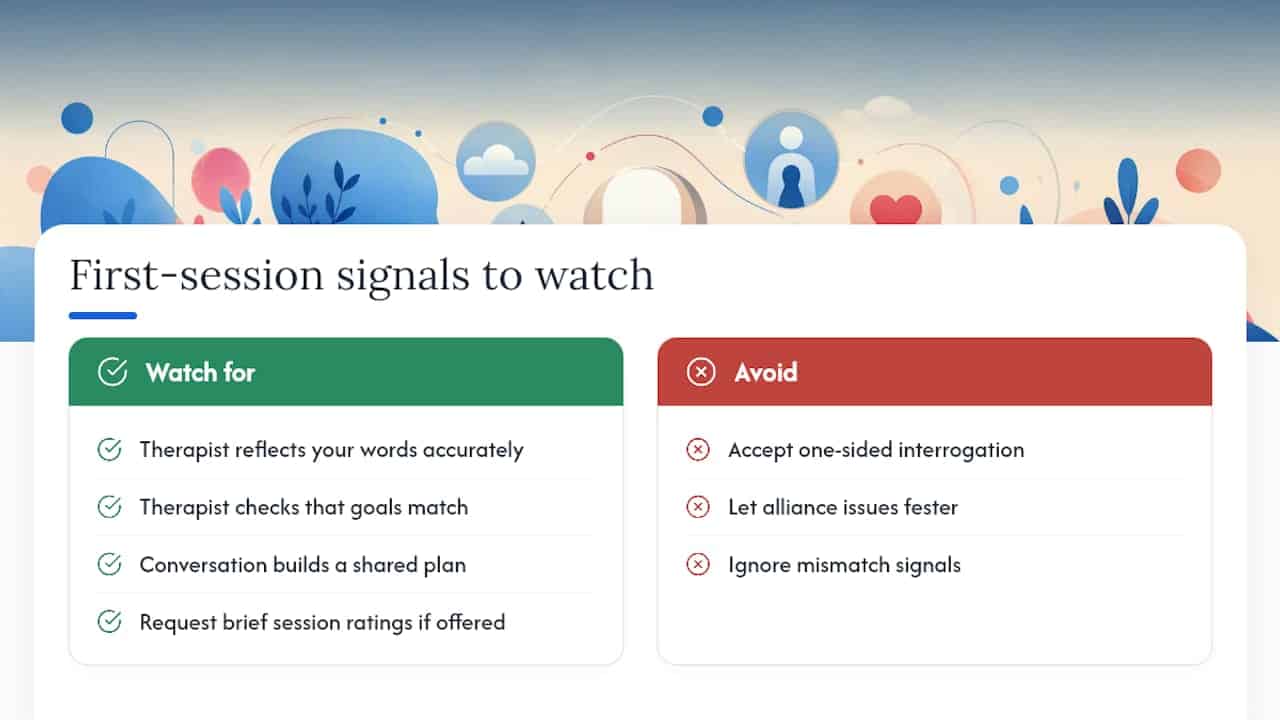
You don’t need a rating scale to notice the signals yourself. Watch for whether the therapist reflects back what you said accurately, whether they check in on whether their read of your goals matches yours, and whether the conversation feels like two people building a plan together rather than one person interrogating the other. The specific method a therapist uses tends to matter less than these behaviors early on, since alliance itself is a stronger predictor than the particular treatment modality in the first several sessions. If those signals are present, you’re likely in the right room, even if the conversation itself felt awkward or slow.
A Note From the Clinical Side
Pacing is everything in a first session. Good clinicians deliberately slow down, leave room for silence, and tell clients directly that it’s fine not to have answers yet. Uncertainty in that first hour isn’t a failure on the client’s part, it’s the starting material we work with.
At Your Family Walk-In Clinic, therapy sessions are handled with the same patient-first philosophy that’s shaped our care for over 25 years across urgent and primary care. Clinicians like Emily Gilbert bring a collaborative style to first sessions, and flexible scheduling means your first appointment doesn’t have to wait weeks.
— Lisa
Booking Your First Session With Your Family Walk-In Clinic
If everything above sounds reasonable but you’re still not sure where to start, some clinics offer same-day appointments so you don’t spend weeks anticipating one hour, and provide both in-office and virtual therapy options to help accommodate your comfort preferences.

Booking here means working with clinicians like Emily Gilbert, who takes a collaborative approach built around the same alliance-first principles covered above. If you’re coming in for your first appointment, bring your ID and insurance card the same way you would for any medical visit, and if you’re booking a virtual session, ask ahead about setting up a private, distraction-free space so the technical side doesn’t add to the nerves. For anyone weighing whether to start with therapy or handle a more immediate physical concern first, Your Family Walk-In Clinic also offers urgent care seven days a week, so you’re never stuck choosing between the two. Reach out today to schedule your first session and get a clear answer on availability within the same day.
This article is general information, not a substitute for advice from a qualified doctor. Consult a qualified healthcare professional about your own circumstances before acting on anything here.
Sources
FAQ
Is the first therapy session the hardest?
For many people, yes, mostly because of anticipation rather than what actually happens. Once the session starts and you realize it’s mainly a conversation and some paperwork, most of that dread eases quickly.
Is the first therapy session awkward?
Some initial awkwardness is common and expected, especially with unfamiliar questions or silences. It typically fades as the conversation settles into a natural rhythm.
What should I say during my first therapy session?
Start with whatever is actually on your mind, even if it’s just “I’m not sure where to start.” That phrase alone gives your therapist useful information about where you’re at emotionally.
What is the two year rule for therapists?
This isn’t a standard, universally recognized clinical rule, and definitions vary depending on context, such as licensing boards or specific state regulations. If you’ve encountered this term from a specific provider or state licensing body, ask them directly what it refers to in your situation.
How long does a first therapy session usually last?
Most initial sessions typically last about an hour, covering paperwork, an intake conversation, and basic goal-setting before wrapping up with scheduling details.