

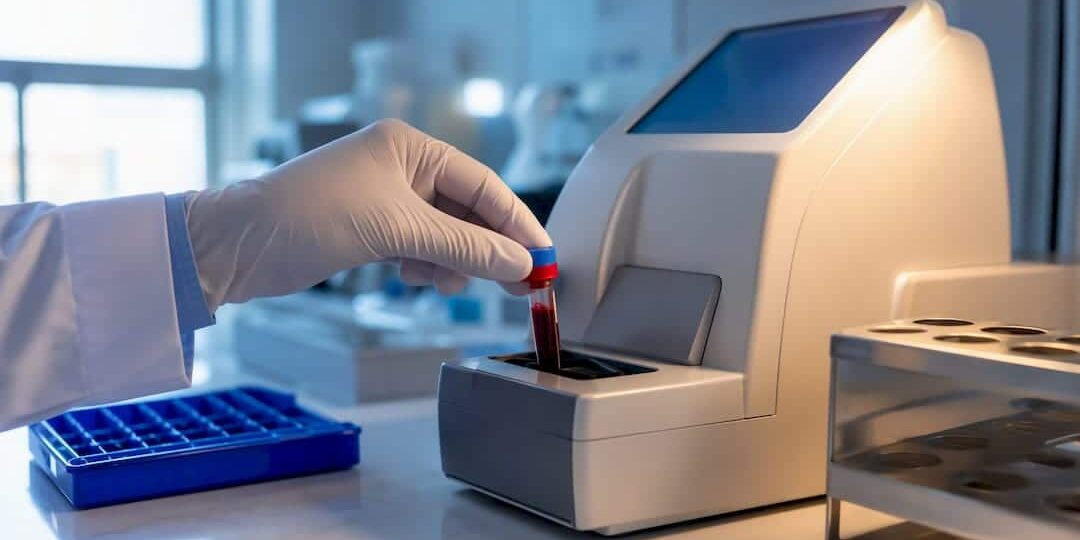
A thyroid TSH test measures thyroid-stimulating hormone, made by your pituitary gland to signal your thyroid to produce T3 and T4. A high result usually points to an underactive thyroid, or hypothyroidism, and a low result usually points to an overactive thyroid, or hyperthyroidism. Either way, one abnormal number almost never stands alone. Your provider will typically order follow-up testing before landing on a diagnosis.
TL;DR:
- TSH levels are most sensitive in detecting early thyroid regulation issues, which is why they are typically the first test ordered rather than T3 or T4.
- Most abnormal TSH results are not definitive diagnoses and require follow-up testing, such as free T4, T3, or antibody tests, to determine the underlying cause.
- TSH reference ranges vary by lab and assay technology, with pregnancy and age requiring specific threshold adjustments to interpret results accurately.
- Factors such as medication, biotin supplements, recent illness, or food intake can interfere with TSH levels, often prompting additional testing before diagnosis.
- Routine screening or symptom-driven testing may be done at different times of day, with morning appointments preferred to account for TSH’s natural daily rhythm.
Table of Contents
- What Does a TSH Test Actually Measure?
- Who Actually Needs This Test?
- What to Expect During the Test and How to Prepare
- What Counts as a Normal TSH Level, and What Doesn’t?
- What Else Can Skew Your TSH Results?
- Does Testing Change for Pregnant Women, Newborns, and Older Adults?
- How Often Should You Repeat a TSH Test?
- How Readers Can Get a TSH Test Without the Wait
- Where to Read More on Thyroid Testing
- Get Your Thyroid Checked Without the Wait
- Sources
- FAQ
What Does a TSH Test Actually Measure?
Your body runs thyroid hormone production through a feedback loop, and TSH sits at the control switch. Your pituitary gland, a pea-sized structure at the base of your brain, releases TSH when it senses your thyroid hormone levels dropping. That TSH travels through your bloodstream and tells your thyroid gland to make more T3 and T4, the hormones that regulate your metabolism, heart rate, and body temperature. Once T3 and T4 levels rise enough, the pituitary backs off and TSH production slows. It’s a thermostat, constantly adjusting.
This is exactly why a thyroid function test starts with TSH rather than T3 or T4 directly. TSH tends to shift before T3 and T4 move outside their normal ranges, which makes it a sensitive early warning sign of thyroid trouble according to the American Thyroid Association.
A few things worth understanding about what this test can and can’t tell you:
- It flags that something is off with thyroid regulation, but not why.
- A high or low result tells you direction, not diagnosis, on its own.
- It’s often the first test ordered specifically because it’s inexpensive and reliable at catching early dysfunction.
- It doesn’t distinguish between causes like autoimmune disease, nodules, or medication effects without additional labs.
Who Actually Needs This Test?
Your provider might order a TSH test for a specific complaint, or simply as part of a routine screening. Here’s how that usually breaks down:
- Symptom-driven testing. Unexplained fatigue, sudden weight gain or loss, hair thinning, heart palpitations, feeling unusually cold or hot, or menstrual cycle changes all prompt a TSH check.
- Newborn screening. Every state in the country screens infants shortly after birth for congenital hypothyroidism, since untreated thyroid deficiency in infancy can affect development.
- Pregnancy monitoring. Thyroid function shifts during pregnancy, and providers screen women with risk factors or symptoms to protect fetal development.
- Medication monitoring. If you’re on levothyroxine or another thyroid medication, TSH tracks whether your dose needs adjusting.
- Nodule or goiter follow-up. If a provider feels or images an enlarged thyroid or nodule, TSH helps determine whether it’s producing excess hormone.
- General screening. Many providers add TSH to a broader panel during annual physicals or wellness visits, similar to other common health screenings recommended for adults.
What to Expect During the Test and How to Prepare
The test itself is simple. A phlebotomist draws blood from a vein in your arm, usually the inside of your elbow, using a small needle. The actual blood collection takes less than five minutes, though your total visit, including registration and the draw, might run 15 to 30 minutes depending on where you go.
A few practical notes before your appointment:
- Fasting usually isn’t required for a standard TSH test.
- If you take thyroid medication, ask your provider whether to take your dose before or after the draw. Some prefer you wait until after blood is drawn.
- Biotin supplements can interfere with certain TSH assays, so mention any you’re taking.
- Morning appointments are common because TSH follows a mild daily rhythm, tending to run slightly higher earlier in the day.
- Bring a list of current medications and your insurance card.
Pro Tip: If you’ve had a TSH test before, try to schedule your next one at a similar time of day and under similar eating conditions. Research on food intake and TSH levels shows that eating beforehand can suppress TSH enough to shift a borderline result into a different category, which matters if your provider is tracking trends over time.
What Counts as a Normal TSH Level, and What Doesn’t?
Most labs set the standard adult reference range for TSH within a commonly accepted range, though exact cutoffs vary due to assay differences. That variation isn’t sloppiness. Different labs use different assay technologies, and third-generation sensitive TSH assays can detect much lower hormone concentrations than older methods, which shifts where a “normal” line gets drawn. Always check the reference range printed on your specific lab report rather than comparing your number to a range you found online.
Here’s the general interpretive pattern clinicians follow:
- High TSH (above the lab’s upper limit): Usually signals an underactive thyroid, or primary hypothyroidism. Your pituitary is working overtime trying to push a sluggish thyroid into producing more hormone.
- Low TSH (below the lab’s lower limit): Usually signals an overactive thyroid, or hyperthyroidism, where hormone levels are already high enough that the pituitary has stopped signaling for more.
- Subclinical hypothyroidism: A mildly elevated TSH with normal free T4, often 4.0 to 10.0 mIU/L depending on the lab. Many providers monitor rather than treat immediately, especially without symptoms.
- Subclinical hyperthyroidism: A mildly suppressed TSH with normal free T4 and T3, which sometimes gets watched rather than treated depending on individual health factors.
Pregnancy changes the math entirely. Guideline-based targets commonly cited put the first-trimester upper limit near 2.5 μIU/mL, rising to roughly 3.0 μIU/mL by the second and third trimesters. That tighter first-trimester threshold exists because early fetal brain development depends heavily on adequate maternal thyroid hormone, before the fetus can produce much of its own.
What Else Can Skew Your TSH Results?
TSH doesn’t move in a vacuum. Several unrelated factors can push your number up or down without reflecting true thyroid disease, which is part of why abnormal results almost always trigger a second look.
Medications are common culprits. Amiodarone, a heart rhythm drug, is notorious for disrupting thyroid function in both directions. Corticosteroids and certain dopamine-affecting drugs can suppress TSH artificially. High-dose biotin supplements can interfere with the lab assay itself, producing a falsely abnormal reading rather than a real hormone change. Recent severe illness, sometimes called non-thyroidal illness syndrome, can also temporarily distort TSH without any actual thyroid disease present.
Because TSH alone can’t explain these confounders, an abnormal result typically leads to more testing rather than an immediate diagnosis, as the Cleveland Clinic points out. Common next steps include:
- Free T4 testing to see whether actual circulating hormone matches what the TSH suggests.
- Free T3 testing, useful in certain hyperthyroidism patterns.
- Thyroid antibody tests (TPO or TgAb) to check for autoimmune thyroid disease like Hashimoto’s or Graves’ disease.
- Imaging or endocrinology referral if a structural problem or pituitary disorder is suspected.
In rare cases, both TSH and T4 are abnormal in a way that doesn’t fit the usual thyroid pattern, which raises the possibility of a pituitary problem rather than a thyroid one. That’s a different diagnostic path entirely and usually requires specialist evaluation.
Does Testing Change for Pregnant Women, Newborns, and Older Adults?
Age and life stage change how a TSH number should be read. A result flagged as abnormal in a 30-year-old might be entirely unremarkable in someone in their 70s.
- Pregnancy: Target ranges run lower, particularly in the first trimester, because adequate thyroid hormone supports early fetal neurological development.
- Newborns: Routine screening checks for congenital hypothyroidism shortly after birth. An abnormal newborn screen typically triggers a fast follow-up test, since early treatment prevents developmental delays.
- Older adults: Reference ranges tend to run higher, and mildly elevated TSH doesn’t always warrant treatment the way it would in a younger patient, according to Mayo Clinic. Providers often take a more conservative, watch-and-wait approach in this age group.
How Often Should You Repeat a TSH Test?
If you’re starting or adjusting levothyroxine, monitoring follows a fairly predictable rhythm.
- Recheck TSH 6 to 8 weeks after starting or changing your dose. Thyroid hormone levels take time to stabilize, so testing sooner usually gives a misleading picture.
- Recheck subclinical abnormalities every 6 to 12 months if you’re not on treatment, sooner if new symptoms appear or risk factors change.
- Report changes proactively. Tell your provider about new symptoms, medication changes, or a pregnancy, since any of these can shift how your TSH should be interpreted and how often you need retesting.
How Readers Can Get a TSH Test Without the Wait
You don’t need a scheduled appointment weeks out to get your thyroid checked. Some walk-in clinics are open seven days a week and offer same-day appointments, making it possible to get blood drawn the same day symptoms start bothering you, without waiting weeks.
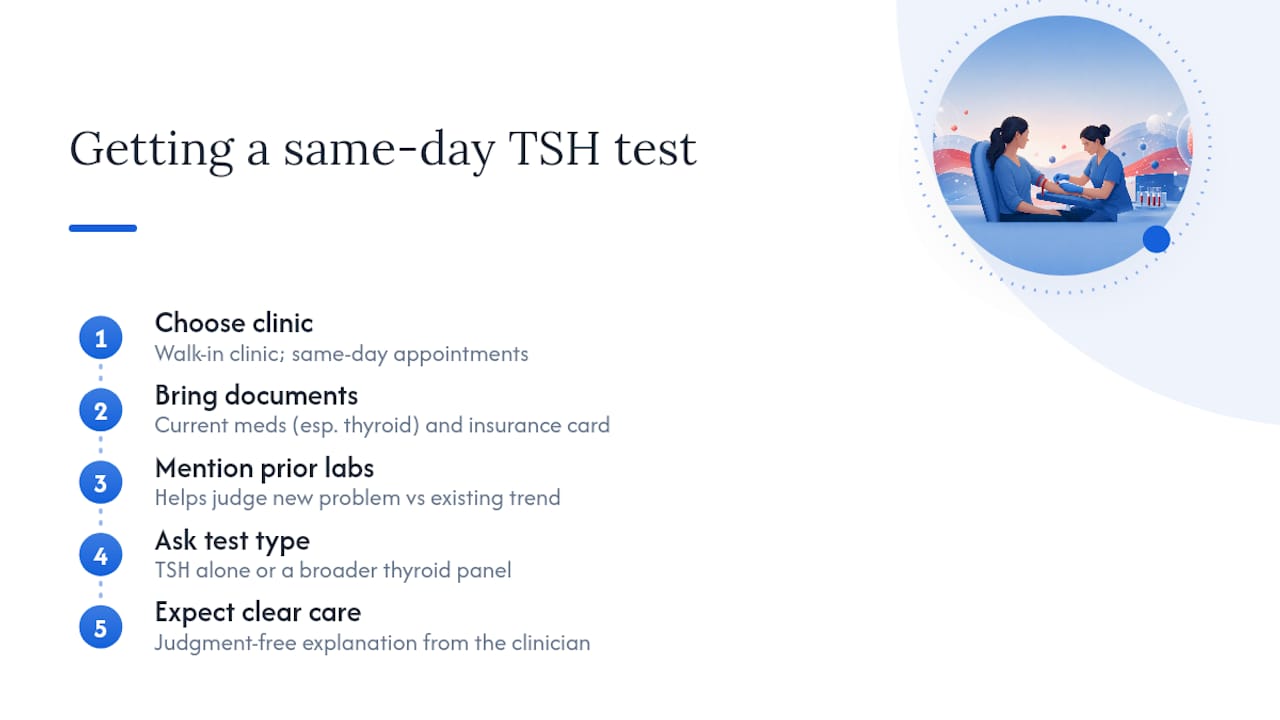
When you come in for a TSH test, bring your current medication list, especially anything thyroid-related, along with your insurance card. If you’ve had prior thyroid labs, mention them. It helps your provider judge whether a result reflects a new problem or an existing trend. Ask directly whether you’re getting a TSH test alone or a broader thyroid panel, since the two answer slightly different clinical questions.
Experienced clinicians provide patient visits, focusing on straightforward, judgment-free explanations rather than jargon. Whether you’re dealing with fatigue that won’t quit or you simply want a baseline reading, testing here fits into an actual same-day visit rather than a multi-week wait.
— Lisa
Where to Read More on Thyroid Testing
- NIDDK’s overview of thyroid tests covers what each thyroid lab measures and why.
- MedlinePlus’s TSH test page explains the blood draw procedure in plain language.
- The American Thyroid Association’s function test guide breaks down how TSH, T3, and T4 work together.
- Cleveland Clinic’s TSH levels article details follow-up testing after an abnormal result.
Get Your Thyroid Checked Without the Wait
Waiting weeks for a specialist referral just to get a blood draw doesn’t make sense when fatigue, weight changes, or heart palpitations are affecting your daily life right now. Some walk-in clinics offer same-day visits seven days a week, avoiding the scheduling backlog common in many primary care offices.

Our providers can order a TSH test on the spot, walk you through what your number means, and set up the right follow-up testing if something looks off, all in one visit rather than a chain of referrals. If ongoing thyroid monitoring turns out to be the right path, our primary care services can carry that forward instead of sending you elsewhere. Ready to get answers instead of guessing? Visit our urgent care page to see today’s availability and walk in for your TSH test.
This article is general information, not a substitute for advice from a qualified doctor. Consult a qualified healthcare professional about your own circumstances before acting on anything here.
Sources
- Thyroid tests – NIDDK
- TSH (Thyroid-stimulating hormone) Test – MedlinePlus
- Thyroid function tests – American Thyroid Association
- Effects of food intake on TSH – PMC
FAQ
What Is a Normal TSH Level for Thyroid Function?
Most labs consider a commonly accepted range up to about 4.0 mIU/L normal for adults, though the exact range depends on your lab’s specific assay and should be read against the reference range printed on your own report.
Does a Low TSH Level Cause Weight Gain?
No, a low TSH usually points to an overactive thyroid, which more commonly causes weight loss rather than gain; weight gain is more typically associated with high TSH and an underactive thyroid.
How Will I Feel if My TSH Is High?
High TSH usually reflects hypothyroidism, which commonly causes fatigue, weight gain, cold intolerance, dry skin, and hair thinning, though symptoms vary and some people feel minimal change even with an abnormal result.
What Should You Avoid Before a TSH Test?
Fasting typically isn’t required, but eating right before your draw can temporarily suppress TSH enough to skew a borderline result, so keeping your testing conditions consistent each time is the safer approach.
Can I Walk In for a TSH Test Without an Appointment?
Yes, Your Family Walk-In Clinic offers same-day appointments seven days a week, so you can typically get a TSH test drawn the same day you decide you need one.