

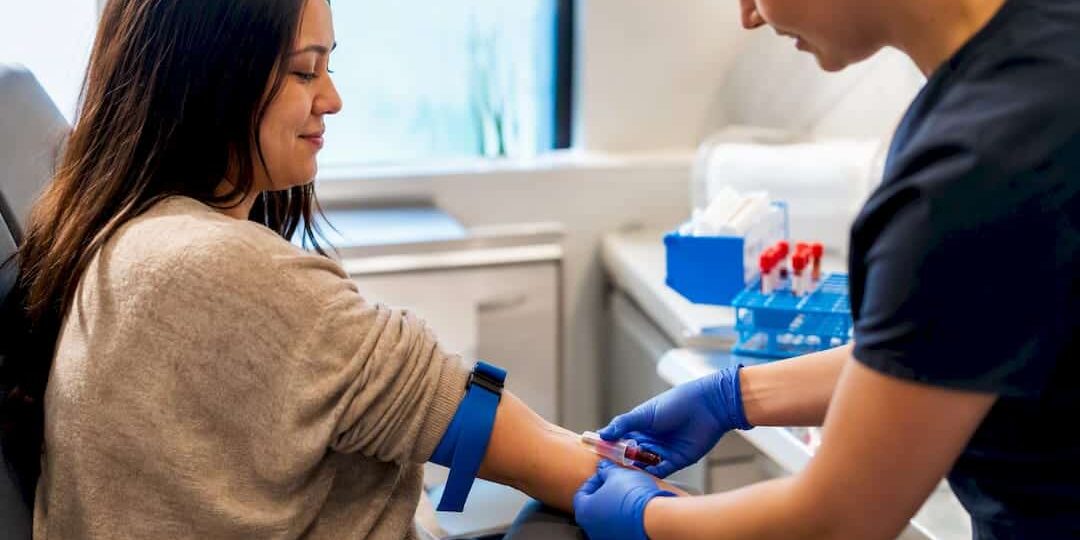
Fasting is only required for certain blood tests, and when it is, the standard window is generally between several hours to overnight, usually about 8 to 12 hours, with plain water allowed the whole time. Not every test on your order needs it, so the fastest way to know for sure is to check your lab requisition or call your provider’s office before your appointment. When in doubt, fast anyway. Showing up prepared costs you nothing; showing up unprepared can mean a second trip.
TL;DR:
- Most fasting blood tests, like lipid panels and glucose measurements, require 8 to 12 hours of no food or beverages except water, with the exact duration depending on the test ordered.
- Eating or drinking anything besides water, smoking, nicotine use, intense exercise, or chewing gum can break the fast and affect test accuracy.
- Your lab order is the authoritative source for fasting requirements; do not rely solely on general advice, and schedule early-morning appointments to shorten fasting periods.
- Tests like A1C do not require fasting, while others, such as lipid panels, often need up to 12 hours of fasting unless specified otherwise.
- Drinking plain water is encouraged during fasting, but medications should generally be continued as prescribed unless your provider advises otherwise.
Table of Contents
- What Fasting Before a Blood Test Actually Means
- How Long to Fast Before Different Blood Tests
- Which Blood Tests Require Fasting (and Which Don’t)
- What You Can Drink or Take While Fasting
- What Happens If You Accidentally Eat or Drink
- Practical Tips to Make Fasting Easier
- What to Expect After Your Blood Draw
- How a Walk-In Clinic Handles Fasting Blood Work
- The Real Problem With Fasting Instructions
- Book Your Lab Work Without the Guesswork
- Sources
- FAQ
What Fasting Before a Blood Test Actually Means
Fasting for a lab draw means no food and no beverages except plain water for a set stretch of time before your appointment. It sounds simple, but the reasoning behind it matters. Whatever you eat gets absorbed into your bloodstream within hours, and that temporarily raises glucose and fat levels in ways that can throw off certain results, according to MedlinePlus. A blood draw taken an hour after breakfast tells a different story than one taken after a full night without food.
A few behaviors count as breaking your fast even though they aren’t technically eating:
- Chewing gum, which can trigger digestive activity
- Smoking or using nicotine products
- Intense exercise, which shifts blood sugar and metabolic markers
- Anything besides water, including diet soda or flavored drinks
How Long to Fast Before Different Blood Tests
The fasting duration generally ranges between about 8 and 12 hours, depending on what your provider ordered. Here’s how the timing typically breaks down:
- Fasting glucose or fasting insulin tests usually call for 8 to 12 hours without food.
- Lipid panels, which measure cholesterol and triglycerides, often require 9 to 12 hours, and Cleveland Clinic notes some providers now allow shorter windows depending on the specific panel.
- Metabolic panels vary more widely; some require fasting and others don’t, depending on which markers are included.
Your lab order is the final word here, not general guidance you read online. If your paperwork says 10 hours, go with 10 hours even if a different test only needs 8. One practical habit makes this easier: book an early-morning appointment. Sleeping through most of the fasting window means you barely notice it, and you’re not stuck hungry at your desk until 2 p.m., a scheduling tip Labcorp recommends for exactly this reason.
Which Blood Tests Require Fasting (and Which Don’t)
Not every vial drawn from your arm needs prep. Knowing which tests fall into which category saves you from fasting unnecessarily or, worse, eating when you shouldn’t have.
Tests that commonly require fasting:
- Fasting glucose and fasting insulin
- Lipid panel (total cholesterol, LDL, HDL, triglycerides)
- Some comprehensive metabolic panels, depending on what’s included
Tests that typically don’t require fasting:
- Complete blood count (CBC)
- Thyroid tests (TSH and related panels)
- Most vitamin D and B12 tests
- Many STI screenings
An A1C test is a good example of a glucose-related test that does not require fasting, since it measures average blood sugar over roughly three months rather than a single snapshot. That confuses people who assume “glucose test” always means “fast first.” Per MedlinePlus, it comes down to what’s actually being measured, not the general category of test. If your requisition form doesn’t spell it out, call the ordering provider or the lab directly rather than guessing.
What You Can Drink or Take While Fasting
Plain water is not just allowed during a fast, it’s encouraged. Staying hydrated keeps your veins fuller and easier to access, which means a faster, less painful draw, a detail Cleveland Clinic points out often gets overlooked.

Medications are usually a different story. In most cases, you should keep taking your prescriptions as scheduled, even during a fast, since stopping medication without guidance can create bigger problems than a slightly skewed lab value. If a specific medicine needs to be taken with food, tell your provider ahead of time so they can advise you.
What to avoid during the fasting window:
- Black coffee (yes, even without cream or sugar) and caffeine can influence certain results and interact with some medications, an effect worth checking on if you take GLP-1 drugs
- Tea, juice, flavored or sparkling water
- Alcohol
- Gum and nicotine
Pro Tip: Skip vitamin-infused or “enhanced” waters during your fast. They often contain small amounts of sugar or electrolytes that technically break a strict fast, even though the label makes them sound harmless.
What Happens If You Accidentally Eat or Drink
Mistakes happen. Maybe you grabbed your morning coffee out of habit, or a kid’s snack ended up in your mouth before you remembered. The move here is straightforward.
- Tell your provider or the lab staff before the blood draw, not after.
- Explain exactly what you consumed and roughly when.
- Let them decide whether the test can still proceed or needs rescheduling.
Some tests tolerate a minor slip better than others. A cholesterol screening might still give usable numbers; a diagnostic glucose test tied to a diabetes workup usually can’t, and your provider will likely ask you to come back fasted, as Labcorp advises. Being upfront costs you a moment of embarrassment. Getting an inaccurate result costs you a repeat visit and a delayed diagnosis.
Practical Tips to Make Fasting Easier
Fasting for a blood test doesn’t have to be miserable if you plan around it instead of just white-knuckling through hunger.
- Schedule your appointment first thing in the morning so most of the fasting window happens while you’re asleep.
- Drink water the evening before and the morning of your appointment. It keeps you comfortable and makes the draw itself go faster.
- Pack a small snack, like a granola bar or piece of fruit, to eat the moment your blood is drawn.
- If a medication needs food, ask your provider whether a small sip of water with it is acceptable or whether the timing can shift slightly.
Pro Tip: Set your appointment reminder the night before, not the morning of. That way “midnight” as your fasting start time doesn’t sneak up on you after a late dinner.
What to Expect After Your Blood Draw
You can eat and drink normally right after your blood is drawn. There’s no waiting period once the needle comes out.
Some people feel a little lightheaded, especially after a longer fast. If that happens, stay seated, sip some water, and eat your snack. Tell the staff if you need a few extra minutes before standing up. Before you leave, ask when and how you’ll get your results, and whether the findings might lead to any follow-up testing.

How a Walk-In Clinic Handles Fasting Blood Work
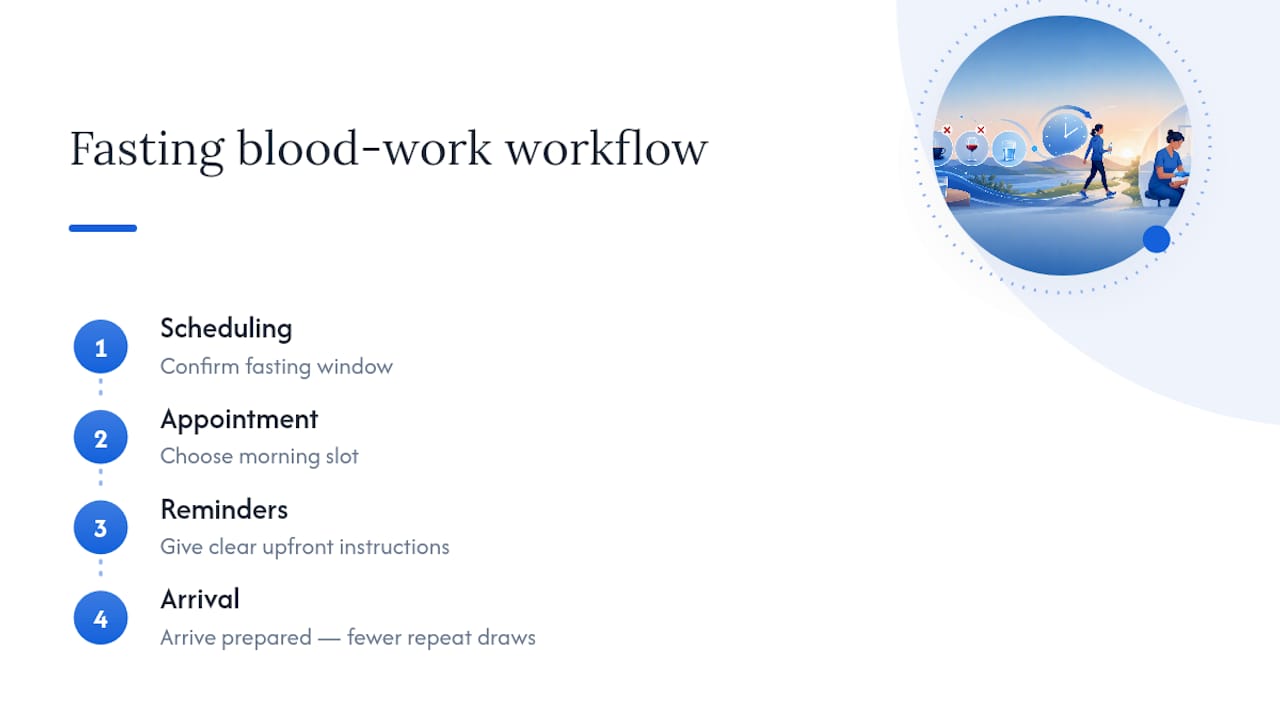
Fasting instructions sound simple until a patient shows up at 11 a.m. having already had breakfast, and now the draw has to be rescheduled. That happens more than people expect. Staff walk patients through their specific fasting window at the time of scheduling rather than assuming everyone read the intake paperwork carefully, because most people don’t until the night before.
Same-day testing works best when patients know exactly what to expect walking in. Morning slots fill first for a reason: fasting overnight is far easier than fasting through a workday. The clinic’s approach leans on clear, upfront communication over generic handouts, which cuts down on the number of patients who need a second draw because they misunderstood the instructions.
The Real Problem With Fasting Instructions
Most fasting advice online treats every blood test like it needs the same 12-hour lockdown, and that’s where people get tripped up. The truth is messier and more useful: fasting rules exist because specific nutrients (glucose, fats) spike after eating and specific tests are built to measure baseline levels, not post-meal levels. Once you understand that mechanism, the rules stop feeling arbitrary and start feeling like something you can reason through, even when your paperwork is vague.
The bigger issue isn’t whether people understand fasting. It’s that clinics and labs often hand patients a generic instruction sheet and expect them to map it onto their specific test order, which is exactly where confusion, missed fasts, and repeat visits come from. The instruction that actually prevents mistakes isn’t “fast for 8 to 12 hours.” It’s “ask what your specific test requires before you assume anything.” That single habit would eliminate most of the rescheduled draws clinics deal with every week.
— Lisa
Book Your Lab Work Without the Guesswork
Fasting instructions are only useful if someone actually explains them to you before you’re standing in a waiting room having already eaten breakfast. At Your Family Walk-In Clinic, that conversation happens when you book, not after you arrive. You’ll know exactly which tests need fasting, for how long, and what you can drink beforehand, so you’re not left piecing it together from a printout the night before your appointment.
Same-day appointments are available for lab work including glucose panels, lipid panels, and A1C testing, along with broader services like prostate cancer screening and general primary care. Bring a photo ID and your insurance card if you have one, and arrive having followed whatever fasting window your appointment confirmation specifies. If you’re not sure what your ordered test requires, call ahead and staff will walk you through it before you fast unnecessarily. Ready to get your lab work scheduled the right way? Book your urgent care appointment today and get clear fasting instructions before you ever step through the door.
Sources
The fasting guidance in this article draws from established patient prep resources, including:
- Fasting for a Blood Test — MedlinePlus
- Fasting for Blood Work — Cleveland Clinic
- Fasting for Blood Work: What to Know Before Your Test | Labcorp
Always confirm fasting instructions with your own provider or the lab performing your specific test, since requirements can vary by panel and by patient.
This article is general information, not a substitute for advice from a qualified doctor. Consult a qualified healthcare professional about your own circumstances before acting on anything here.
FAQ
What Blood Tests Require 12 Hours of Fasting?
Lipid panels most commonly call for up to 12 hours of fasting, though some providers now allow shorter windows depending on the specific panel ordered.
Can I Drink Water Before a Fasting Blood Test?
Yes. Plain water is allowed and encouraged during fasting, and staying hydrated makes your veins easier to access for the draw.
What Happens if I Don’t Fast Before My Blood Test?
Tell your provider or the lab before the draw. Some tests can still proceed with slightly less accurate results; others, like diagnostic glucose testing, usually need to be rescheduled.
Is 8 Hours of Fasting Enough for a Blood Sugar Test?
Often yes. Fasting glucose and insulin tests typically require 8 to 12 hours, so 8 hours falls within the standard range, but your specific lab order is the final word.
Do I Need to Fast for an A1C Test?
No. A1C testing measures average blood sugar over roughly three months and doesn’t require fasting, unlike a fasting glucose test.