


Yes, you can get primary care without insurance in Florida. Your best first calls are community health centers (also called FQHCs), free and charitable clinics, sliding-fee clinics, and self-pay walk-in clinics. Community health centers are usually the strongest choice for ongoing care because they price visits by income. Save the emergency room for true emergencies. Under EMTALA, it will screen and stabilize you regardless of insurance, but it is not built for routine checkups or refills.
TL;DR:
- Community health centers are the best option for ongoing care because they charge based on income, typically ranging from 100% to 200% of the Federal Poverty Guidelines.
- Free and charitable clinics serve low-income residents but often have more restrictive eligibility criteria and limited hours, so calling ahead is essential.
- Most clinics use a sliding-fee schedule, with costs adjusting according to household size and income, but services like labs and referrals may not be discounted the same way.
- Emergency room visits are covered under EMTALA but can result in high bills, so it is best to seek primary or urgent care for non-life-threatening issues to save money.
- Calling clinics in advance to ask about self-pay rates and bringing appropriate income and ID documentation streamline the process and prevent unexpected bills.
Table of Contents
- Where to Find Affordable Primary Care Without Insurance
- How Sliding-Fee Discounts and Self-Pay Pricing Actually Work
- Primary Care, Urgent Care, or the ER: Picking the Right Door
- How to Schedule and Prepare for Your Visit
- Florida-Specific Resources Worth Knowing
- A Local Clinic’s View on Serving Uninsured Patients
- What Uninsured Floridians Get Wrong About Finding Care
- Get Same-Day, Self-Pay Care at Your Family Walk-In Clinic
- Sources
- FAQ
Where to Find Affordable Primary Care Without Insurance
You have more options than you probably think, and knowing the difference between them saves you both money and wasted phone calls.
Community health centers, often called FQHCs (Federally Qualified Health Centers), are usually your best bet for ongoing primary care. HealthCare.gov points uninsured people to these community health centers specifically because they charge based on what you earn, not a flat rate. They also tend to offer continuity, meaning you see the same provider over time and can get referrals when you need a specialist.
Free and charitable clinics fill a different gap. They typically serve people who fall below a certain income threshold and often require Florida residency, though the details shift from clinic to clinic. The Florida Association of Free & Charitable Clinics notes that eligibility and services vary widely by location, so a clinic that helps adults in one county might only serve children or seniors in another. Clinics like Health & Hope in Pensacola show how differently these models can be structured from one community to the next, which is exactly why calling ahead matters.
Beyond those two anchors, look for:
- County health department programs, which sometimes run low-cost primary care alongside vaccination and screening services
- Mobile health units that visit underserved neighborhoods on a rotating schedule
- Seasonal vaccine or screening events at churches, schools, or community centers
To locate a center near you, use HRSA’s Find a Health Center tool, which lists federally funded clinics by ZIP code. It is the most reliable directory available for this purpose.
How Sliding-Fee Discounts and Self-Pay Pricing Actually Work
Most community health centers use a sliding-fee discount schedule built on the Federal Poverty Guidelines (FPG). Between roughly 100% and 200% of FPG, you pay a nominal fee that increases in steps as income rises, according to HRSA’s sliding-fee program guidance.
Here is generally how the process works:
- You complete a sliding-fee application, usually a short form asking about household size and income.
- The clinic verifies your documentation, sometimes on the spot, sometimes within a few days.
- Your discount tier is assigned and applied to that visit and future ones.
- You reapply annually, since income and household size can change.
Sample policy language from HRSA’s National Health Service Corps program shows clinics commonly ask for photo ID, proof of household size, and recent pay stubs or a tax return.
Pro Tip: Don’t ask “Do you take uninsured patients?” Ask “Can I see your sliding-fee schedule?” That single question shifts the conversation from whether they’ll see you to how much you’ll actually owe.
One caveat: sliding-fee discounts usually cover the clinic visit itself. Outside labs, imaging, or specialist referrals billed by a third party may not be discounted the same way, so ask specifically before you agree to a test.
Primary Care, Urgent Care, or the ER: Picking the Right Door
The site of care you choose changes both your wait time and your bill. Routine needs, chronic condition management, prescription refills, and preventive screenings belong at a primary care visit. Sudden but non-life-threatening problems, a sprained ankle, an ear infection, a bad cough, belong at urgent care. Chest pain, severe bleeding, difficulty breathing, or signs of stroke mean you call 911 or go straight to an emergency department.
EMTALA requires any hospital with an emergency department to give you a medical screening exam and stabilizing treatment no matter your ability to pay, according to CMS. That protection is real, but it is not free. A bill typically follows, and if you cannot pay it, you should request the hospital’s financial assistance policy right away rather than waiting for a collections notice.
Cost-wise, primary care visits are generally the cheapest option for routine issues, but pricing swings by clinic. Always confirm:
- Whether the self-pay price includes labs or imaging
- Whether medications are billed separately
- Whether a follow-up visit costs extra or is bundled in
How to Schedule and Prepare for Your Visit
A little preparation turns a stressful phone call into a straightforward appointment.
- Call ahead and ask directly: “Do you accept uninsured patients?” and “Do you have a sliding-fee schedule or self-pay rate?”
- Ask what’s included in that price. Labs, a follow-up visit, and medications are not always bundled.
- Bring a photo ID, proof of Florida residency if requested, and income documentation like pay stubs or a tax return.
- Bring a current medication list, even if you’re not sure of exact dosages.
- At check-in, complete the sliding-fee application if one is offered, and ask for a written estimate before treatment begins.
- If a bill arrives later that surprises you, request an itemized statement and the facility’s financial assistance policy immediately. Nonprofit hospitals are required to offer one, and acting fast can prevent the account from going to collections.
Pro Tip: Keep a folder, physical or digital, with your ID copy, income proof, and medication list. Reusing the same documents across multiple clinic calls saves you from starting over every time.
If you’d rather understand your full range of options before calling anyone, this guide to seeing a doctor without insurance walks through the landscape in more detail.
Florida-Specific Resources Worth Knowing
Start with HRSA’s Find a Health Center tool, the most complete directory of federally funded clinics statewide. Pair that with HealthCare.gov’s community health center guidance, which also explains how to check whether you actually qualify for Medicaid or Marketplace subsidies before assuming you’re stuck paying full price.
A few things to keep in mind:
- Florida free clinics often require proof of state residency and may restrict services by age or county
- Some operate by appointment only, so walking in without calling first can mean a wasted trip
- If you’re enrolled in or think you might qualify for Medicaid, it’s worth checking, since eligibility rules shift and some people qualify without realizing it, including in cases covered by Florida’s Medicaid urgent care guidance
A Local Clinic’s View on Serving Uninsured Patients
At a local walk-in clinic in Lutz, providers with significant experience see uninsured patients regularly, and the pattern is consistent: people delay care because they assume it’s unaffordable before they ever ask. Same-day visits and extended hours mean patients don’t have to choose between missing work and getting seen. Bringing a photo ID and a rough income estimate up front speeds the conversation considerably, and most patients are surprised the self-pay conversation takes just a few minutes.
What Uninsured Floridians Get Wrong About Finding Care
The biggest mistake I see in how this topic gets covered is treating “free clinic” and “community health center” as interchangeable. They’re not. Free clinics often have tighter eligibility rules, limited hours, and county-specific restrictions, while FQHCs are built for exactly this situation: ongoing care, priced by income, with continuity built in. If you only remember one thing from this article, remember to ask for the sliding-fee schedule by name.
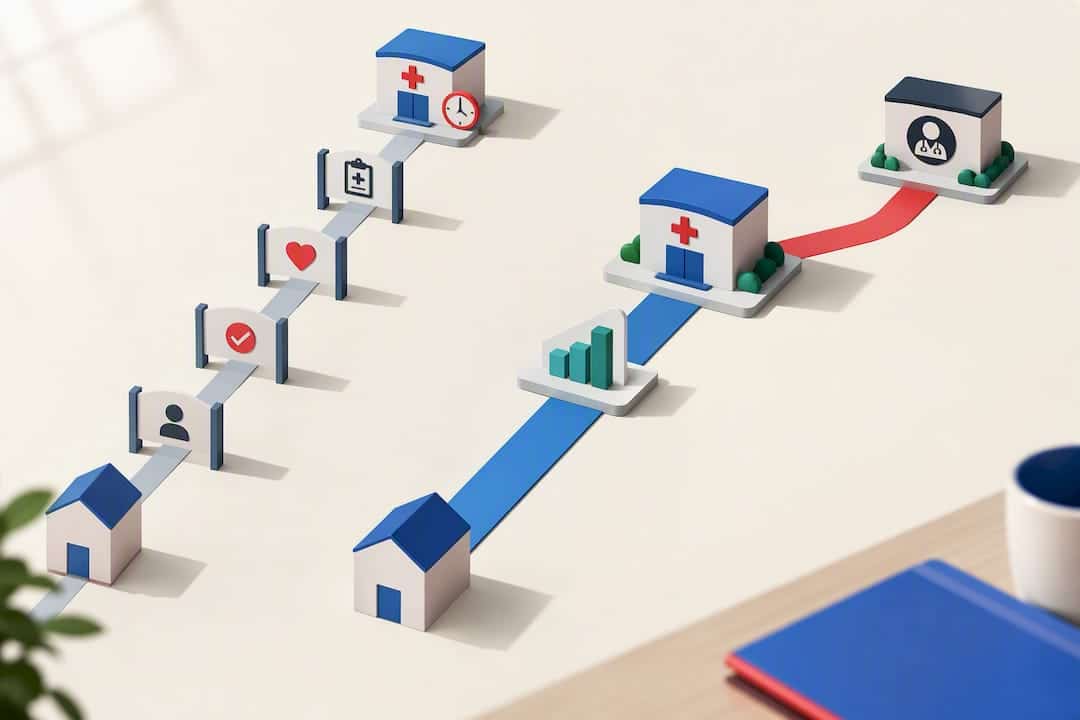
The other gap in most advice is the silence around what happens after an ER visit. EMTALA gets discussed like it solves the money problem. It doesn’t. It guarantees you’ll be seen and stabilized, but the bill still comes, and too many people sit on that bill instead of requesting the hospital’s financial assistance policy, which nonprofit hospitals are required to offer. That single phone call, made early, is often the difference between a manageable payment plan and a collections notice.
Prioritize the phone call before the appointment. Ask about pricing before you ask about availability. The clinics doing this well will tell you exactly what you’ll owe before you ever sit in a waiting room.
— Lisa
Get Same-Day, Self-Pay Care at Your Family Walk-In Clinic
A local walk-in clinic is a practical alternative to bouncing between hotlines and waitlists when you need to be seen promptly.
Same-day primary care and urgent care appointments are available seven days a week from 8 AM to 8 PM, with services covering immunizations, health screenings, STD testing, and sports and school physicals for both adults and children.
If you’re uninsured, call and ask directly for self-pay rates or sliding-fee options and what documents to bring to get pricing information before your visit. For a full breakdown of services and pricing, check the clinic’s prices and services page and schedule your appointment today.
This article is general information, not a substitute for advice from a qualified doctor. Consult a qualified healthcare professional about your own circumstances before acting on anything here.
Sources
- Healthcare
- Sliding Fee Discount Program | Bureau of Primary Health Care (HRSA)
- Emergency Medical Treatment & Labor Act (EMTALA) | CMS
- NHSC sample Sliding Fee Discount Program policy | HRSA
- Financial assistance policy and emergency medical care policy (Section 501®(4)) | IRS
FAQ
Can I see a primary care doctor without insurance in Florida?
Yes. Community health centers, free and charitable clinics, and self-pay walk-in clinics all see uninsured patients in Florida, and many price visits using income-based sliding-fee schedules. Calling ahead to ask about self-pay rates is the fastest way to find an affordable option near you.
Can you see a doctor in Florida without insurance?
Yes, uninsured Florida residents can be seen at community health centers, free clinics, and walk-in clinics that accept self-pay patients. HealthCare.gov specifically recommends community health centers as the starting point for people who can’t afford a plan.
Is it cheaper to go to primary care or urgent care without insurance?
Primary care is generally less expensive for routine issues like refills, checkups, and chronic condition management. Urgent care pricing varies by clinic and visit type, so it’s worth comparing self-pay urgent care costs against a primary care visit before deciding which fits your situation.
What happens if you don’t have health insurance in Florida?
You can still get medical care. Emergency departments must screen and stabilize you under EMTALA regardless of ability to pay, but a bill typically follows afterward. For non-emergency needs, community health centers, sliding-fee clinics, and walk-in clinics like Your Family Walk-In Clinic offer more predictable, lower-cost paths to care.