


Yes, urgent care can diagnose and treat most ear infections, from same-day exams to prescriptions when needed. Go to the emergency room instead for facial weakness, severe dizziness, high or persistent fever, or swelling behind the ear, and get infants under three months with a fever of 100.4°F (38°C) or higher evaluated right away. If symptoms are mild, safe home care is reasonable for a few days, but come in if pain, drainage, or fever hangs on or gets worse.
TL;DR:
- Urgent care can diagnose middle and outer ear infections with otoscope exams, guiding treatment like antibiotics or ear drops based on the inflammation type.
- Signs requiring urgent care include persistent ear pain, Fluid drainage, high fever in infants under three months, or symptoms lasting over 2 to 3 days.
- Immediate ER visits are necessary if there is facial weakness, severe dizziness, swelling behind the ear, or symptoms of bacterial spread beyond the ear.
- Home care with pain relievers and comfort measures is suitable for mild cases, but worsening pain, drainage, or fever warrants classic medical evaluation.
- Virtual visits are helpful for symptom checks, but in-person otoscope exams are essential if pain, drainage, or severe symptoms are present.
Table of Contents
- Ear Infection Symptoms That Mean You Should Go to Urgent Care
- How Urgent Care Diagnoses and Treats an Ear Infection
- What to Expect During Your Urgent Care Visit
- Safe Home Care While You Watch and Wait
- Emergency Red Flags: When to Skip Urgent Care and Go to the ER
- A Clinic Perspective on Treating Ear Infections
- Getting Same-Day Ear Care at Your Family Walk-In Clinic
- Sources
- FAQ
Ear Infection Symptoms That Mean You Should Go to Urgent Care
Ear pain is the obvious sign, but it’s rarely the only one. In babies and toddlers who can’t tell you what hurts, watch for tugging or pulling at the ear, unusual fussiness, trouble sleeping through the night, and a drop in appetite or refusal to feed. Adults tend to notice muffled hearing, a feeling of pressure, or drainage that wasn’t there yesterday.
Timing matters as much as the symptom itself. Mild ear pain that resolves within a day or two often clears on its own, but pain, fever, or drainage lasting more than 2 to 3 days signals it’s time for an evaluation. That window isn’t arbitrary. It reflects how long a viral process typically takes to either resolve or reveal itself as bacterial.
One rule has no gray area: any fever of 100.4°F (38°C) or higher in an infant under three months needs immediate medical attention, not a wait-and-see approach. Parents often miss the quieter signs, too, like a toddler who suddenly wants to be held constantly, wakes up crying at 2 a.m. for the third night in a row, or starts refusing a bottle they normally love.
Here’s what should prompt a same-day urgent care visit:
- Ear pain or tugging that persists more than a day, especially in a child under two
- Fluid or pus draining from the ear canal
- Fever above 100.4°F in an infant, or fever paired with ear pain at any age
- Sudden hearing changes or a sensation of fullness that doesn’t clear
- Sleep disruption or feeding refusal that’s out of character for the child
- Symptoms that have lasted several days without improvement
How Urgent Care Diagnoses and Treats an Ear Infection
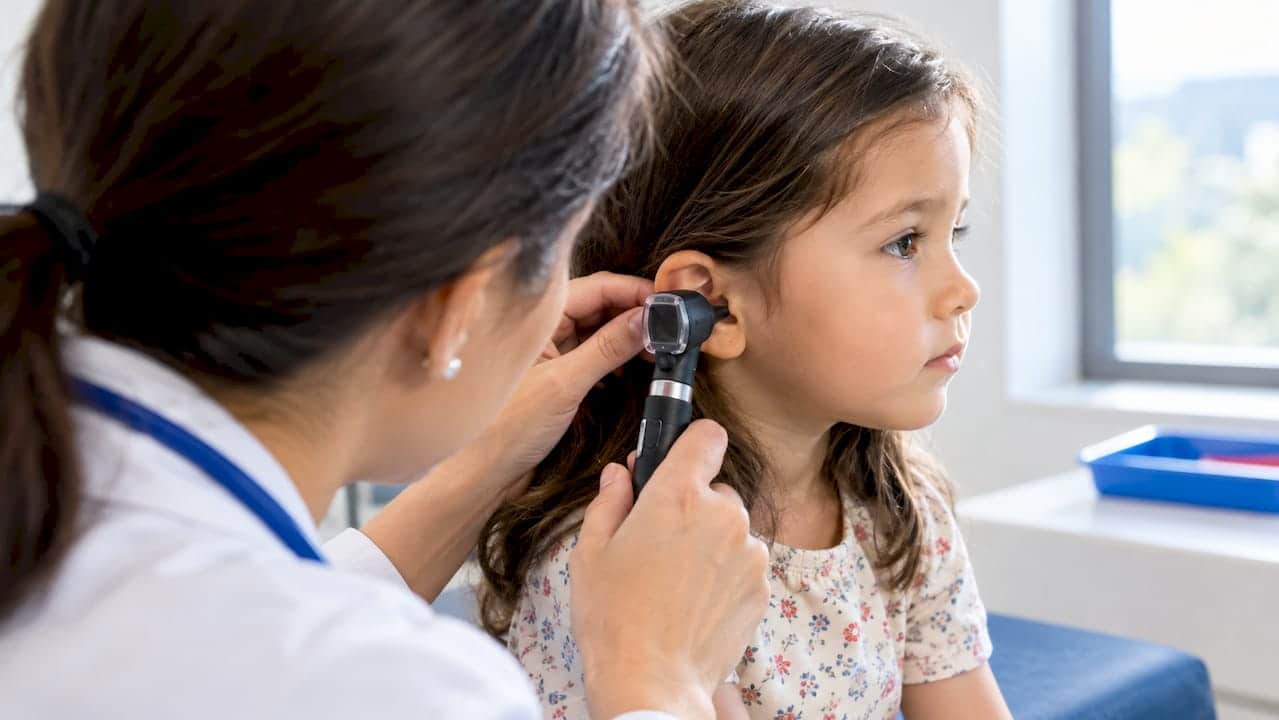
An urgent care provider starts with an otoscope, the lighted instrument that looks into the ear canal. What they see determines everything that follows. A bulging, red eardrum with visible fluid behind it usually points to acute otitis media, a middle ear infection. A pneumatic otoscopy that shows an eardrum that doesn’t move properly adds more weight to that diagnosis. Redness and swelling confined to the ear canal itself, without middle ear involvement, usually points to otitis externa, better known as swimmer’s ear.
That distinction changes the treatment plan entirely. Here’s the typical pathway:
- Pain relief first. Providers often start with over-the-counter analgesics regardless of the eventual diagnosis, since comfort matters immediately.
- Topical drops for outer ear infections. Swimmer’s ear usually responds to antibiotic ear drops rather than oral medication.
- Oral antibiotics when bacterial infection is confirmed. Amoxicillin is commonly the first choice for middle ear infections when the exam findings support it and there’s no allergy history.
- Watchful waiting when appropriate. Many ear infections are viral, and CDC guidance supports holding off on antibiotics in select cases, favoring pain control and a follow-up check instead.
- Referral to an ENT specialist for recurrent infections, persistent fluid buildup, or cases that don’t respond to standard treatment.
Pro Tip: If you’re offered a delayed prescription (fill it only if symptoms haven’t improved in 48 to 72 hours), that’s not a sign you’re being dismissed. It’s evidence-based antibiotic stewardship, and it usually means your provider expects your body to handle a viral process on its own.
Virtual visits work fine for a symptom check or a prescription refill conversation, but they can’t replace an otoscope exam; for more on virtual care scope and alternatives, see Online Treatment for UTI, Strep, Rash, Flu & More Conditions | Chameleon. If pain is severe, drainage is present, or a child is under two, an in-person visit is essential.
What to Expect During Your Urgent Care Visit
Walking in prepared shortens the whole process. Bring a rough timeline of when symptoms started, a list of current medications and allergies, and your insurance card if you have one.
Once you’re checked in, expect this general flow:
- Vitals check, including temperature, since fever guides the rest of the visit
- Otoscope exam of the affected ear (sometimes both, for comparison)
- A quick look at the throat and neck, since ear pain sometimes originates elsewhere
- Ear cleaning or drop application if wax or debris is blocking the view
- A same-day prescription, watchful-waiting instructions, or a referral, depending on findings
Most visits wrap up with a clear next step. That might mean a prescription in hand, a plan to reassess in a few days, or a referral if the provider suspects something more complex, similar to how a strep throat urgent care visit tends to move from exam to answer in one stop. Most insurance plans cover urgent care visits at a lower copay than the ER, and walk-in availability means you typically don’t need an appointment booked days out.
Safe Home Care While You Watch and Wait
Home care has a real role here, as long as you know its limits. Acetaminophen or ibuprofen, dosed appropriately for age and weight, remains the most reliable way to manage ear pain while you monitor how things progress. If you’re unsure about dosing thresholds, especially alongside a fever, this guide to fever thresholds walks through when a temperature reading itself becomes the reason to seek care.
Beyond medication, a few low-effort comfort measures actually help:
- A warm compress held against the outer ear for 10 to 15 minutes at a time
- Extra fluids, especially for kids who are eating less than usual
- Propping the head slightly elevated during sleep to ease pressure
- Skipping cotton swabs and any unproven ear drops not recommended by a provider
What the guidance actually says: The CDC recommends evaluating ear infection symptoms that persist beyond 2 to 3 days, and treating any fever of 100.4°F (38°C) or higher in an infant under three months as an immediate medical concern, not something to monitor at home.
Home care stops being the right call the moment pain worsens, drainage appears, or fever climbs past that 48 to 72 hour mark. At that point, waiting longer doesn’t save you a visit. It just delays one you’re going to need anyway.
Emergency Red Flags: When to Skip Urgent Care and Go to the ER
A handful of signs mean urgent care isn’t the right stop, and every hour matters more than usual. These point toward infection spreading beyond the ear itself, which is rare but serious.
- Facial weakness or drooping on one side, which can indicate nerve involvement
- Severe dizziness or sudden loss of balance, not just mild unsteadiness
- Swelling, redness, or tenderness behind the ear, a possible sign of mastoiditis, a bacterial spread into the bone behind the ear
- Confusion or a severe headache alongside ear pain and fever
- A very high fever that isn’t responding to medication, or any fever in a very young infant
- Recent head trauma combined with new ear pain or drainage
Any of these warrants an immediate ER visit or a call to 911 rather than a wait for a same-day slot. At triage, be ready to say when symptoms started, whether fever has been present, and whether antibiotics were started recently. That information helps the team move fast.
A Clinic Perspective on Treating Ear Infections
Most parents assume “antibiotics now” is always the safer choice. It usually isn’t. At walk-in clinics open seven days a week from 8 AM to 8 PM, same-day ear infection cases are common, and the right call is often watchful waiting paired with real pain relief, not a reflexive prescription. That approach protects your child from unnecessary side effects and protects antibiotics from losing effectiveness over time. Comfort now, patience where it’s warranted, and a same-day appointment when something looks off. That’s the balance worth trusting.
— Lisa
Getting Same-Day Ear Care at Your Family Walk-In Clinic
Walk-in clinics can be a practical alternative to sitting in an ER waiting room for problems that usually don’t require one. These clinics often offer same-day appointments and walk-in availability daily, with otoscope exams, earwax or foreign object removal, and prescriptions on the spot when the exam calls for it.

Bring your insurance card, a list of current medications, and a rough timeline of when symptoms started. That’s it. These clinics typically accept major insurance plans, Medicaid, and self-pay, and follow-up is straightforward if watchful waiting is the right first step. Whether it’s a toddler tugging at an ear or an adult with sudden hearing changes, you can walk into our urgent care clinic in Lutz and Tampa today and get an answer, not just an appointment. Check our extended hours and walk-in schedule and come in when you’re ready.
Sources
- Ear infections | CDC
- Ear pain (earache, otalgia): causes & treatment | Cleveland Clinic
- Diagnosis and Management of Acute Otitis Media and Acute Otitis Externa for the Urgent Care Clinician | FOAMed
This article is general information, not a substitute for advice from a qualified doctor. Consult a qualified healthcare professional about your own circumstances before acting on anything here.
FAQ
Can urgent care treat ear infections?
Yes, urgent care providers can examine the ear with an otoscope, diagnose middle ear or outer ear infections, and prescribe antibiotics or ear drops the same day when the exam supports it. They can also apply watchful-waiting guidance for viral cases, following CDC recommendations.
When should I seek urgent care for an ear infection?
Seek urgent care if ear pain, drainage, or fever lasts more than 2 to 3 days, or sooner if a young child is tugging at their ear, refusing to eat, or unusually fussy. Any infant under three months with a fever of 100.4°F (38°C) or higher needs immediate evaluation, not a wait-and-see approach.
Can you treat an ear infection without going to the doctor?
Mild ear pain can sometimes improve with acetaminophen or ibuprofen, warm compresses, and rest over 48 to 72 hours, especially if it appears viral. If pain persists, drainage develops, or fever climbs during that window, an in-person exam is necessary since complications, while rare, can be serious.
What is a stage 1 ear infection?
There’s no universally standardized “stage 1” classification for ear infections; providers generally describe severity by exam findings, such as mild redness without bulging versus a fully bulging, fluid-filled eardrum. An early-stage infection typically shows milder inflammation and may respond well to pain control and monitoring rather than antibiotics right away.
How much does an urgent care visit for an ear infection cost?
Pricing for urgent care visits at Your Family Walk-In Clinic is available on the clinic’s website, and the clinic accepts major insurance plans, Medicaid, and self-pay. Costs vary based on exam findings and whether additional services like earwax removal or lab work are needed.