
A good back-to-school health checklist has six parts: vaccine records, a well-child or sports physical, signed school forms, a medication and allergy plan, a sleep and meal routine, and a quick check of vision, hearing and mood. Do them in that order, because the first three can take the longest. If your child is already in class and something is missing, you can still catch up this week. We see families do exactly that every fall in Lutz.
TL;DR
- Check your child’s immunization record against Florida’s school requirements, and file the right form with the school.
- Book the annual well-child visit or sports physical now. Sports physicals work best at least six weeks before the first practice.
- Fill out every health and emergency form your school sends, and give the school a written plan for any medication, allergy, asthma or other condition.
- Rebuild sleep, breakfast and activity routines in small steps. Children under 12 need 9 to 12 hours of sleep.
- Ask about vision, hearing and emotional health at the checkup, not only about shots and forms.
Table of Contents
- Start with immunizations
- Schedule the annual checkup
- Sports and school physicals
- Forms, emergency contacts and medications
- Reset sleep, breakfast and activity
- Check vision, hearing and emotional health
- Know the signs of a concussion
- Perspective: why we push families to come in before the first bell
- Get the checklist done in one visit
- Quick checklist to print
- FAQ
- Sources
Start with immunizations
Vaccines come first because a school can hold up enrollment or attendance without them. HealthyChildren.org notes that all 50 states require certain immunizations before a child enrolls, and the exact list differs by state, so check Florida’s rules rather than a national chart.
In Florida, the Department of Health lists these for kindergarten through 12th grade: 4 to 5 doses of DTaP, 4 to 5 doses of IPV (polio), 2 doses of MMR, 3 doses of hepatitis B, and 2 doses of varicella (chickenpox), with one Tdap booster added for students entering 7th grade. The same page says the state’s Form DH 680, the Florida Certification of Immunization, is what documents these shots for school entry and attendance.
What to do with the record
- Find your child’s current immunization record. If you can’t, our guide to getting immunization records in Florida walks through where to ask.
- Compare it to the Florida list above. Note any shot that is missing or late.
- Bring the record to the visit. A provider can give catch-up doses and complete the school form.
- Turn the form in to the school. Our page on Florida school vaccine requirements explains the filing window for families who enroll mid-year or move to the state.
Your school district and your child’s grade have the final word on what the school needs, so confirm with the school’s front office or nurse if anything on your record looks unclear. Sending a child to college? Dorm life brings its own vaccine questions, covered in our college vaccine guide.
Don’t forget the flu shot
The American Medical Association says keeping children current on vaccines, including the annual flu vaccine, helps protect their health. Flu season overlaps with the school year, so fall is the time to get it. Details are on our flu shot page.
Schedule the annual checkup
If your child has not had a well-child visit in the past year, book one. The AMA says annual checkups can uncover vision and hearing problems, and that pediatric visits are also a place to raise physical, emotional and behavioral concerns that affect school.
A checkup is more than a signature on a form. According to HealthyChildren.org, the visit gives the doctor a chance to spot new health concerns, including vision, hearing or emotional issues that matter for school success.
What to bring and ask
- The immunization record and any school forms, already filled in with your child’s name, grade and school.
- A list of current medications, with doses.
- Questions about sleep, appetite, headaches, stomachaches, trouble reading the board, or changes in mood.
- Any worries about bullying, anxiety, focus or friendships.
Our guide to why yearly physicals matter explains what a routine exam checks and why a visit when your child is well makes later visits easier. Teens and parents may also want to read about the common health screenings primary care providers recommend.
Sports and school physicals
If your child plays a sport, they will likely need a preparticipation physical. The American Academy of Pediatrics says the evaluation should happen at least six weeks before the first preseason practice, ideally during the annual health supervision visit. That timing leaves room to follow up on anything the exam turns up.
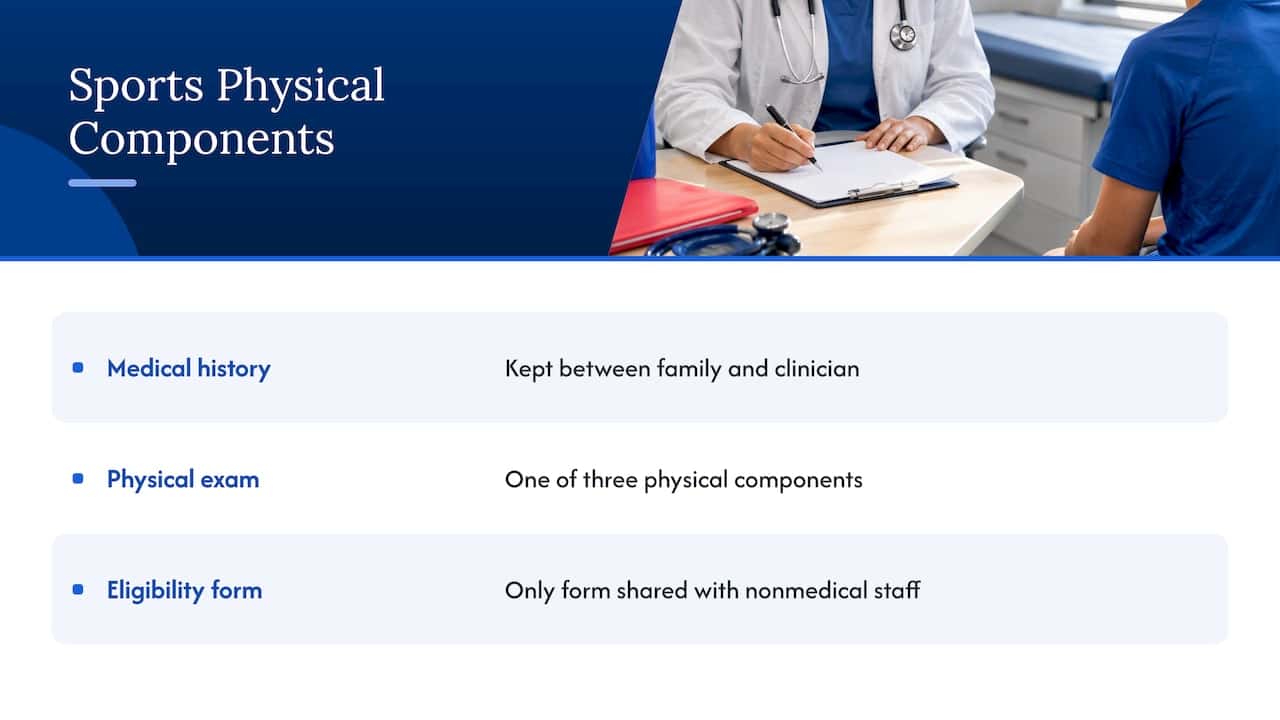
The AAP also describes the forms: a medical history, a physical examination and a medical clearance form. Only the medical eligibility form should go to nonmedical school staff, so your child’s full history stays between your family and the clinician.
The AAP strongly discourages group physicals in non-clinical settings, such as a gym or school hallway, because they lack the privacy needed for a confidential health history. A one-on-one visit in a clinic is the better setup, especially for teens who may want to talk about things they would not say in front of teammates.
Tips for a smooth sports physical
- Check your school or league’s form first. Many teams post it online, and youth sports registration forms usually ask for medical details you will want ready.
- Have your child bring glasses, contacts, braces or a brace for a past injury if they use one.
- Write down any history of fainting, chest pain, shortness of breath with exercise, concussions or family heart problems.
- Bring the school’s form with the child’s name and sport filled in.
- Ask whether your child’s sport or school requires extra testing. We offer a sports physical with EKG for families who want it.
You can read our school and sports physical details on the school and sports physicals page, and the clinic prints a sports physical form you can download ahead of the visit.
Forms, emergency contacts and medications
Paperwork is the part parents most often leave for the first day. HealthyChildren.org advises parents to fill out all health or emergency contact forms the school sends home or posts on the district website. It also suggests checking the district site for grade-specific supply lists.
Forms to gather
- Emergency contact and pickup authorization forms.
- Health information forms listing allergies, conditions and medications.
- Immunization certification (Form DH 680 in Florida).
- Sports clearance forms, if your child plays.
- Medication authorization forms, if the school nurse will give any dose.
A written plan for conditions and allergies
If your child has asthma, a food allergy, diabetes, seizures or another condition, a plan on paper matters. HealthyChildren.org says standardized emergency health forms can include dietary restrictions and contact details and can be completed with your child’s pediatrician. It also recommends working with the pediatrician on disease-specific action plans and sharing them with school staff.
Practical steps:
- Ask your provider to fill in the action plan or medication form before the first day.
- Check expiration dates on inhalers, epinephrine auto-injectors and other medicines.
- Ask whether the school needs a separate labeled supply kept in the nurse’s office.
- Tell the teacher, nurse and any bus or aftercare staff what to watch for.
- Run out of a regular medication? We handle medication refills for established needs, so ask at your visit.
Reset sleep, breakfast and activity
Routines are the least glamorous item on the list and often the most useful. Start two weeks before school if you can, and move bedtime earlier in 15-minute steps.
Sleep
The CDC’s back-to-school flyer says children under 12 need 9 to 12 hours of sleep every night to help them learn. Work backward from your school’s wake-up time. Screens off before bed and a steady wake-up time on weekends make the shift easier.
Meals
The CDC suggests offering vegetables, fruits and whole-grain foods to support the immune system and healthy growth in children and teens. It also says small daily changes can add up to significant health improvements over time, so you do not need to overhaul the kitchen. A simple breakfast with some protein and fruit counts.
Movement
CDC back-to-school guidance says children aged 6 to 17 should get at least 60 minutes of physical activity a day, which supports concentration and thinking skills. In Florida heat, plan outdoor play for morning or evening, and send a water bottle to school.

Mouth care
Dental habits belong on the checklist too. Brushing twice a day gets harder when mornings are rushed, so build it into the routine. These dental hygiene routines for kids are one place to start for younger children.
Check vision, hearing and emotional health
Children rarely say, “I can’t see the board.” They squint, sit close to the screen, get headaches or lose interest in reading. The annual checkup is the natural place to look at vision and hearing, as the AMA notes above. If you notice trouble earlier, don’t wait for the school year to start.
Emotional health deserves the same attention. HealthyChildren.org says annual checkups matter for screening mental and emotional concerns that could get in the way of school progress. Signs worth raising with a provider include:
- Frequent stomachaches or headaches on school mornings.
- Trouble falling asleep, or new nightmares.
- Dropping grades, or avoiding friends and activities.
- Frequent anger, tears or withdrawal that lasts more than a couple of weeks.
Our clinic also offers therapy and counseling for adults and children, in the office or by virtual session, so you can start that conversation in one place.
Know the signs of a concussion
Fall sports and playground falls make head injuries common. The CDC says concussion symptoms may seem mild but can affect thinking and learning, and it gives parents three steps: assess the situation, watch for signs and symptoms, and contact a health care professional. Our page on concussion symptoms and when to see a doctor lists the red flags that mean going to the emergency room right away and the ones that call for a visit with a doctor within 72 hours.
Perspective: why we push families to come in before the first bell
We open at 8 AM and close at 8 PM, seven days a week, because school schedules do not follow clinic hours. A parent who works until 5 PM should not have to choose between a day off and a missing form.
Our providers bring more than 25 years of experience to the exam room, and we see kids and adults in the same building. That helps when one visit needs to cover a sports physical for a teen, a catch-up vaccine for a younger sibling and a refill for a parent.
We believe the best time to see a provider is while your child feels well. Then the visit is about prevention: records, forms, vision and hearing, and the questions you did not have time to ask in August. Same-day appointments mean you can fix a gap the day you find it, not three weeks later.
Our goal is care that is affordable and unhurried, with a welcoming office where children are comfortable. If your family needs help sorting out what your school requires, bring the paperwork and we will go through it with you.
Lisa
Get the checklist done in one visit
Most items on this list can happen in a single trip. At Your Family Walk-In Clinic in Lutz, we offer school and sports physicals, immunizations, wellness exams, lab work and screenings, with same-day appointments for families who need them. Pricing is not posted online, so call or ask about costs and insurance when you book. We accept major health insurance plans, Medicaid and self-pay.
See what we offer on our services page, or call (813) 792-8555 to ask about a same-day visit. If your child gets sick during the first weeks of school, our urgent care is open the same hours, every day of the week.
Quick checklist to print
| Task | When | Done |
|---|---|---|
| Review immunization record against Florida requirements | 4 to 6 weeks before school | |
| Book well-child visit or school physical | 4 to 6 weeks before school | |
| Book sports physical | At least 6 weeks before first practice | |
| Complete health, emergency and medication forms | Before the first day | |
| Written plan for asthma, allergies or other conditions | Before the first day | |
| Restock and check expiration dates on medicines | 2 weeks before school | |
| Start earlier bedtime in 15-minute steps | 2 weeks before school | |
| Flu shot | Early fall | |
| Ask about vision, hearing and mood | At the checkup |
FAQ
What shots does my child need for school in Florida?
The Florida Department of Health lists DTaP, IPV, MMR, hepatitis B and varicella for kindergarten through 12th grade, plus a Tdap booster for 7th graders. Your school uses Form DH 680 to confirm them. Call the school or your provider if your child’s record looks incomplete.
When should I schedule a sports physical?
The AAP recommends at least six weeks before the first preseason practice, ideally at the annual checkup. That gives time to handle any follow-up the exam reveals. If you are short on time, a walk-in visit can still get the form signed.
Does my child need a physical every year?
Annual well-child visits are what the AMA and HealthyChildren.org recommend, and they cover vision, hearing, growth and emotional health as well as forms. Your school or league may have its own rules about how often a sports form is required, so check with them.
What if my child has a medical condition?
Ask your provider to help complete an action plan or medication form, then share it with the school nurse and teachers. Bring medicines in their original labeled packaging. Update the plan whenever the dose or condition changes.
Can we do all of this in one visit?
Often, yes. A single appointment can cover the physical, vaccine catch-up and form completion. Bring your records and school paperwork, and tell us at booking if you also need a refill or want to discuss a concern.
Sources
- Checklist for the First Day of School, HealthyChildren.org
- Back to School, Back to the Doctor, HealthyChildren.org
- When Your Child Has a Medical Emergency at School, HealthyChildren.org
- Preparticipation Evaluation, American Academy of Pediatrics
- 6 physician-approved ways to help kids thrive this school year, AMA
- Child Immunizations, Florida Department of Health
- Tips for a positive start to the school year, CDC
- Tips to Support Healthy Routines for Children and Teens, CDC
- Head back to school safer and healthier, CDC
- Dental hygiene for kids