Yes, urgent care can issue a valid sick note for a medically attended visit, usually the same day you’re seen. The note will typically list your visit date, a recommended return-to-work or return-to-school date, and any temporary activity restrictions, without spelling out your diagnosis. If your situation involves extended leave or accommodations under FMLA or the ADA, expect a longer process with different paperwork.
TL;DR:
- Urgent care can issue a valid sick note the same day, listing visit and return dates without disclosing your diagnosis.
- A proper note includes provider and patient identities, visit details, and clear restrictions, but never the diagnosis to protect your privacy.
- Employers and schools mainly require confirmation of the visit and return date; they cannot ask for unrelated medical records or diagnosis details.
- To ensure the note meets your needs, bring any specific forms or wording requested by your employer or school before the appointment.
- Legitimate sick notes require an actual evaluation, whether in person or via telehealth, and cannot be issued without a documented visit.
Table of Contents
- Checklist: what a valid urgent care sick note contains
- When employers and schools accept urgent care notes
- How to get a sick note from urgent care: step by step
- Templates and sample wording that protect your privacy
- Clinic perspective: what to expect at Your Family Walk-In Clinic
- What this guide gets right that most advice misses
- How to book a visit and what to bring
- Sources
- FAQ
Checklist: what a valid urgent care sick note contains
A sick note doesn’t need to be long to do its job. What matters is that it contains enough information for your employer or school to verify the visit and understand what’s expected next, while keeping your private health details out of it.
A clinician writing a solid, functional note will typically include:
- Provider identity: clinic name, the treating clinician’s name and credentials, and a phone number for verification
- Patient identity: your full name, and sometimes a date of birth for extra verification
- Visit date and time: the exact day (and sometimes time) you were seen
- Excused dates or return status: either specific dates you’re excused or a clear “cleared to return on [date]” statement
- Restrictions, if any: concrete limits like “no heavy lifting for one week” or “no sports until follow-up,” rather than vague instructions
- Signature and license information: the clinician’s signature, printed name, and credential, which gives the note legal weight
Notice what’s missing from that list: your diagnosis. A well-written note protects your privacy by focusing on function rather than illness. According to EEOC guidance on medical inquiries, a note listing functional limitations and exact dates is more useful to an employer, and less invasive to you, than one listing a diagnosis. A clinician can write “restricted from lifting more than 10 pounds for seven days” instead of naming the condition behind it.
Pro Tip: If you know your employer or school requires a specific form, bring it with you. Clinicians can usually fill out a provided form faster than drafting a note from scratch.
When employers and schools accept urgent care notes
Most employers and schools accept a note from urgent care the same way they’d accept one from any licensed provider. What varies is how much they’re allowed to ask for, and that’s where a lot of confusion starts.
Under EEOC guidance, employers can require a doctor’s note to support sick leave, but only if the policy applies consistently to all employees, not selectively. They cannot demand your full medical record or details unrelated to your ability to work. A note confirming you were seen and listing your return date satisfies most policies without exposing more than necessary.
- Employers may ask for confirmation of a visit and expected return date under a consistent policy
- Employers may not request unrelated medical records or a specific diagnosis
- Schools may verify that a note is authentic, but CDC guidance on school illness policies cautions against requiring clinic visits for minor, self-limiting illnesses
- Documentation for FMLA or ADA accommodations involves a separate, more detailed process than a routine sick note
One in a small set of documentation types employers can lawfully request is a routine doctor’s note tied to a consistent leave policy, according to the EEOC’s enforcement guidance. That distinction matters if your employer asks for anything beyond visit confirmation and dates.
If you anticipate needing more than a few days off, or you’re dealing with a chronic condition, check your employer’s policy before your visit. Knowing whether they need a specific form, a return-to-work date, or restriction details will save you a follow-up call to the clinic.
How to get a sick note from urgent care: step by step
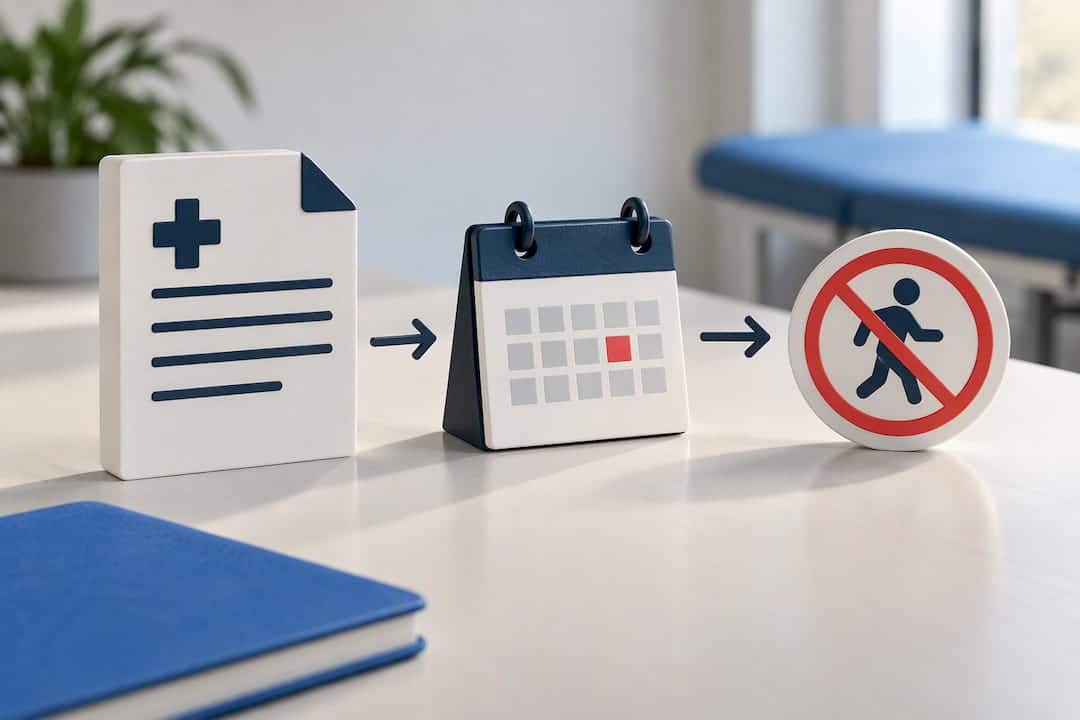
Getting a note is straightforward once you know the sequence. Here’s how it typically goes, whether you walk in or use telehealth.
- Decide if urgent care is the right setting. MedlinePlus notes that urgent care is appropriate for non-life-threatening problems like minor injuries and common illnesses, not emergencies.
- Bring your paperwork. Have your ID, insurance card, any employer or school form, and a rough timeline of your symptoms ready.
- Ask directly for the note during your visit. Tell the clinician what wording or dates you need so it’s included before you leave.
- Confirm telehealth acceptance in advance. Many employers accept notes from a documented telehealth visit, but policies vary, so check first.
- Expect an evaluation, not a shortcut. A legitimate note generally requires an actual visit. Asking for one without being seen isn’t something a responsible clinic will do.
Pro Tip: Write down your symptom timeline before your appointment. It speeds up the visit and helps the clinician document accurate dates on your note.
Our urgent care guide covers what conditions are typically treated in a single visit, which can help you decide if this is the right stop before you go.
Templates and sample wording that protect your privacy
The best sick notes say just enough and nothing more. For a work excuse, minimal effective wording looks like: “Patient was evaluated on [date] and is excused from work through [date]” or “Cleared to return to work on [date].” That’s it. No diagnosis required.
For school absences, younger children often need a parental note for a single day, while a clinician’s note becomes necessary for multi-day absences or when a school explicitly requires one. Restricted-duty notes work best with specifics: “No lifting over 10 pounds for 7 days, follow-up recommended if symptoms persist.” Specific limits, as opposed to a vague “off work” instruction, give your employer something concrete to work with.
- Use exact dates, not ranges like “a few days”
- State restrictions in measurable terms (weight limits, duration, activity type)
- Skip the diagnosis unless you specifically want it included
- Confirm the note has a signature, printed name, and contact number before you leave
Clinic perspective: what to expect at Your Family Walk-In Clinic
Urgent care visits are often handled the same day, with availability seven days a week and extended hours. That schedule matters when you need documentation quickly and can’t wait for a next-week appointment. Experienced providers see both adults and children for visits that typically lead to a work or school note, including respiratory infections and minor injuries.
If you know ahead of time that you’ll need a note with specific wording or a form filled out, calling before your visit lets the front desk flag it for the clinician. That small step often shaves minutes off your time in the office and reduces back-and-forth after you’ve already left.
What this guide gets right that most advice misses
Most articles on sick notes focus on whether you can get one, as if that’s the hard part. It usually isn’t. The real friction happens when a note is too vague to be useful or too detailed to be appropriate. A note that just says “excused for illness” with no return date creates more questions than it answers, and a note that names your diagnosis shares more than your employer is entitled to know.
The advice worth following is simpler than most guides make it sound: ask for specific dates and functional restrictions, not a diagnosis. That single habit resolves most disputes before they start, because HR departments and school offices are generally looking for a return date and a way to confirm the visit happened, not medical detail. If you take one thing from this guide, let it be that precision protects you better than vagueness ever will.
— Lisa
How to book a visit and what to bring
Getting a same-day, clinician-signed note doesn’t require guesswork about wait times or whether you’ll be seen at all. The clinic is open daily with convenient hours, allowing walk-in visits or scheduling ahead when a work or school deadline is close.
- Call, walk in, or book online for a same-day urgent care visit
- Bring photo ID, insurance information, and any employer or school form you need completed
- Ask about additional documentation needs, including sports and school physicals, at the same visit
Start with our urgent care page to see current services and plan your visit today.
Sources
This guide draws on EEOC guidance on medical inquiries, CDC recommendations on school illness policies, and MedlinePlus guidance on urgent care use. For a broader look at how patient information should be handled, see this overview of healthcare data privacy.
- Enforcement Guidance on Disability-Related Inquiries and Medical Examinations of Employees under the ADA | U.S. Equal Employment Opportunity Commission
- When to use the emergency room – adult: MedlinePlus Medical Encyclopedia
- When Students or Staff are Sick | Children & School Preparedness | CDC
FAQ
Can I get a sick note from urgent care?
Yes, urgent care clinics can issue a sick note after a medically attended visit, usually the same day. The note typically states your visit date and a recommended return date rather than a diagnosis.
Can I get a sick note without seeing a doctor?
Generally, no. A legitimate sick note requires an actual evaluation, whether in person or through a documented telehealth visit, because the clinician needs to assess your condition before recommending time off.
Can I get an excuse letter from urgent care?
Yes, an excuse letter and a sick note serve the same purpose and urgent care providers can issue either after your visit. Ask the clinician for specific wording or dates you need before you leave the appointment.
What are acceptable reasons for a sick note?
Acceptable reasons include illness, injury, or a medical procedure that a clinician evaluates and documents during your visit. Employers can require this documentation under a policy applied consistently to all employees, according to EEOC guidance, but they cannot demand details beyond what’s needed to confirm your leave.