


It’s probably an allergy if both eyes itch intensely and the discharge is thin and watery. It’s more likely infectious pink eye if one eye started first with thick, sticky discharge that mats your eyelashes overnight. A clinician can confirm what’s going on, but these clues get you most of the way there.
- Itch intensity: Allergies itch a lot. Viral pink eye feels gritty or irritated, not itchy.
- Discharge type: Watery means allergy or virus; thick and yellow-green points to bacteria.
- Laterality and timeline: One eye first, especially after a cold, suggests infection. Both eyes at once, especially during pollen season, suggests allergy.
Exceptions exist. Infections can start bilateral, and severe allergies can flare in one eye more than the other.
Key Takeaways
Distinguishing pink eye from allergies comes down to itch intensity, discharge type, and whether one eye or both eyes are affected.
| Point | Details |
|---|---|
| Itch is the biggest clue | Intense itching in both eyes points to allergy; gritty or painful eyes point to infection. |
| Discharge type matters | Watery discharge suggests allergy or virus; thick yellow-green discharge suggests bacteria. |
| Only infections spread | Viral and bacterial conjunctivitis are contagious; allergic conjunctivitis never is. |
| Skip antibiotics for viral or allergic cases | Antibiotics only help bacterial conjunctivitis and won’t touch viral or allergic symptoms. |
| Get evaluated when in doubt | Your Family Walk-In Clinic offers same-day exams to confirm the cause and treat it correctly. |
This article is general information, not a substitute for advice from a qualified doctor. Consult a qualified healthcare professional about your own circumstances before acting on anything here.
Table of Contents
- What Is Pink Eye (Conjunctivitis) and What Are the Main Types?
- How Do You Spot the Difference Between Pink Eye and Allergies?
- What Causes Pink Eye and Allergies, and Is Pink Eye Contagious?
- How Is Pink Eye Treated Compared to Allergies?
- When Should You See a Doctor for Pink Eye or Allergies?
- How Can You Prevent Pink Eye and Reduce Allergy Flare-Ups?
- What Does Research Say About Pink Eye vs Allergies?
- A Practical Note From Lisa
- Need a Same-Day Eye Exam? Here’s How We Can Help
- Sources
- FAQ
What Is Pink Eye (Conjunctivitis) and What Are the Main Types?
Conjunctivitis is inflammation of the conjunctiva, the clear tissue lining your eyelid and covering the white of your eye. “Pink eye” is the everyday name for it, and it comes in three main forms.
- Viral conjunctivitis usually follows a cold or upper respiratory infection and is the most common infectious cause of red eye, according to a StatPearls clinical overview.
- Bacterial conjunctivitis comes from bacteria like Staphylococcus or Streptococcus species and tends to produce thicker, colored discharge.
- Allergic conjunctivitis is triggered by pollen, pet dander, dust mites, or cosmetics, and the American Academy of Ophthalmology notes it often shows up alongside allergic rhinitis, asthma, or eczema.
The CDC and the National Eye Institute both use these three categories as the standard framework clinicians rely on.
How Do You Spot the Difference Between Pink Eye and Allergies?
Symptom patterns rarely overlap perfectly, but a few markers separate allergic conjunctivitis from viral or bacterial pink eye almost every time. The table below reflects the clinical distinctions the CDC and AAO use when evaluating red eye complaints.
| Feature | Allergic conjunctivitis | Viral conjunctivitis | Bacterial conjunctivitis |
|---|---|---|---|
| Typical symptoms | Intense itching, mild redness, swelling | Gritty feeling, redness, watering | Redness, discomfort, sticky lids |
| Onset & laterality | Both eyes, gradual | Often one eye first, spreads | Often one eye first |
| Discharge type | Watery, stringy mucus | Watery to mucoid | Thick, yellow or green |
| Contagious? | No | Yes | Yes |
| Usual treatment | Antihistamine drops, avoid trigger | Supportive care | Antibiotic drops if indicated |
| Typical duration | Until allergen exposure stops | 3 to 7 days | Improves in 48 to 72 hours with antibiotics |
A few extra clues help narrow things down further. Allergic itching is the kind that makes you want to rub your eyes raw; viral irritation feels more like sand caught under the lid. Bacterial infections are notorious for eyelids that feel glued shut in the morning, a sign the Cleveland Clinic flags as one of the clearest tells against allergy.
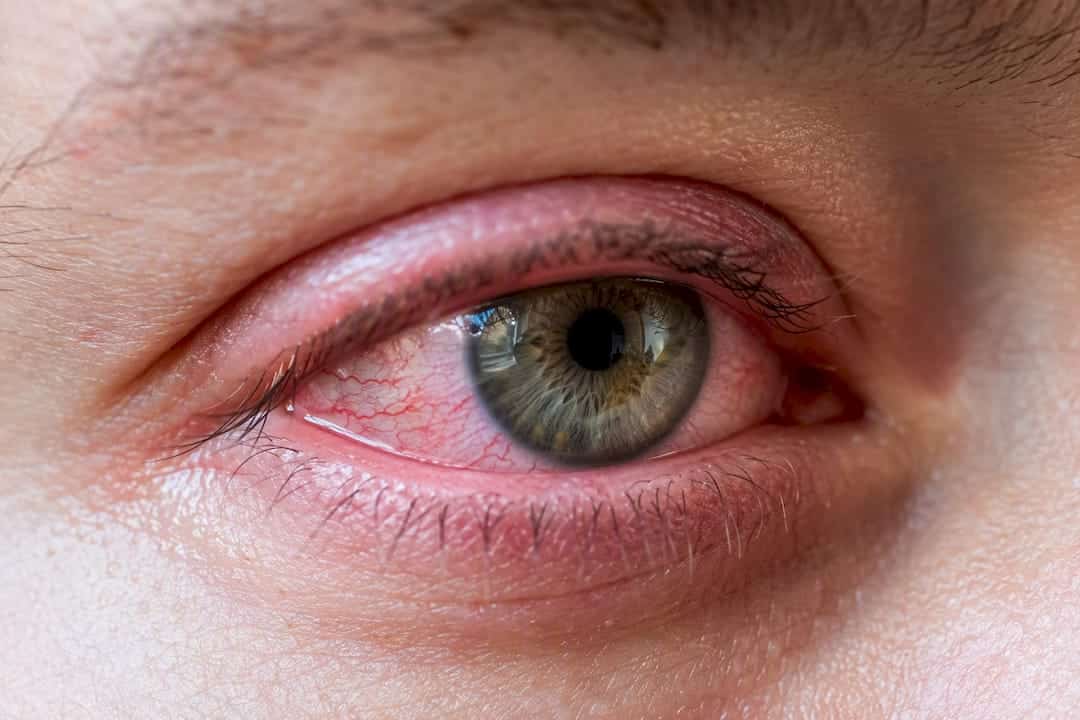
Pro Tip: Check for a swollen, tender lymph node just in front of your ear. Clinicians often find this alongside viral conjunctivitis, and it almost never shows up with allergies or bacterial infections.
What Causes Pink Eye and Allergies, and Is Pink Eye Contagious?
Allergic conjunctivitis flares from environmental triggers: pollen, dust mites, animal dander, mold, cosmetics, and even contact lens solutions. None of these spread from person to person, so allergy sufferers pose zero contagion risk to anyone around them.
Infectious pink eye is a different story. Viral conjunctivitis, most often from adenovirus, spreads through contact with eye discharge or contaminated surfaces, and remains contagious as long as the eyes are watery and red, sometimes up to two weeks. Bacterial conjunctivitis spreads similarly and stays contagious until treatment starts working. According to the AAO, this contagion gap is precisely why allergic conjunctivitis never requires isolation while its infectious cousins do.
Basic precautions cut transmission risk substantially:
- Wash your hands often, especially after touching your eyes.
- Avoid sharing towels, pillowcases, or eye makeup.
- Skip contact lenses until symptoms fully clear.
How Is Pink Eye Treated Compared to Allergies?
Treatment splits cleanly along cause, and mixing them up wastes time and, in the case of antibiotics, invites resistance.
- Allergic conjunctivitis: Topical antihistamine and mast-cell stabilizer combination drops are the first-line option, according to the AAO, alongside artificial tears and avoiding the trigger. Oral antihistamines like Zyrtec help systemic symptoms but can dry out the eyes further if used alone.
- Viral conjunctivitis: There’s no cure for the virus itself. Cold compresses, artificial tears, and good hygiene are what actually help, per PMC treatment guidance.
- Bacterial conjunctivitis: Topical antibiotics shorten the course and contagious period when the infection is truly bacterial, but only when there’s a clear clinical indication.
Antibiotics don’t help viral or allergic conjunctivitis, and using them anyway does nothing for the eye while contributing to antibiotic resistance across the population. The CDC is explicit on this point, and it’s one of the most common misuses of antibiotics in outpatient care.
If you wear contact lenses, stop wearing them the moment symptoms appear, and don’t resume until your eyes are completely clear and you’ve followed proper lens hygiene, including replacing your solution and case.
When Should You See a Doctor for Pink Eye or Allergies?
Most cases of pink eye, viral or allergic, resolve without a clinical visit. But certain signs mean self-care isn’t enough.
Seek care right away if you notice:
- Severe eye pain or a sensation that something is stuck in the eye
- Sensitivity to light or blurred vision
- Intense redness that keeps worsening
- Inability to open the eye
- Symptoms in a newborn
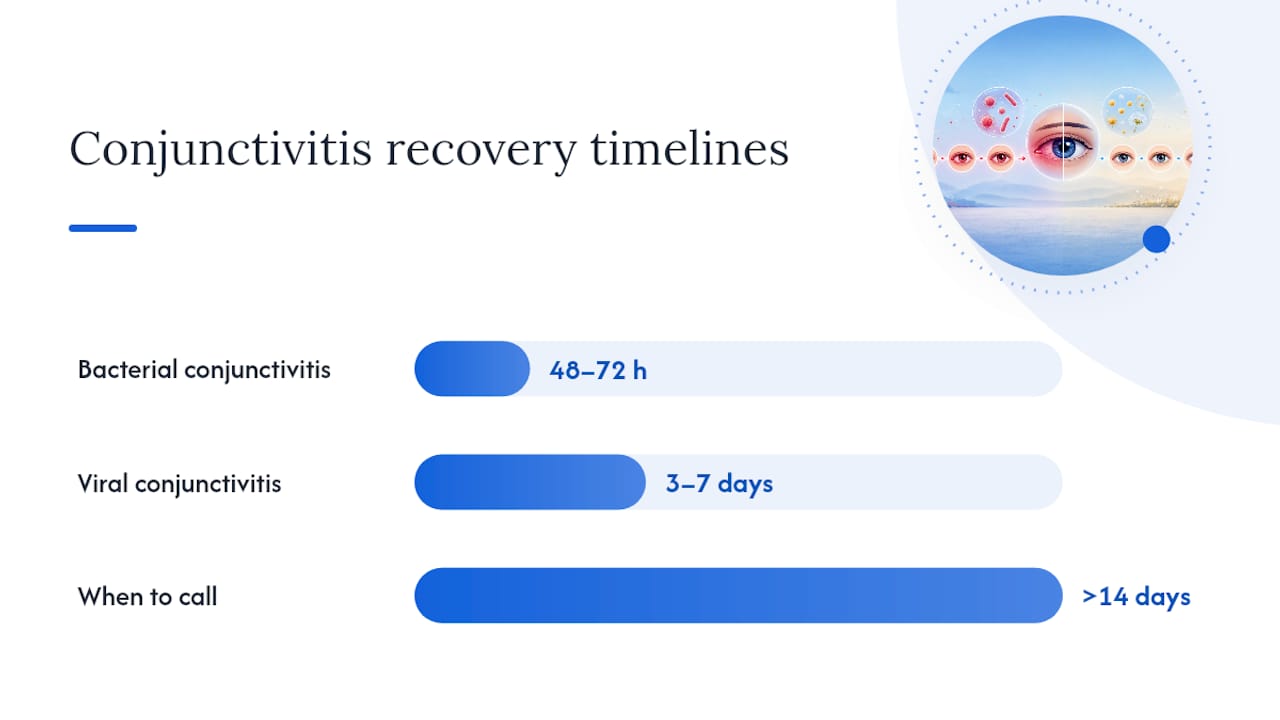
Timelines matter too. Viral conjunctivitis typically improves within three to seven days but can linger past two weeks. Bacterial cases usually respond within 48 to 72 hours of starting antibiotics. If nothing has improved by then, that’s worth a call to your provider. According to American Family Physician, no single symptom reliably separates viral from bacterial cases on its own, which is why clinicians rely on exam findings and sometimes a swab test. Contact lens wearers with suspected infection, immunocompromised patients, and anyone with chronic or recurring symptoms should be seen. The AAO’s practice guidelines also note that conjunctivitis that won’t resolve can occasionally signal something more serious, like an autoimmune condition, and warrants further workup.
How Can You Prevent Pink Eye and Reduce Allergy Flare-Ups?
Simple habits go a long way toward keeping both types at bay.
- Wash your hands frequently and avoid touching your eyes.
- Don’t share towels, pillowcases, or eye makeup.
- Replace contact lens cases regularly and discard lenses worn during an infection.
- Limit allergen exposure with air filters and by washing bedding often during pollen season.
For return-to-school or work guidance, bacterial conjunctivitis is generally considered non-contagious 24 to 48 hours after starting antibiotics, while viral cases should wait until redness and discharge clearly improve. Always check your specific school or workplace policy first.
What Does Research Say About Pink Eye vs Allergies?
Allergic conjunctivitis is the most common ocular allergic condition overall, while viral conjunctivitis remains the leading infectious cause of red eye, according to StatPearls. That statistic alone explains why so many people confuse the two: they’re both extremely common, and they can look similar at a glance.
A careful history, recent cold symptoms, allergen exposure, which eye started first, combined with a simple external exam of discharge and eyelid matting, is often enough to sort out the cause without lab testing.
Swab testing exists but is reserved for unusual, severe, or recurring cases, not routine visits. That’s part of why clinicians push back so hard against reflexive antibiotic prescriptions for garden-variety red eye.
A Practical Note From Lisa
Most people can sort pink eye from allergies using the clues above, but eyes don’t leave much room for guessing wrong. If something feels off, especially pain or vision changes, don’t wait it out. This article is meant to inform your next step, not replace an exam from someone who can actually look at your eye.
Need a Same-Day Eye Exam? Here’s How We Can Help
Your Family Walk-In Clinic gets you seen the same day, without the days-long wait for a specialist appointment that eye symptoms often don’t have time for. Open seven days a week from 8 AM to 8 PM in Lutz, our providers examine your eyes, check your vision, look for the specific signs that separate allergy from infection, and prescribe treatment or run a swab when it’s actually warranted.

You won’t get handed antibiotics just because you asked. You’ll get an actual exam and a plan that matches what’s really going on. Walk in or book ahead for urgent care available seven days a week, and if you’d rather see the space before your visit, you can also tour our clinic online first.
Sources
- CDC: Clinical overview of conjunctivitis
- StatPearls: Conjunctivitis overview
- PMC article: conjunctivitis treatment and management
- Cleveland Clinic: Pink Eye vs. Allergies
FAQ
How do I know if it’s pink eye or allergies?
Check for itching and how many eyes are affected. Intense itching in both eyes usually means allergy, while thick discharge starting in one eye points to infection.
How do you rule out pink eye?
A clinician rules out infectious pink eye by checking discharge type, eyelid matting, and whether swollen lymph nodes are present near the ear, a sign more common with viral cases.
Can allergies mimic pink eye symptoms?
Yes. Allergic conjunctivitis causes redness and swelling that can look like infectious pink eye, but the intense itching and watery discharge are the giveaways that separate it from a true infection.
What does the first day of pink eye feel like?
Viral pink eye often starts with a gritty, irritated feeling in one eye, sometimes following cold symptoms, while bacterial pink eye may bring redness and discharge that thickens within a day or two.
Is pink eye always contagious?
No. Viral and bacterial conjunctivitis are contagious, but allergic conjunctivitis is not, since it’s triggered by allergens rather than a spreadable organism.